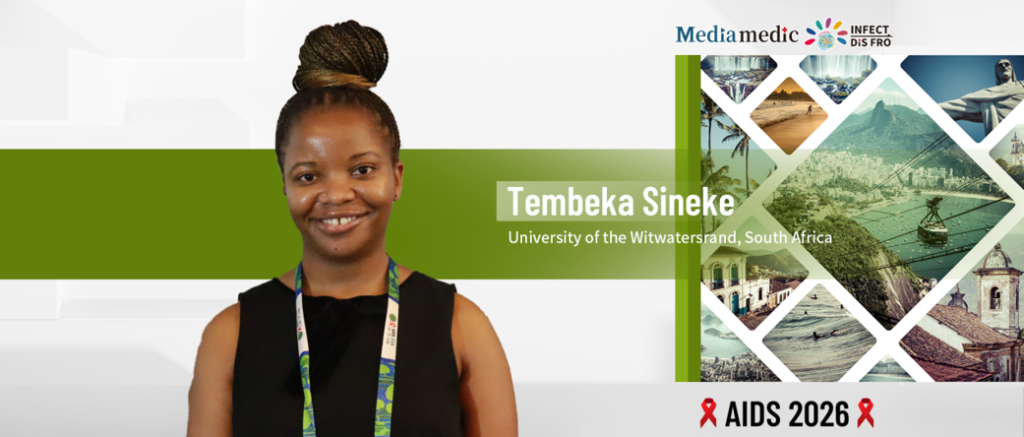
AIDS 2026 | Tembeka Sineke: A Randomized Trial Exploring Integration of U=U Interventions into Standardized HIV Care for Adolescents in South Africa

AIDS 2026 | Tembeka Sineke: A Randomized Trial Exploring Integration of U=U Interventions into Standardized HIV Care for Adolescents in South Africa

The 2026 International AIDS Conference (AIDS 2026) was held in Rio de Janeiro, Brazil. HIV care for adolescents and the rollout of the Undetectable = Untransmittable (U=U) framework emerged as key discussion priorities at the conference. Young populations across sub-Saharan Africa bear a dual burden of HIV infection and pervasive social stigma. Integrating U=U interventions into routine clinical care serves as a critical pathway to improve their disease literacy, psychological wellbeing, and reduce high-risk sexual behaviours.
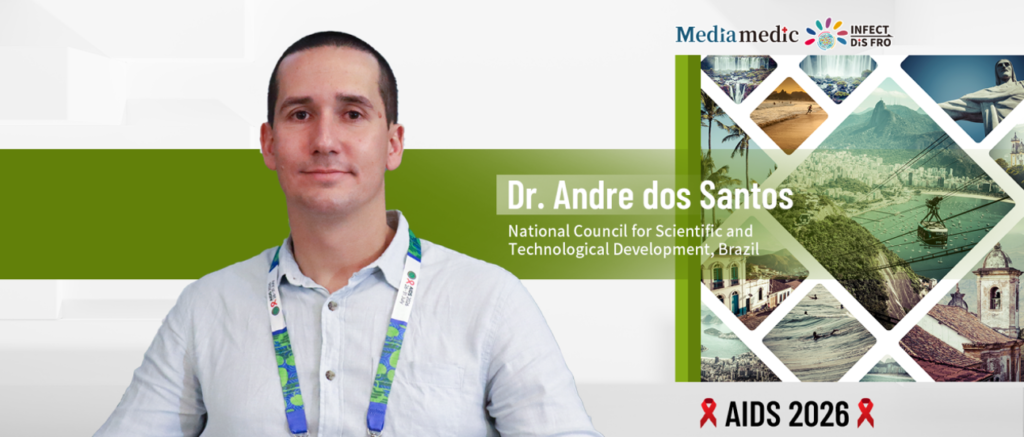
AIDS 2026 | Dr. Santos: Distinguishing Muscle Quantity from Muscle Quality to Refine Sarcopenia Assessment Systems in Older Adults Living with HIV

AIDS 2026 | Dr. Santos: Distinguishing Muscle Quantity from Muscle Quality to Refine Sarcopenia Assessment Systems in Older Adults Living with HIV

The 2026 International AIDS Conference (AIDS 2026) was held in Rio de Janeiro, Brazil, where the management of sarcopenia among older adults living with HIV emerged as a hot topic of discussion. Dr. Andre dos Santos from the National Council for Scientific and Technological Development, Brazil, conducted a special study on the correlations between muscle quantity, muscle quality, muscle strength and physical performance in older HIV-positive patients using multimodal imaging techniques. His research findings have drawn widespread attention from clinical peers. Older adults living with HIV suffer prominent skeletal muscle damage due to chronic inflammation and long-term antiretroviral therapy (ART). Traditional assessment models that rely solely on muscle quantity have clear limitations. Infectious Disease Frontier conducted an exclusive interview with Dr. Santos to conduct in-depth discussions on core clinical issues including optimized sarcopenia assessment frameworks and stratified intervention strategies, offering new insights for long-term health management of older adults living with HIV.
AIDS 2026 | Dr. Vizcaino: Focus on Harms of Late HIV Diagnosis in Cuba and Explore Efficient Early Diagnosis, Prevention and Control Strategies

AIDS 2026 | Dr. Vizcaino: Focus on Harms of Late HIV Diagnosis in Cuba and Explore Efficient Early Diagnosis, Prevention and Control Strategies

The 2026 International AIDS Conference was held in Rio de Janeiro, Brazil, where scholars from across the globe engaged in in-depth exchanges on the latest advances in HIV diagnosis, treatment, prevention and control. Dr. Milena Duque Vizcaino from the Pedro Kourí Tropical Medicine Institute in Cuba presented a domestic follow-up study covering 2019 to 2025 at the conference, centering on the critical public health issue linking late HIV diagnosis to mortality risk. Though Cuba has built a comprehensive HIV prevention and control network underpinned by its unique universal free healthcare system, the challenge of delayed diagnosis has not been fully eliminated. Infectious Disease Frontier conducted an exclusive interview with Dr. Vizcaino to discuss core topics including disparities in mortality risk among late-diagnosed patients, key barriers to delayed diagnosis, and optimized screening and intervention pathways. The interview analyzes pain points and practical experience of HIV prevention under a Latin American medical model, offering reference frameworks for low- and middle-income regions worldwide to refine strategies for early HIV screening and treatment.
AIDS 2026 | Professor McMahon: Exploring the Clinical Potential of Half-Yearly Long-Acting Triple Regimens for HIV Treatment

AIDS 2026 | Professor McMahon: Exploring the Clinical Potential of Half-Yearly Long-Acting Triple Regimens for HIV Treatment

The 2026 International AIDS Conference (AIDS 2026) was successfully held in Rio de Janeiro, Brazil. The conference covered multi-dimensional topics including HIV prevention, diagnosis and treatment, and long-term disease management, bringing together scholars from the global infectious disease field for academic exchanges. Professor James McMahon from the Alfred Hospital and Monash University, Australia presented data from a 104-week Phase II clinical trial at the conference, focusing on evaluating the efficacy and safety of a half-yearly long-acting triple regimen combining lenacapavir, teropavimab and zinlirvimab. Long-acting administration represents a key developmental direction for current HIV therapy, drastically alleviating the daily pill-taking burden on patients and offering new insights for optimized long-term disease management. Infectious Disease Frontier conducted an exclusive interview with Professor McMahon to discuss the sustained viral suppression effects, tolerability profiles and target patient populations of this innovative long-acting triple regimen based on core primary clinical trial data, for reference by frontline clinical practitioners.

AIDS 2026 | Natalie Maricich: Balancing Algorithmic Capabilities and Human Empathy to Build a Sustainable Smart Health Service Model for HIV

AIDS 2026 | Natalie Maricich: Balancing Algorithmic Capabilities and Human Empathy to Build a Sustainable Smart Health Service Model for HIV

At AIDS 2026, Sarah Morris, Chief Product Officer of Audere, delivered a presentation titled From Algorithms to Empathy: Artificial Intelligence in Self-Care Support for HIV Services, sharing cutting-edge practical experience and exploring the value and boundaries of AI technology deployed in long-term HIV health management. As AI gradually penetrates multiple self-care scenarios including medication adherence tracking, psychological counseling and risk monitoring for people living with HIV, balancing technical efficiency with humanistic care, data security, and equitable universal access have emerged as core issues demanding clarification across the industry.
APACC 2026 | Prof. Jason Ong: Tackling PrEP Accessibility Challenges and Exploring AI-Driven New Pathways for STI Prevention and Control 

APACC 2026 | Prof. Jason Ong: Tackling PrEP Accessibility Challenges and Exploring AI-Driven New Pathways for STI Prevention and Control 

The 2026 Asia-Pacific AIDS and Co-infections Conference (APACC 2026) was successfully held in Tokyo, Japan. Focusing on cutting-edge practices and technological innovations in the prevention and control of HIV and sexually transmitted infections, the conference gathered global experts in the field to explore pathways for optimizing public health services. Our journal specially invited Professor Jason Ong from the Melbourne Sexual Health Centre in Australia for an in-depth interview.
APACC 2026| Researcher Johanna Beulah Sornillo: Rapid ART Initiation to Fortify HIV Prevention and Control in the Asia-Pacific 

APACC 2026| Researcher Johanna Beulah Sornillo: Rapid ART Initiation to Fortify HIV Prevention and Control in the Asia-Pacific 

The 11th Asia-Pacific AIDS & Co-Infections Conference (APACC 2026) was successfully convened in Tokyo, Japan. Bringing together HIV prevention and control experts from across the region, the conference focused on core regional challenges including standardized antiretroviral therapy (ART) and whole-course management for people living with HIV, serving as an exchange platform to advance the optimization of HIV diagnosis and treatment in the Asia-Pacific.
APACC 2026 | Rodenie & Patrick: Exploring the Causes of HIV Loss to Follow-Up and Building Comprehensive Care for People Living with HIV Through Innovative Community Services 

APACC 2026 | Rodenie & Patrick: Exploring the Causes of HIV Loss to Follow-Up and Building Comprehensive Care for People Living with HIV Through Innovative Community Services 

The 2026 Asia-Pacific AIDS and Co-infections Conference (APACC 2026) was successfully held in Tokyo, Japan. Focusing on core public health issues such as continuous care for people living with HIV (PLHIV) and co-infection management, the conference gathered frontline clinical researchers from multiple countries to share local prevention and control practices and research findings. Infectious Disease Frontier specially invited Dr. Rodenie Arnaiz Olete, MEARL Lead of Sustained Health Initiatives of the Philippines, and his colleague, Dr. Patrick Eustaquio, Director for Clinical Programs of SAIL Clinics in the Philippines, for an in-depth interview. Combining real-world clinical data from the Philippines, the two discussed practical challenges including factors associated with HIV care disengagements, innovative intervention models in community clinics, and integrated diagnosis and treatment of hepatitis B and HIV co-infection. Integrating research conclusions with frontline clinical practical experience, they provide localized reference ideas for low- and middle-income countries to optimize the continuum of care for PLHIV.
APACC 2026 | Dr. Hay Mar Su Lwin: Focus on Glycemic Abnormalities Among People Living with HIV, Analyze Risk Factors for Diabetes Progression and Asia-Specific Clinical Management Strategies 

APACC 2026 | Dr. Hay Mar Su Lwin: Focus on Glycemic Abnormalities Among People Living with HIV, Analyze Risk Factors for Diabetes Progression and Asia-Specific Clinical Management Strategies 

Editorial Note: The 2026 Asia-Pacific AIDS & Co-infections Conference (APACC 2026) was successfully held in Tokyo, Japan. Centered on the clinical hot topics of metabolic complications in people living with HIV (PLWH), the conference delivered cutting-edge insights for clinical practice across the Asia-Pacific region. During the conference, Infectious Disease Frontier conducted an exclusive interview with Dr. Hay Mar Su Lwin, Research Physician (MBBS MCTM) at the HIV Netherlands Australia Thailand Research Collaboration. Glycemic abnormality is a prevalent metabolic complication among PLWH receiving long-term antiretroviral therapy (ART), and intervention during prediabetes is a critical link in disease prevention and control. Drawing on long-term cohort studies, Dr. Lwin shared in-depth perspectives on risk factors linked to glycemic deterioration in PLWH, metabolic impacts of distinct antiretroviral regimens, and tailored clinical strategies for Asian populations. This interview integrates evidence-based data and practical clinical guidance, offering vital references for clinicians in domestic infectious disease departments to optimize glycemic screening, lifestyle intervention, and individualized selection of ART regimens.
APACC 2026 | Professor Eric Chow: Addressing Antimicrobial Resistance and Adherence Challenges — Analysis of Evidence Base and Implementation Barriers of DoxyPEP for STI Prevention 

APACC 2026 | Professor Eric Chow: Addressing Antimicrobial Resistance and Adherence Challenges — Analysis of Evidence Base and Implementation Barriers of DoxyPEP for STI Prevention 

The 11th Asia-Pacific AIDS & Co-infections Conference (APACC 2026) was successfully held in Tokyo, Japan. The prevention and control of sexually transmitted infections (STIs) has emerged as one of the most heated topics at the conference. To sort out current cutting-edge prevention and control strategies, Infectious Disease Frontier invited Professor Eric Chow from the Melbourne Sexual Health Centre, Monash University, for an exclusive in-depth interview.