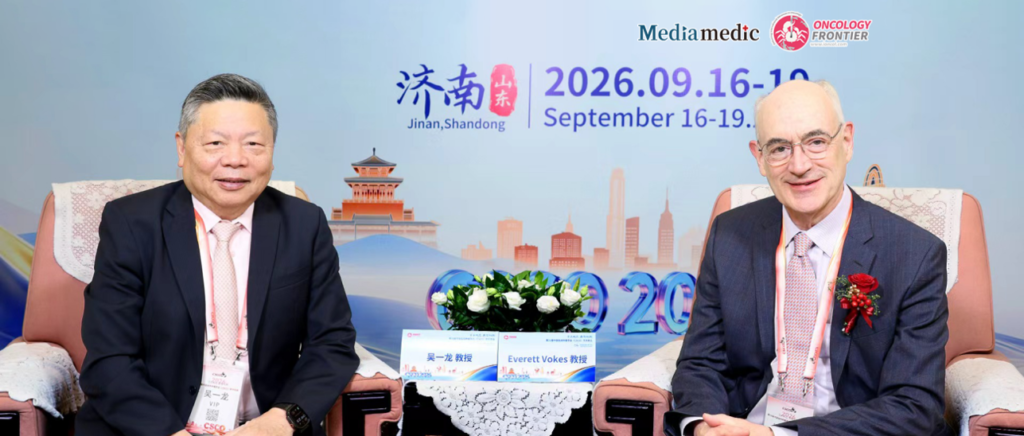
FACO China–Japan Expert Dialogue | Professors Jin Li, Xiaotian Zhang, and Koji Kono Discuss Precision Treatment Advances in HER2-Positive Gastric Cancer

FACO China–Japan Expert Dialogue | Professors Jin Li, Xiaotian Zhang, and Koji Kono Discuss Precision Treatment Advances in HER2-Positive Gastric Cancer

China, Japan, and other Asian countries have some of the highest rates of gastric cancer worldwide. In China, the majority of patients are still diagnosed at an advanced stage, having already lost the opportunity for curative surgery. Effective systemic therapy is therefore essential for improving survival. In recent years, innovative drugs represented by antibody–drug conjugates (ADCs)—such as the HER2-targeted ADC trastuzumab deruxtecan (T-DXd)—have achieved major breakthroughs in pivotal clinical studies including DESTINY-Gastric04. These advances are expected to gradually transform the treatment landscape starting from later lines of therapy. Asian clinical researchers have played an important role in these studies, contributing insights that are redefining clinical practice.
2025 FACO | Professors Tetsuya Mitsudomi & Yun Gyoo Lee: Strengthening China–Japan–Korea Collaboration to Address Shared Challenges in Lung Cancer Care

2025 FACO | Professors Tetsuya Mitsudomi & Yun Gyoo Lee: Strengthening China–Japan–Korea Collaboration to Address Shared Challenges in Lung Cancer Care

China, Japan, and South Korea have long ranked among the countries with the highest incidence of lung cancer worldwide. With a heavy disease burden, urgent unmet medical needs, and remarkably similar disease characteristics, strengthening trilateral collaboration among these East Asian nations is critical to advancing clinical oncology and addressing shared challenges in lung cancer management.
Professors Michael R. Bishop and Edmund K. Waller Visit Peking University Institute of Hematology:Sino–U.S. Experts Discuss the Future of Cell Therapy

Professors Michael R. Bishop and Edmund K. Waller Visit Peking University Institute of Hematology:Sino–U.S. Experts Discuss the Future of Cell Therapy

On November 2, 2025, world-renowned hematology experts Professor Michael R. Bishop, Director of the Cell Therapy Center at the University of Chicago, and Professor Edmund K. Waller, the Rein Saral Distinguished Chair at Emory University, visited the Peking University Institute of Hematology for an academic exchange.
ESMO China Voice | Prof. Jiayu Wang: MAIC Analysis Highlights the Potential of Bireociclib as a Second-Line Therapy for HR+/HER2– Advanced Breast Cancer, Offering a New Treatment Option for Patients 

ESMO China Voice | Prof. Jiayu Wang: MAIC Analysis Highlights the Potential of Bireociclib as a Second-Line Therapy for HR+/HER2– Advanced Breast Cancer, Offering a New Treatment Option for Patients 

In the second-line treatment of hormone receptor–positive, HER2-negative (HR+/HER2–) advanced breast cancer, CDK4/6 inhibitors combined with fulvestrant have become the standard of care. However, variations in efficacy and safety profiles among different inhibitors remain an important clinical consideration.
ESMO Hot Topic | Professor Zhao Yanxia: PATINA Trial PRO Data Confirm Palbociclib Combination Extends PFS Without Compromising Quality of Life

ESMO Hot Topic | Professor Zhao Yanxia: PATINA Trial PRO Data Confirm Palbociclib Combination Extends PFS Without Compromising Quality of Life

The PATINA (AFT-38) trial is a randomized, open-label, phase III study designed to evaluate the efficacy and safety of palbociclib + HER2-targeted therapy + endocrine therapy versus HER2-targeted therapy + endocrine therapy alone in patients with HR+/HER2+ metastatic breast cancer following induction therapy. Previous data from PATINA demonstrated that the addition of palbociclib significantly prolonged median progression-free survival (mPFS) in this patient population.