Getting to the Bottom of the Debate 2.0 | Oligoprogressive mCRPC: Debating Local Therapy and the Sequencing of PARP Inhibitors and ¹⁷⁷Lu-PSMA-617—A Debate Between Professors Jianming Guo and Qing Zou

Getting to the Bottom of the Debate 2.0 | Oligoprogressive mCRPC: Debating Local Therapy and the Sequencing of PARP Inhibitors and ¹⁷⁷Lu-PSMA-617—A Debate Between Professors Jianming Guo and Qing Zou

Treatment options for metastatic castration-resistant prostate cancer (mCRPC) are expanding rapidly. However, two major challenges remain in clinical decision-making: how to adjust treatment following oligoprogression and how to optimize the sequencing of precision therapies.
Professor Dingwei Ye and Professor Xiaojie Bian: Breaking Through Treatment Challenges in mCRPC with Sacituzumab Tirumotecan Plus Immunotherapy for Durable Survival Benefits

Professor Dingwei Ye and Professor Xiaojie Bian: Breaking Through Treatment Challenges in mCRPC with Sacituzumab Tirumotecan Plus Immunotherapy for Durable Survival Benefits

Patients with metastatic castration-resistant prostate cancer (mCRPC) who experience disease progression following novel endocrine therapy have very limited treatment options, presenting a major clinical challenge. In recent years, China has made substantial advances in innovative drug development, continuously reshaping treatment strategies. Novel TROP2 antibody-drug conjugates (ADCs), represented by sacituzumab tirumotecan, have demonstrated promising potential in prostate cancer. When combined with immunotherapy, the regimen achieved an overall objective response rate (ORR) of 47.4%, a disease control rate (DCR) of 89.5%, a duration of response (DoR) of 24.7 months, and a PSA50 response rate of 39.1% in the overall population. Median radiographic progression-free survival (rPFS) was 13.1 months, and median overall survival (OS) reached 22.8 months, potentially opening up a new treatment pathway for patients with mCRPC.
2026 CSCO | Professor Dingwei Ye and Professor Yao Zhu: Novel Breakthrough with a China-Developed TROP2 ADC—Sacituzumab Tirumotecan Demonstrates Significant Clinical Value in Advanced Urothelial Carcinoma

2026 CSCO | Professor Dingwei Ye and Professor Yao Zhu: Novel Breakthrough with a China-Developed TROP2 ADC—Sacituzumab Tirumotecan Demonstrates Significant Clinical Value in Advanced Urothelial Carcinoma

In recent years, treatment for urothelial carcinoma has advanced rapidly, with combination therapy involving targeted agents and immunotherapy significantly improving survival outcomes in patients with advanced disease. The CSCO Guidelines for the Diagnosis and Treatment of Urothelial Carcinoma have continued to incorporate emerging evidence, further enriching the standardized treatment framework. However, for most patients whose disease progresses following platinum-based chemotherapy and immunotherapy, subsequent treatment options remain extremely limited. Developing effective treatment strategies for patients receiving second-line and later-line therapy remains a major unmet need and a key clinical challenge in advanced urothelial carcinoma.
2026 Pujiang Urological Oncology Academic Conference丨Professor Guohai Shi: From Combination Therapy to Whole-Course Management, Advancing Long-Term Benefit in Advanced Renal Cell Carcinoma

2026 Pujiang Urological Oncology Academic Conference丨Professor Guohai Shi: From Combination Therapy to Whole-Course Management, Advancing Long-Term Benefit in Advanced Renal Cell Carcinoma

The 2026 Pujiang Urological Oncology Academic Conference was held in Shanghai. With the deeper integration of targeted therapy and immunotherapy, survival outcomes for advanced renal cell carcinoma (RCC) continue to improve. Clinical attention has also shifted from “whether to combine treatments” toward “how to select the optimal combination, how to sequence subsequent therapies, and how to balance efficacy with safety.” Oncology Frontier – Urology Frontier invited Professor Guohai Shi of Fudan University Shanghai Cancer Center for an exclusive interview. Professor Shi shared his clinical perspectives on long-term benefit, first-line treatment selection, decision-making after disease progression, and whole-course management in the real-world setting.
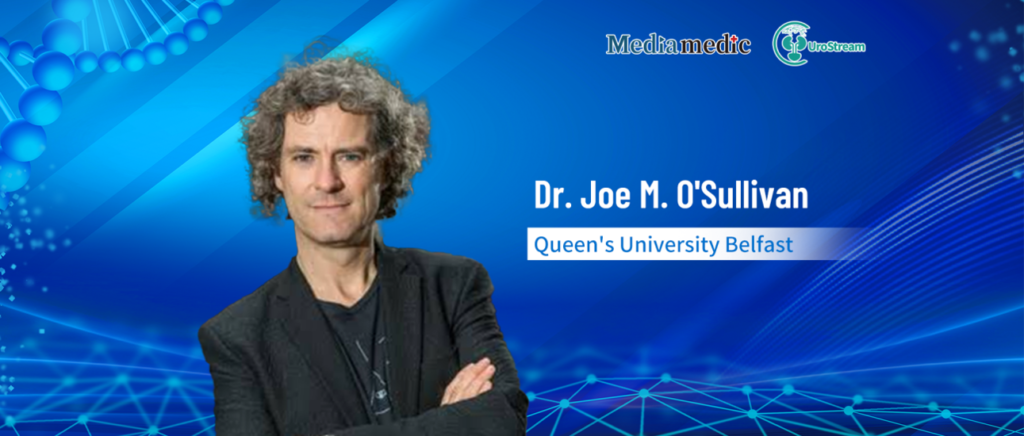
Joe M. O’Sullivan Professor: APCCC 2026 Updates and Insights — Controversies in Hormonal Therapy Sequencing and Combination Strategies, the Prospects of Radioligand Therapy, and Global Equity in Prostate Cancer Care

Joe M. O’Sullivan Professor: APCCC 2026 Updates and Insights — Controversies in Hormonal Therapy Sequencing and Combination Strategies, the Prospects of Radioligand Therapy, and Global Equity in Prostate Cancer Care

In 2026, the Advanced Prostate Cancer Consensus Conference (APCCC), one of the most influential international expert consensus meetings in advanced prostate cancer, brought together experts from around the world to discuss systemic treatment strategies, risk-adapted treatment decisions, and emerging combination therapies, providing important guidance for clinical practice worldwide.
2026 Pujiang Urological Oncology Academic Conference丨Professor Dingwei Ye: Reshaping First-Line Treatment for Urothelial Carcinoma — Standardized Comprehensive Management to Maximize Long-Term Patient Benefit

2026 Pujiang Urological Oncology Academic Conference丨Professor Dingwei Ye: Reshaping First-Line Treatment for Urothelial Carcinoma — Standardized Comprehensive Management to Maximize Long-Term Patient Benefit

The 2026 Pujiang Urological Oncology Academic Conference was held in Shanghai. In recent years, innovative approaches including antibody-drug conjugates (ADCs), immunotherapy, and precision diagnostics have developed rapidly, shifting the treatment goals of urothelial carcinoma from short-term disease control toward deeper responses, long-term survival, and comprehensive disease management. Enfortumab vedotin-based combination therapy has changed the first-line treatment standard for locally advanced or metastatic urothelial carcinoma (LA/mUC). At the same time, patient selection, standardized treatment, adverse event management, response assessment, and long-term follow-up in real-world practice have become critical to translating evidence-based benefits into meaningful clinical outcomes. Oncology Frontier · UroStream invited Professor Dingwei Ye of Fudan University Shanghai Cancer Center to share his clinical perspectives on first-line treatment transformation, standardized continuous treatment, and advances in perioperative research.

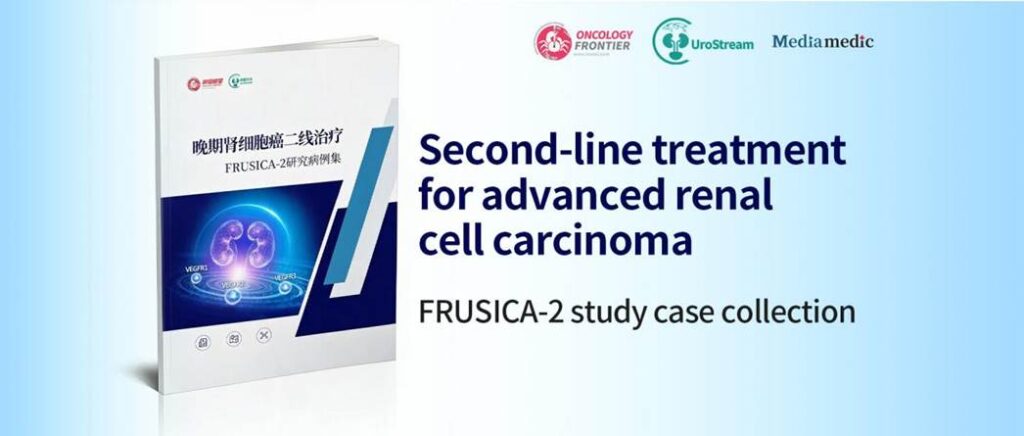
From Evidence to Clinical Practice丨FRUSICA-2 Case Series in Second-Line Treatment of Advanced Renal Cell Carcinoma Officially Released

From Evidence to Clinical Practice丨FRUSICA-2 Case Series in Second-Line Treatment of Advanced Renal Cell Carcinoma Officially Released

Building on the evidence from the pivotal FRUSICA-2 registration study, the FRUSICA-2 Case Series has now been officially launched. This case collection brings together real-world clinical cases from multiple centers across China, providing practical insights into the clinical application of fruquintinib plus sintilimab as second-line treatment for advanced renal cell carcinoma. Scan the QR code to access the complete case collection.
When All Seems Lost? — Rethinking the Optimal Treatment Sequence for Comprehensive Management of Advanced Renal Cell Carcinoma

When All Seems Lost? — Rethinking the Optimal Treatment Sequence for Comprehensive Management of Advanced Renal Cell Carcinoma

With the advent of immune checkpoint inhibitors, advanced renal cell carcinoma (RCC) has gradually entered the “immunotherapy era.” Targeted therapy plus immunotherapy (IO+TKI) combinations are now recommended by major guidelines and have become part of the first-line treatment landscape for advanced RCC. Although head-to-head trials have unequivocally demonstrated the superiority of first-line IO+TKI combinations over TKI monotherapy, “superior” in the first line does not necessarily mean “optimal” across the entire treatment journey.
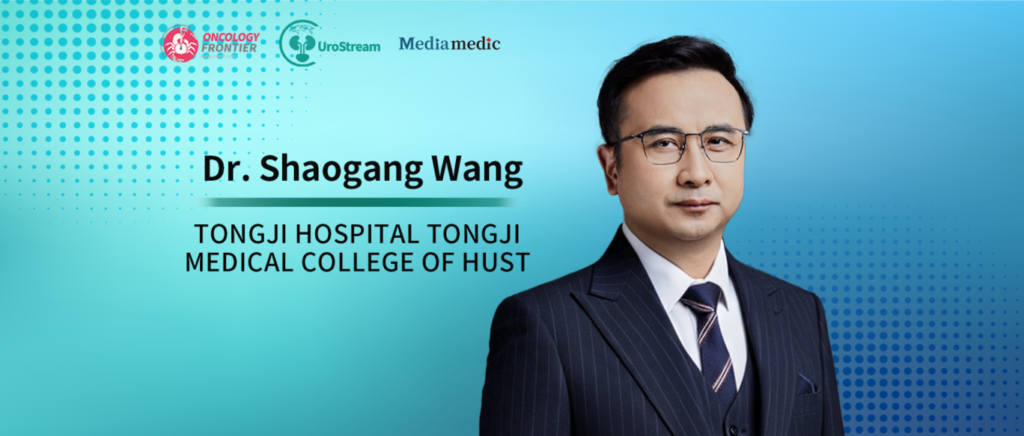
Professor Shaogang Wang: Technological Innovation Enabling Precision Minimally Invasive Surgery, with Clinical Research Driving the Future of Urology

Professor Shaogang Wang: Technological Innovation Enabling Precision Minimally Invasive Surgery, with Clinical Research Driving the Future of Urology

In recent years, urology has entered an important period of rapid technological iteration and continuous evolution in treatment concepts. From the accelerated development of advanced domestically manufactured medical equipment to the growing integration of robotic-assisted surgery, molecular imaging, and artificial intelligence into clinical practice, urology is moving toward increasingly minimally invasive, precise, and function-preserving approaches. At the same time, high-quality clinical research has become an important foundation for updating treatment standards and strengthening China's academic influence in urology. Oncology Frontier – UroStream invited Professor Shaogang Wang of Tongji Hospital, Tongji Medical College, Huazhong University of Science and Technology, for an in-depth interview. He shared his perspectives on trends in urological development, the clinical value and technological advances of robotic-assisted surgery, and strategies for conducting high-quality clinical research.