A Global ADC Industry Milestone: SystImmune and Biotech Company Sichuan Biokin Win a Prestigious World ADC Award

A Global ADC Industry Milestone: SystImmune and Biotech Company Sichuan Biokin Win a Prestigious World ADC Award

On October 14, 2026, the 17th World ADC San Diego conference, currently taking place in San Diego, USA, announced this year's World ADC Awards. Iza-bren (lunvenlatug vedotin; Yizekang®, BL-B01D1), a first-in-class, new-concept bispecific antibody–drug conjugate (ADC) independently developed by Sichuan Biokin Pharmaceutical and currently the world's first and only approved EGFR×HER3 bispecific ADC, was named Best ADC Clinical Impact Winner.
SIERRA Study Primary Analysis Published Online in the Journal of Hepatology, Providing New Evidence of a Favorable Risk–Benefit Profile for Patients with Unresectable HCC and Poor Prognostic Factors

SIERRA Study Primary Analysis Published Online in the Journal of Hepatology, Providing New Evidence of a Favorable Risk–Benefit Profile for Patients with Unresectable HCC and Poor Prognostic Factors

Hepatocellular carcinoma (HCC) represents a major global health burden, with unresectable HCC (uHCC) accounting for a substantial proportion of cases and carrying a poor prognosis. Pivotal phase III clinical trials in uHCC have generally excluded patients with poor prognostic factors, including impaired liver function (e.g., Child-Pugh class B/C), poor performance status (ECOG performance status [PS] >1), or main trunk portal vein tumor thrombosis (Vp4). In clinical practice, these patients account for as much as 65% of the uHCC population. In recent years, combination immunotherapy has become a standard first-line treatment approach for uHCC. The HIMALAYA study established the first-line value of the STRIDE regimen, comprising a single priming dose of tremelimumab followed by maintenance durvalumab. However, HIMALAYA likewise enrolled only patients with Child-Pugh class A liver function, ECOG PS 0–1, and no Vp4 involvement. Because patients with these poor prognostic factors have been underrepresented in global phase III trials, high-level evidence to guide treatment decisions remains limited, making clinical management particularly challenging.
ESMO 2026 | From Sustained First-Line Benefits to Earlier-Stage Exploration: Expanding the Evidence Base in Urothelial Carcinoma

ESMO 2026 | From Sustained First-Line Benefits to Earlier-Stage Exploration: Expanding the Evidence Base in Urothelial Carcinoma

The 2026 Congress of the European Society for Medical Oncology (ESMO) featured several important advances in urothelial carcinoma (UC). Nectin-4-targeted therapy continued to attract considerable attention, with 34 studies related to enfortumab vedotin presented, covering long-term follow-up of first-line treatment for locally advanced or metastatic urothelial carcinoma (la/mUC), evidence of benefit across patient subgroups with different characteristics, and prospective investigations of perioperative treatment and bladder preservation in muscle-invasive bladder cancer (MIBC).
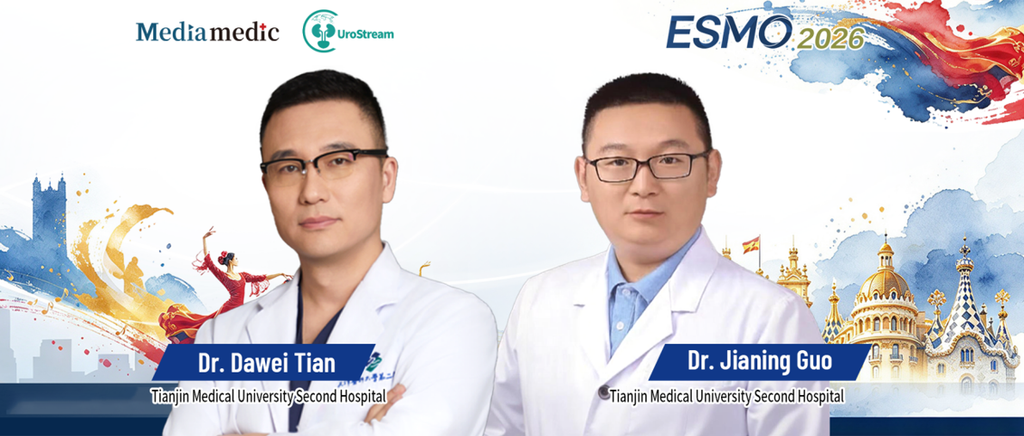
ESMO Voices from China | Professors Dawei Tian and Jianing Guo: HER2 Expression Heterogeneity in Bladder Carcinoma In Situ Reveals New Therapeutic Opportunities in Urothelial Carcinoma Beyond Invasive Disease

ESMO Voices from China | Professors Dawei Tian and Jianing Guo: HER2 Expression Heterogeneity in Bladder Carcinoma In Situ Reveals New Therapeutic Opportunities in Urothelial Carcinoma Beyond Invasive Disease

In recent years, HER2-targeted antibody–drug conjugates (ADCs), including disitamab vedotin, have demonstrated significant clinical value in the treatment of urothelial carcinoma (UC). However, HER2 expression in UC exhibits spatiotemporal heterogeneity. Bladder carcinoma in situ (CIS), in particular, is characterized by its occult presentation, high malignancy, and substantial risk of progression to invasive carcinoma. A standardized HER2 testing workflow for CIS is currently lacking, highlighting the need for further investigation. To address this challenge, a research team led by Professor Dawei Tian and Professor Jianing Guo of the Second Hospital of Tianjin Medical University conducted a clinical study whose findings were selected for presentation at the annual congress of the European Society for Medical Oncology (ESMO) [1], providing new evidence in this field. Oncology Frontier – UroStream invited both professors to discuss the clinical value of HER2, the characteristics of HER2 expression in CIS, the potential of disitamab vedotin in UC, and the implications of their findings for HER2 testing and clinical management.