Professor Xuewen Jiang: Deepening MDT Collaboration to Advance Standardized Diagnosis and Treatment in Urologic Oncology

Professor Xuewen Jiang: Deepening MDT Collaboration to Advance Standardized Diagnosis and Treatment in Urologic Oncology

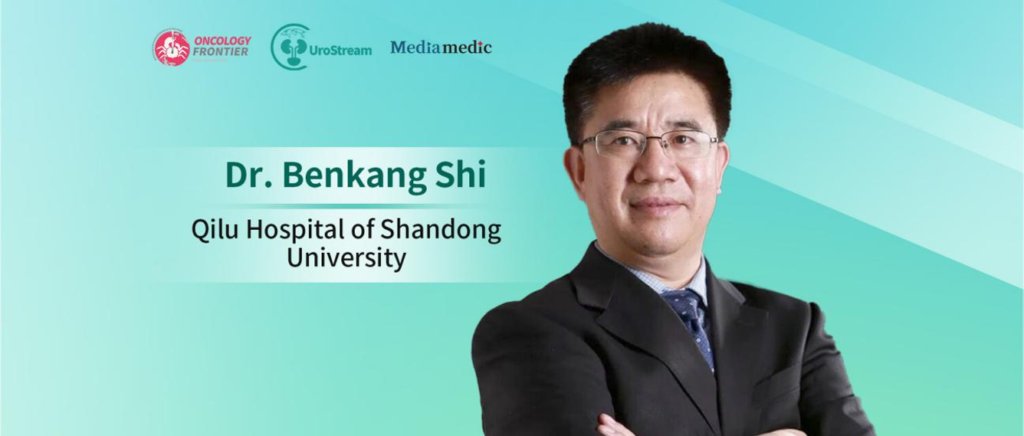
As diagnostic concepts and treatment strategies for urologic malignancies continue to evolve, clinical decision-making is shifting from relatively specialized, single-discipline treatment toward multidisciplinary, comprehensive management throughout the disease course. Multidisciplinary team (MDT) care integrates expertise from surgery, medical oncology, radiation oncology, radiology, pathology, and other specialties to develop more standardized, precise, and individualized treatment strategies for patients with complex and challenging disease. It has therefore become an important pathway for improving the quality of urologic oncology care. Oncology Frontier · UroStream invited Professor Xuewen Jiang of Qilu Hospital of Shandong University for an exclusive interview to share his experience with MDT practice in urologic oncology and discuss future directions for optimizing and expanding the model.
Professor Yanbo Wang: Strengthening End-to-End Quality Control and Data Governance to Build a High-Quality Clinical Research System in Urology

Professor Yanbo Wang: Strengthening End-to-End Quality Control and Data Governance to Build a High-Quality Clinical Research System in Urology

High-quality clinical research is an essential foundation for advancing medicine and improving patient outcomes. In urology, establishing robust top-level research design and end-to-end quality control, transforming large volumes of clinical records into standardized and usable research data, and helping young physicians identify research opportunities amid demanding clinical workloads have become important priorities in disciplinary development. In this issue of Oncology Frontier · UroStream, Professor Yanbo Wang of the First Hospital of Jilin University discusses the full-process quality control of clinical research in urology, clinical database development and data governance, as well as pathways for young physicians to develop their research careers, sharing practical experience and insights into building a high-quality clinical research system.
Professor Shouzhen Chen: Combining PI-RADS and PHI Density for Precise Risk Stratification and Optimizing Repeat Prostate Biopsy Decisions

Professor Shouzhen Chen: Combining PI-RADS and PHI Density for Precise Risk Stratification and Optimizing Repeat Prostate Biopsy Decisions

For patients with an initial negative prostate biopsy, whether and when to perform a repeat biopsy remains an important clinical challenge in the early diagnosis of prostate cancer. On the one hand, unnecessary repeat biopsies may increase patients' pain, bleeding, infection, and psychological burden; on the other hand, inadequate risk assessment may delay the diagnosis of clinically significant prostate cancer. How to use more precise risk-stratification tools to reduce unnecessary invasive procedures while maintaining a low risk of missing clinically significant cancer has therefore become an important area of clinical interest. In this issue of Oncology Frontier · UroStream, Professor Shouzhen Chen of Qilu Hospital of Shandong University discusses a risk-stratification and prediction model combining the Prostate Imaging Reporting and Data System (PI-RADS) score with the Prostate Health Index (PHI) and PHI density (PHID). He provides an in-depth interpretation of the model's key findings, clinical value, and current limitations in patients undergoing repeat biopsy, while also discussing future directions involving multimodal biomarkers and emerging molecular imaging technologies.
Professor Xin Yao: Precision Medicine and Minimally Invasive Technologies Working Together to Advance Urologic Oncology Care

Professor Xin Yao: Precision Medicine and Minimally Invasive Technologies Working Together to Advance Urologic Oncology Care

With the rapid development of molecular imaging, artificial intelligence, multi-omics technologies, and robotic surgery, the management of urologic cancers is gradually evolving from relatively standardized treatment toward more precise, minimally invasive, and individualized whole-course care. Precision medicine can improve the accuracy of tumor identification, risk stratification, and treatment selection, while robotic-assisted surgery provides important technical support for meticulous dissection, organ preservation, and functional reconstruction. Oncology Frontier · UroStream invited Professor Xin Yao of Tianjin Medical University Cancer Institute and Hospital for an exclusive interview to discuss pathways toward precision diagnosis and treatment in urologic oncology, as well as the clinical value and future directions of robotic surgery.
Advancing Clinical Innovation and Shaping the Future of Urology — Professor Liqun Zhou on the Development of Clinical Research and the Training of Young Urologists

Advancing Clinical Innovation and Shaping the Future of Urology — Professor Liqun Zhou on the Development of Clinical Research and the Training of Young Urologists

The Third Yellow River Urology Congress and the 31st Academic Conference of the Shandong Medical Association on Urology were recently held successfully. The conference brought together numerous experts and scholars in urology from across China to discuss cutting-edge advances, innovations in clinical practice, talent development, and regional collaboration. Oncology Frontier · UroStream invited Professor Liqun Zhou of Peking University First Hospital to provide an in-depth analysis of how to advance high-quality clinical research in urology and support the professional development of young physicians.
 Professor Shaoxing Zhu: Achieving Deep Testosterone Suppression and Maximizing Patient Benefit — Individualized ADT-Based Treatment Strategies for Prostate Cancer

 Professor Shaoxing Zhu: Achieving Deep Testosterone Suppression and Maximizing Patient Benefit — Individualized ADT-Based Treatment Strategies for Prostate Cancer

In recent years, the incidence and mortality of prostate cancer in China have increased significantly, driven by socioeconomic development and population aging, resulting in a growing disease burden. Androgen deprivation therapy (ADT), whether used alone or in combination, remains a cornerstone of comprehensive prostate cancer management. With updates to the Chinese Expert Consensus on Testosterone Management in Prostate Cancer and the Expert Consensus on Comprehensive Management of Prostate Cancer, clinical recommendations have evolved beyond achieving castration-level testosterone (<50 ng/dL) toward deep testosterone suppression (<20 ng/dL) and rapid, sustained PSA control, which may provide patients with better outcomes. Against this background, Oncology Frontier invited Professor Shaoxing Zhu of Fujian Medical University Union Hospital to discuss the evidence supporting deep testosterone suppression, individualized perioperative treatment strategies, and approaches that balance treatment efficacy with quality of life, with the goal of further improving survival and quality of life among patients with prostate cancer in China.
Professor Shangqing Ren: Advancing Technological Innovation and Prioritizing Functional Preservation — Progress in Urologic Oncology and the Development of Young Physicians

Professor Shangqing Ren: Advancing Technological Innovation and Prioritizing Functional Preservation — Progress in Urologic Oncology and the Development of Young Physicians

In recent years, technologies, therapeutic agents, and treatment concepts in urologic oncology have continued to evolve, with precision, minimally invasive treatment, and functional preservation emerging as key directions for high-quality specialty development. From 5G-enabled remote robotic surgery expanding access to high-quality medical resources, to the continued advancement of systemic therapy for prostate cancer toward earlier stages of disease, and the development of surgical techniques centered on urinary continence and sexual function preservation, urologic oncology is gradually moving beyond a sole focus on tumor control toward comprehensive management that balances long-term survival with quality of life. In this issue, Oncology Frontier · UroStream invited Professor Shangqing Ren of Sichuan Provincial People's Hospital to share insights into important advances in urologic oncology, functional preservation in prostate cancer and related technical approaches, as well as the clinical and research development pathways for young urologists, providing practical experience and perspectives on innovation in urologic care and the development of the next generation of specialists.
Professor Mo Zhang: Fine Risk Stratification and Multimodal Integration — Exploring Precision Diagnosis and Treatment for High-Risk and Locally Advanced Prostate Cancer

Professor Mo Zhang: Fine Risk Stratification and Multimodal Integration — Exploring Precision Diagnosis and Treatment for High-Risk and Locally Advanced Prostate Cancer

High-risk and locally advanced prostate cancer is characterized by substantial biological heterogeneity, with significant differences in recurrence risk, metastatic potential, and treatment response among patients, making it a major challenge in clinical practice. With the development of novel androgen receptor pathway inhibitors, PSMA PET/CT, multi-omics technologies, and artificial intelligence, overcoming the limitations of traditional risk stratification, accurately identifying patients at truly extremely high risk, and integrating local and systemic therapies to improve long-term outcomes have become important areas of research. Oncology Frontier · UroStream invited Professor Mo Zhang of the Department of Urology, First Hospital of China Medical University, for an in-depth interview on the institution's single-center experience, precision stratification strategies, and future research directions in high-risk and locally advanced prostate cancer.
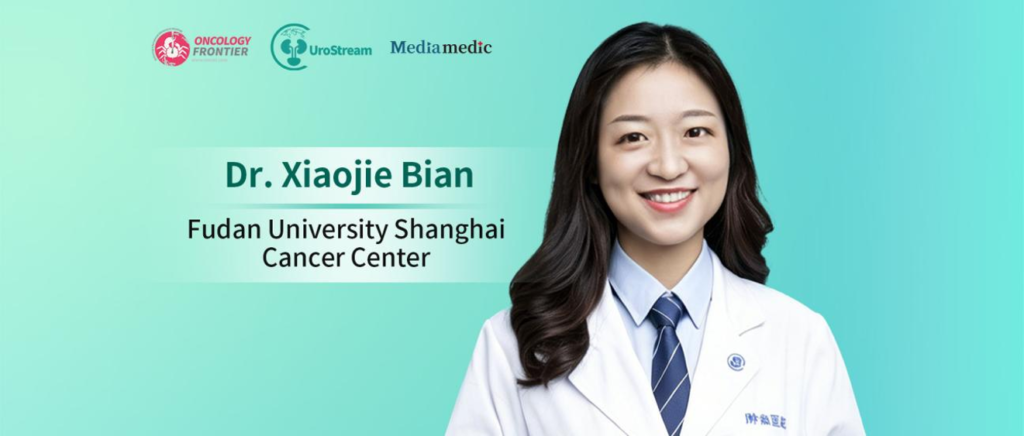
Professor Xiaojie Bian: Advances and Future Directions in the Treatment of Advanced Prostate Cancer in the Era of Precision Stratification

Professor Xiaojie Bian: Advances and Future Directions in the Treatment of Advanced Prostate Cancer in the Era of Precision Stratification

In recent years, the treatment paradigm for advanced prostate cancer has undergone a profound transformation, shifting from conventional empiric treatment toward precision stratification. With the increasing availability of genetic testing and the emergence of novel targeted therapies, individualized treatment based on molecular characteristics has become an important direction in clinical practice. Oncology Frontier · UroStream invited Professor Xiaojie Bian of Fudan University Shanghai Cancer Center for an in-depth interview on treatment decisions guided by genetic testing, individualized treatment strategies, and potential future breakthroughs.
Professor Liangyou Gu: From Evidence-Based Breakthroughs to Precision Stratification — Exploring New Pathways for Adjuvant Therapy After Kidney Cancer Surgery

Professor Liangyou Gu: From Evidence-Based Breakthroughs to Precision Stratification — Exploring New Pathways for Adjuvant Therapy After Kidney Cancer Surgery

For patients with kidney cancer who undergo radical surgery, reducing the risk of postoperative recurrence, prolonging disease-free survival, and ultimately improving overall survival have long remained key clinical priorities. In recent years, postoperative adjuvant therapy for kidney cancer has evolved from investigations of targeted therapies to breakthroughs with immunotherapy and, more recently, combinations of immunotherapy with novel targeted agents. However, because adjuvant therapy is administered to patients with no radiographically evident disease, accurately identifying microscopic residual disease, selecting patients most likely to benefit, and balancing efficacy against toxicity remain major challenges in clinical practice. Oncology Frontier · UroStream invited Professor Liangyou Gu of the Chinese PLA General Hospital for an in-depth interview to discuss major advances in postoperative adjuvant therapy for kidney cancer, strategies for identifying patients most likely to benefit, and future directions in the field.