Expert Commentary by Professor Yilong Wu: The Evolution of Molecularly Driven Precision Stratification and Comprehensive Treatment Strategies in Lung Cancer

Expert Commentary by Professor Yilong Wu: The Evolution of Molecularly Driven Precision Stratification and Comprehensive Treatment Strategies in Lung Cancer

In driver gene-positive non-small cell lung cancer (NSCLC), mesenchymal-epithelial transition factor (MET) abnormalities represent an important bypass resistance mechanism in patients with epidermal growth factor receptor (EGFR) mutations. Primary MET overexpression is also often associated with poor efficacy of EGFR tyrosine kinase inhibitor (TKI) monotherapy. How to overcome resistance through precision treatment and achieve more refined patient stratification in the first-line setting remain pressing challenges for the global lung cancer community.
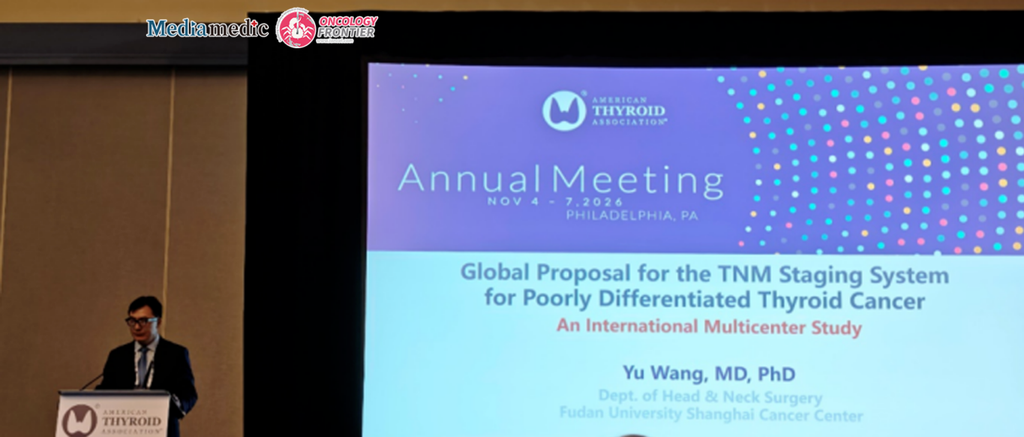
Fudan University Shanghai Cancer Center Leads Global Collaboration to Propose New International Staging Systems for Two Aggressive Thyroid Cancers

Fudan University Shanghai Cancer Center Leads Global Collaboration to Propose New International Staging Systems for Two Aggressive Thyroid Cancers

Although medullary thyroid carcinoma (MTC) and poorly differentiated thyroid carcinoma (PDTC) are relatively rare, they are more aggressive and associated with a higher risk of disease-related mortality. The TNM staging system of the American Joint Committee on Cancer (AJCC) and the Union for International Cancer Control (UICC) serves as the global “common language” for cancer diagnosis, treatment, and research. Its primary role is to stratify patients by prognosis and provide a basis for postoperative surveillance, risk management, and stratification in clinical studies. However, the current eighth edition of the TNM system has notable limitations for both tumor types. In MTC, certain lymph node categories do not fully correspond to actual prognostic outcomes, potentially resulting in an excessive concentration of patients in advanced stages. PDTC, meanwhile, has long lacked an independent staging system and has had to rely on the framework for differentiated thyroid cancer, which does not adequately reflect its distinct biological behavior.
Global Health Dialogue | Academician Daming Fan: Sharing China’s Approach to Cancer Prevention and Control With the World

Global Health Dialogue | Academician Daming Fan: Sharing China’s Approach to Cancer Prevention and Control With the World

Recently, Academician Daming Fan, President of the Chinese Anti-Cancer Association (CACA), was invited to an exclusive interview with Princess Dina Mired of Jordan, former President of the Union for International Cancer Control (UICC). With a history spanning more than 90 years and members in over 170 countries, UICC is one of the world's most influential organizations in cancer control and prevention.
Professor Jianchun Duan: Personalized Neoantigen DC Vaccine LK101 Plus Immunotherapy—Exploring a New First-Line Maintenance Strategy for NSCLC

Professor Jianchun Duan: Personalized Neoantigen DC Vaccine LK101 Plus Immunotherapy—Exploring a New First-Line Maintenance Strategy for NSCLC

Immunotherapy combined with chemotherapy has become the standard first-line treatment for driver gene-negative non-small cell lung cancer (NSCLC). However, owing to the heterogeneity of the tumor immune microenvironment and complex mechanisms of primary and acquired resistance, the efficacy of existing regimens has reached a plateau, with only limited improvements in patient survival. How to optimize first-line maintenance strategies and overcome treatment resistance has therefore become a key clinical challenge. Therapeutic cancer vaccines offer a promising approach to addressing this unmet need by stimulating specific antitumor immune responses.
ESMO Investigator Insights | Professor Tianqi Zhang: Exploring Aipaluolitovorelizumab Plus Interventional Therapy as a Later-Line Treatment Strategy for HCC Progressing After Targeted Therapy and Immunotherapy

ESMO Investigator Insights | Professor Tianqi Zhang: Exploring Aipaluolitovorelizumab Plus Interventional Therapy as a Later-Line Treatment Strategy for HCC Progressing After Targeted Therapy and Immunotherapy

What treatment options remain for patients with advanced hepatocellular carcinoma (HCC) whose disease progresses following targeted therapy combined with immunotherapy? At the 2026 European Society for Medical Oncology (ESMO) Congress, a retrospective study reported preliminary results of aipaluolitovorelizumab (hereafter referred to as the "combination antibody regimen") combined with arterial interventional therapy and bevacizumab. The study included 13 patients, with objective response rates (ORRs) of 38.46% and 46.15% according to RECIST 1.1 and mRECIST, respectively. Oncology Frontier interviewed Professor Tianqi Zhang of Sun Yat-sen University Cancer Center to discuss the treatment design, management of intrahepatic lesions, and future research directions.
CSCO 2026 | Professor Lang He: China’s First CSCO Cancer Pain Guidelines Released, Advancing Comprehensive Cancer Pain Management Nationwide

CSCO 2026 | Professor Lang He: China’s First CSCO Cancer Pain Guidelines Released, Advancing Comprehensive Cancer Pain Management Nationwide

During the 2026 Annual Meeting of the Chinese Society of Clinical Oncology (CSCO), the first-ever CSCO cancer pain guidelines, the CSCO Guidelines for the Diagnosis and Treatment of Cancer Pain, were officially released, providing clinicians with standardized guidance that integrates the latest advances with the characteristics of clinical practice in China. Cancer pain remains highly prevalent in China, while the quality of its management varies considerably across different levels of healthcare institutions. The release of these new guidelines therefore comes at a particularly important time.
ESMO Voices from China | Professor Anwen Xiong: First-in-Class PD-1/VEGF/CTLA-4 Trispecific Antibody CS2009 — Structural Innovation to Overcome Treatment Challenges in Advanced NSCLC

ESMO Voices from China | Professor Anwen Xiong: First-in-Class PD-1/VEGF/CTLA-4 Trispecific Antibody CS2009 — Structural Innovation to Overcome Treatment Challenges in Advanced NSCLC

In recent years, immunotherapy for advanced non-small cell lung cancer (NSCLC) has evolved from the era of programmed cell death protein 1 (PD-1) monoclonal antibodies into the era of Immunotherapy 2.0, represented by bispecific antibodies. However, improving the objective response rate (ORR) while maintaining a favorable safety profile remains a major unmet clinical challenge.