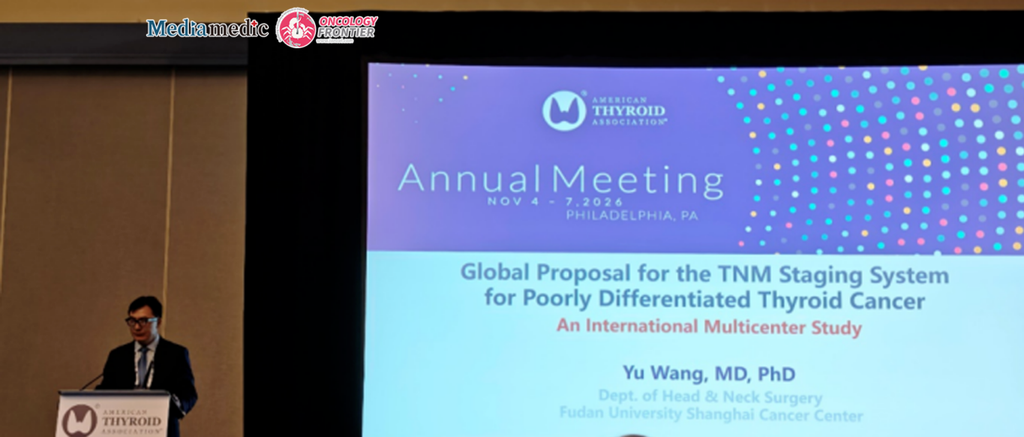
Although medullary thyroid carcinoma (MTC) and poorly differentiated thyroid carcinoma (PDTC) are relatively rare, they are more aggressive and associated with a higher risk of disease-related mortality. The TNM staging system of the American Joint Committee on Cancer (AJCC) and the Union for International Cancer Control (UICC) serves as the global “common language” for cancer diagnosis, treatment, and research. Its primary role is to stratify patients by prognosis and provide a basis for postoperative surveillance, risk management, and stratification in clinical studies. However, the current eighth edition of the TNM system has notable limitations for both tumor types. In MTC, certain lymph node categories do not fully correspond to actual prognostic outcomes, potentially resulting in an excessive concentration of patients in advanced stages. PDTC, meanwhile, has long lacked an independent staging system and has had to rely on the framework for differentiated thyroid cancer, which does not adequately reflect its distinct biological behavior.To address these long-standing challenges, a team led by Professor Yu Wang from the Department of Head and Neck Surgery at Fudan University Shanghai Cancer Center established an international collaborative network. Together with clinical centers from more than 10 countries and regions across six continents, the team developed large global cohorts for MTC and PDTC, respectively, and proposed new international staging systems that better reflect the biological characteristics and real-world prognoses of these two diseases. The findings were presented orally during the 2026 Annual Meeting of the American Thyroid Association (ATA) on November 7, 2026, and published online concurrently with the meeting in the Journal of Clinical Oncology (JCO) and JAMA Oncology, respectively.
(Professor Yu Wang, Director of the Department of Head and Neck Surgery at Fudan University Shanghai Cancer Center, delivers an oral presentation during the ATA Annual Meeting.)
The starting point for these two studies was a fundamental question: how can sufficiently high-level evidence be generated for rare cancers? In 2025, Professor Yu Wang was invited to join the Endocrine Disease Expert Panel of the AJCC, participating in discussions on the staging of thyroid and other endocrine tumors. During related international exchanges, he proposed that for diseases such as MTC and PDTC, in which cases are dispersed and individual centers struggle to recruit sufficient numbers of patients, cross-country and cross-center collaboration is essential to establishing representative staging evidence that can be generalized to other populations and settings. The proposal received a positive response from experts in multiple countries. Participating institutions included high-volume thyroid cancer treatment and research centers in North America, South America, Oceania, Asia, Europe, and Africa. Subsequently, the International Medullary Thyroid Carcinoma Staging Collaborative Group and the International Aggressive Thyroid Cancer Collaborative Group were established.
After each participating center completed ethics review, data de-identification, and standardization, the research teams applied unified definitions, centralized quality control, and statistical modeling to cases accumulated across different countries, healthcare systems, and periods. The proposed systems were further refined through multiple rounds of international expert discussion. Such global collaboration is particularly important for rare cancers. It not only addresses the insufficient sample sizes encountered by individual centers but also helps minimize biases arising from the treatment practices of any single region, allowing the new staging systems to be evaluated across different populations and healthcare environments.
For MTC, the International Medullary Thyroid Carcinoma Staging Collaborative Group assembled 2,573 patients from 43 centers in 15 countries, establishing the largest international multicenter MTC cohort to date. The new system was independently validated in 1,909 patients from the US SEER database. The findings showed that patients with metastases to level VII upper mediastinal lymph nodes had significantly worse disease-specific survival. Accordingly, the research team reclassified these patients from the original N1a category into a new N1c category and reconstructed the stage groupings.
Compared with the AJCC eighth-edition system, the new model demonstrated stronger prognostic discrimination, with a clearer increase in disease-specific mortality risk across successive stages. It also substantially alleviated the problem of excessive concentration in stage IV under the original system: the proportion of stage IV patients in the international collaborative cohort decreased from 42.4% to 20.2%.
This change does not mean that treatment intensity should be reduced. Rather, it brings staging closer to patients’ actual risk. On the one hand, it helps avoid prematurely labeling some patients with relatively favorable prognoses as having advanced-stage disease, thereby reducing unnecessary psychological burden. On the other, it may help clinicians determine more appropriate levels of postoperative surveillance, long-term follow-up, and risk-stratified management. A contemporaneous JCO commentary noted that these adjustments have important implications for future revisions of the TNM system and for the postoperative follow-up and management of patients with MTC.
In the PDTC study, the International Aggressive Thyroid Cancer Collaborative Group included 1,010 patients from 91 centers in 14 countries and used 170 cases from the US SEER database for external validation, establishing the largest global PDTC cohort to date. PDTC has long lacked a dedicated TNM staging system and has therefore been classified using criteria developed for differentiated thyroid cancer.
The study found that the age threshold of 55 years commonly used in differentiated thyroid cancer does not effectively distinguish prognoses among patients with distant metastatic PDTC. The new system therefore no longer applies this age-based rule. Meanwhile, level VII lymph node metastases were also associated with poorer survival outcomes and were likewise classified as N1c. On this basis, the research team established a TNM staging system specifically for PDTC.
Compared with the approach of applying differentiated thyroid cancer staging criteria, the new PDTC system reclassified more genuinely high-risk patients into advanced stages. The proportion of stage I patients decreased from 44.4% to 24.6%, while the proportion of stage IV patients increased from 18.5% to 32.4%. Overall survival risk showed a clearer gradient across stages, and the model’s discriminatory performance improved. These findings were also validated in an external population.
The clinical significance is that PDTC is no longer treated as an “appendage” of differentiated thyroid cancer, but is instead stratified according to its own biological behavior. This provides a more reliable foundation for prognostic discussions with patients, the design of follow-up schedules, clinical trial stratification, and research into comprehensive treatment strategies. It is important to emphasize that TNM staging primarily reflects anatomical disease extent and prognostic risk. Treatment decisions must still be made through comprehensive assessment of tumor resectability, molecular characteristics, the patient’s general condition, and multidisciplinary evaluation.
Together, the two studies address a long-standing challenge: how can risk-stratification frameworks for rare, highly aggressive thyroid cancers with substantial heterogeneity overcome the limitations of insufficient single-center evidence and be validated across different countries and healthcare systems?
The proposed systems are not yet “new standards” formally adopted by the AJCC. Rather, they are new international staging proposals led by Fudan University Shanghai Cancer Center and Chinese researchers, with participation from a global network of multicenter institutions. They provide large-scale, cross-population evidence to inform subsequent revisions of international staging systems. Professor Yu Wang noted that the team will continue long-term validation and explore the complementary value of molecular characteristics, pathological subtypes, and other information alongside anatomical TNM staging. The goal is to advance staging beyond simply “describing the extent of disease” so that it can better support more refined risk management and clinical research.
The selection of both studies for oral presentation at the ATA Annual Meeting and their concurrent publication in two leading international clinical oncology journals, JCO and JAMA Oncology, carries significance beyond the publications themselves. It demonstrates that Chinese thyroid cancer research teams are moving beyond participation in international multicenter studies toward proactively identifying clinical questions, organizing global collaborations, and generating evidence that can inform discussions on revisions to international standards.
With in-depth participation from internationally renowned and leading centers, these two studies enhance the representativeness and credibility of staging evidence for rare cancers. They also contribute globally collaborative evidence led by China to future updates of the AJCC/UICC staging systems.
Interviewee and Research Lead: Professor Yu Wang, Director of the Department of Head and Neck Surgery, Fudan University Shanghai Cancer Center.