In the era of rapidly advancing allogeneic hematopoietic stem cell transplantation (allo-SCT), the number of transplant procedures performed in China continues to increase steadily. However, graft-versus-host disease (GVHD), one of the leading causes of post-transplant mortality and morbidity, remains a “Sword of Damocles” hanging over both transplant physicians and patients. In recent years, as our understanding of immune regulatory mechanisms has deepened and innovative approaches such as targeted therapies and cell therapies have emerged, GVHD prevention and treatment have officially entered a new era of “precision immunomodulation,” moving beyond traditional broad-spectrum immunosuppression.
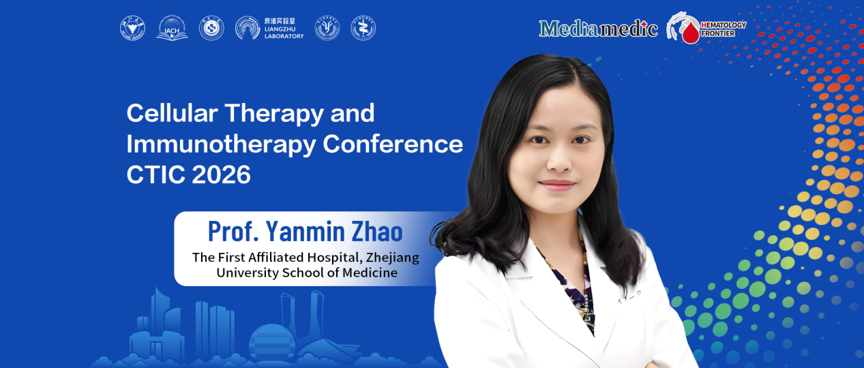
At the 2026 Cellular Therapy and Immunotherapy Conference (CTIC 2026), Professor Yanmin Zhao from the First Affiliated Hospital, Zhejiang University School of Medicine, systematically presented the latest advances in GVHD treatment and prevention, sharing research evidence from China and abroad, as well as her team’s investigations. From salvage treatment for acute GVHD to targeted interventions for chronic GVHD and GVHD prevention throughout the transplantation process, a series of clinical studies are driving GVHD management toward greater precision, individualization, and comprehensive care across the entire treatment course.
Acute GVHD Treatment
Targeted Combinations and Cell Therapy Expand New Salvage Treatment Strategies
Acute GVHD is one of the major causes of non-relapse mortality following allo-HSCT. For patients with steroid-refractory acute GVHD (SR-aGVHD), whose disease remains inadequately controlled despite glucocorticoid treatment, improving response rates, enhancing target-organ responses, and reducing treatment-related toxicity remain important clinical challenges.
01. JAK Inhibitor Combined with TNF Pathway Blockade: Exploring a Synergistic Treatment Strategy
The JAK inhibitor ruxolitinib has become an important treatment option for SR-aGVHD. The REACH2 study provided key evidence supporting the use of ruxolitinib in SR-aGVHD. Building on this evidence, given that both the JAK signaling pathway and the tumor necrosis factor receptor (TNFR) pathway are involved in GVHD-related inflammatory responses, simultaneous blockade of these two pathways may further enhance treatment efficacy.
Professor Yanmin Zhao and colleagues conducted an open-label, single-arm Phase II clinical study (ChiCTR1900024408) to investigate the efficacy and safety of ruxolitinib combined with etanercept in the treatment of grade III–IV aGVHD. The study was conducted from January 2017 to February 2019.
The results showed that the overall response rate (ORR) on day 28 of treatment reached 87.5%, with a median time to best response of 14 days (range: 3–42 days). Organ-specific analyses showed complete response (CR) rates of 96.5% in the skin, 71.4% in the liver, and 72.3% in the gastrointestinal tract. In addition, by day 28, 75.4% of patients (46/61) had achieved a reduction in glucocorticoid dosage of at least 75% from baseline.
Notably, the study also found that early responses on day 7 or day 14 of treatment could predict better survival outcomes, suggesting that early efficacy assessments may help clinicians evaluate treatment effectiveness in a timely manner and optimize subsequent management. Compared with the cohort receiving basiliximab combination therapy, the ruxolitinib combination cohort achieved faster responses in patients with visceral involvement of aGVHD.
Based on these findings, the team further proposed a treatment strategy involving combined blockade of the JAK and TNFR signaling pathways. A prospective, multicenter, randomized controlled study (NCT07184853) comparing ruxolitinib plus etanercept with ruxolitinib monotherapy for SR-aGVHD is currently underway and is expected to further clarify the clinical value of combination treatment.
02. Mesenchymal Stromal Cells: From Immunomodulation to Tissue Repair
Mesenchymal stromal cells (MSCs) have multiple biological functions, including immunomodulation and tissue repair. Their immunomodulatory effects are not restricted by major histocompatibility complex (MHC) compatibility and can influence T-cell proliferation. Meanwhile, guided by chemokines and injury-related signals, MSCs can migrate to damaged tissues and promote tissue repair through paracrine effects. These characteristics make MSCs an important area of investigation for salvage treatment of SR-aGVHD.
MSC therapy has already received relevant US Food and Drug Administration (FDA) approval for pediatric patients with steroid-refractory gastrointestinal aGVHD and is also being used to treat SR gastrointestinal aGVHD in China.
Professor Yanmin Zhao and colleagues conducted a multicenter, open-label Phase Ib/IIa clinical study (ChiCTR2200061603) to evaluate the efficacy and safety of off-the-shelf, third-party human umbilical cord-derived mesenchymal stromal cells (hUC-MSCs) in the treatment of SR-aGVHD.
The study enrolled 25 patients with grade II–IV aGVHD whose disease remained inadequately controlled despite previous immunosuppressive treatment containing glucocorticoids. Three dose cohorts were established: 0.5, 1.0, and 2.0. The recommended Phase II dose (RP2D) was ultimately determined to be 1.0 × 10⁶/kg.
The results showed that on day 28 after the first infusion, the ORR based on the full analysis set (FAS) was 80.0% (95% CI: 59.3%–93.2%), with CR and partial response (PR) each accounting for 40.0%. Organ-specific analyses showed day-28 response rates of 100.0% in the skin, 100.0% in the upper gastrointestinal tract, 54.5% in the lower gastrointestinal tract, and 100.0% in the liver.
The 180-day overall survival (OS) rate was 87.3% (95% CI: 65.5%–95.7%), the non-relapse mortality (NRM) rate was 9.1%, and the 180-day cumulative incidence of relapse of the underlying hematologic disease was 8.8%.
Mechanistic investigations further suggested that treatment response may be associated with dynamic changes in the immune microenvironment. Among responders, the proportions of CD8⁺ central memory T cells and the levels of related chemokines changed significantly within 24 hours after hUC-MSC infusion. This was accompanied by a decrease in the proportion of terminal effector T cells, suggesting that MSCs may exert therapeutic effects by modulating T-cell subsets and the inflammatory microenvironment.
Building on these findings, a multicenter, randomized, double-blind, placebo-controlled clinical study of umbilical cord-derived MSCs is also being planned for patients with grade II–IV SR-aGVHD who have failed previous second-line treatment. This study is expected to provide a higher level of evidence regarding the efficacy of cell therapy.
03. Novel Dual JAK/ROCK Inhibitor: Rovaxitinib Demonstrates Preliminary Clinical Activity
In addition to ruxolitinib, novel kinase inhibitors with distinct target profiles are also showing potential in GVHD treatment. Rovaxitinib (TQ05105) is a novel oral small-molecule JAK/ROCK inhibitor. By modulating the JAK-STAT signaling pathway, it can inhibit cell proliferation, induce apoptosis, and reduce the production of inflammatory cytokines. Preclinical studies have demonstrated potent inhibitory activity against kinases including JAK1, JAK2, and TYK2, as well as activity against ROCK1 and ROCK2.
In animal models of aGVHD, rovaxitinib reduced disease severity, inhibited inflammatory T-cell responses in target organs, and downregulated the expression of costimulatory molecules on dendritic cells (DCs), thereby weakening their capacity to activate T cells. Notably, the drug also preserved the graft-versus-leukemia (GVL) effect in animal models, providing experimental support for its potential application in post-transplant immune regulation.
A Phase Ib, open-label, multicenter clinical study conducted at four centers in China (NCT04941404) preliminarily evaluated the efficacy and safety of rovaxitinib in SR-aGVHD. A total of 13 patients were enrolled, with a median follow-up of 21.5 days.
Preliminary efficacy analyses showed that the ORR on day 28 was 84.6% (11/13), including a CR rate of 69.2% (9/13), while another two patients achieved very good partial responses (VGPR). Subgroup analysis by disease grade showed an ORR of 100% among patients with grade II aGVHD and 66.7% among those with grade III–IV disease. The median time to first response was only 4 days (range: 3–22 days), while the median duration of response had not yet been reached.
Regarding safety, the more common adverse events included thrombocytopenia, leukopenia, neutropenia, and anemia. Two patients discontinued treatment due to treatment-related adverse events, and no treatment-related deaths were reported. By day 56, five patients had discontinued glucocorticoids, while another two had reduced their glucocorticoid doses. The preliminary estimated 12-month OS rate for the entire patient population was 92.31%; only one patient died due to relapse of the primary malignancy.
04. Gut Microbiota Modulation: Fecal Microbiota Transplantation Offers a New Approach to Gastrointestinal aGVHD
The gastrointestinal tract is a major target organ in aGVHD. Gut microbiota dysbiosis is closely associated with intestinal inflammation and abnormalities in immune regulation. Fecal microbiota transplantation (FMT), by modulating the composition of the gut microbiota and the intestinal microbial environment, may improve diarrhea and related clinical symptoms in patients with gastrointestinal GVHD.
MaaT013 is a microbiota-based therapeutic product developed according to the principles of fecal microbiota transplantation. Previous results from the Phase II HERACLES study (NCT03359980) demonstrated that this therapy had potential in patients with steroid-refractory or steroid-dependent gastrointestinal aGVHD, with a favorable safety profile.
The subsequent Phase III ARES study (NCT04769895) further evaluated the efficacy of MaaT013 in patients with aGVHD who had failed treatment with glucocorticoids and ruxolitinib. The early access program and Phase III study showed relatively consistent efficacy signals, with favorable survival outcomes and safety findings also observed in patients with severe disease.
Overall, FMT offers an approach to gastrointestinal aGVHD that differs from conventional immunosuppression. Further randomized controlled studies and long-term follow-up are needed to clarify the appropriate patient population, optimal timing of treatment, and clinical benefits.
Chronic GVHD Treatment
Moving Beyond Conventional Immunosuppression: Exploring Dual JAK/ROCK Targeted Intervention
Chronic GVHD (cGVHD) is an important complication affecting long-term quality of life after allo-HSCT. It can involve multiple organs, including the skin, oral cavity, eyes, lungs, liver, and musculoskeletal system. Although treatment options have expanded in recent years, some patients still experience steroid dependence, treatment resistance, or failure of multiple lines of therapy. Consequently, there remains a substantial unmet need for long-term disease control.
01. Challenges Remain in First-Line Treatment: Further Evidence Is Needed to Optimize Initial Treatment Strategies
Glucocorticoids remain a key foundation of first-line systemic treatment for cGVHD. However, improving response rates while reducing long-term steroid exposure and treatment-related toxicity remains an important focus of clinical research.
Available studies have not yet sufficiently demonstrated that combining multiple drugs improves first-line cGVHD treatment outcomes. For example, the ROCKnrol-1 study was terminated following an interim analysis, indicating that the available evidence does not support the routine use of belumosudil as first-line treatment. Although itacitinib combined with glucocorticoids increased the ORR, it was also associated with an increased mortality rate. The balance between benefit and risk was therefore insufficient to support this combination as first-line treatment for cGVHD.
In addition, adding mycophenolate mofetil (MMF) to initial systemic treatment did not improve treatment outcomes.
These studies suggest that first-line cGVHD treatment cannot simply rely on adding more drugs. Treatment decisions must continue to take into account clinical benefit, safety, and patients’ long-term quality of life, while exploring more rational and individualized treatment pathways.
02. Rovaxitinib: Dual JAK/ROCK Inhibition Offers a New Option for Refractory cGVHD
The JAK-STAT signaling pathway is involved in immune responses mediated by various inflammatory cytokines, while the ROCK pathway is also associated with pathological processes such as immune cell function and tissue fibrosis. Meanwhile, ruxolitinib has been used in the treatment of cGVHD, but some patients still experience treatment failure or are unable to achieve durable responses. Therefore, novel agents that simultaneously target the JAK and ROCK pathways represent a promising area for investigation.
The team led by Professor He Huang and Professor Yanmin Zhao conducted a clinical study evaluating rovaxitinib in patients with glucocorticoid-refractory or glucocorticoid-dependent cGVHD, with a focus on its safety, recommended Phase II dose, and preliminary efficacy. Patients with prior exposure to ruxolitinib were eligible for enrollment, provided that a washout period of more than four weeks had elapsed after the completion of their previous treatment.
A total of 44 patients were enrolled. The results showed that no dose-limiting toxicities (DLTs) were observed in either dose group, and the treatment was generally well tolerated. The most common adverse event was anemia, with a Grade ≥3 anemia rate of 4.54%. The recommended Phase II dose was ultimately established at 10 mg twice daily.
In terms of efficacy, the best overall response rate (BOR) reached 86.4% (95% CI: 72.6%–94.8%), with no significant difference between the two dose cohorts. Organ-specific analyses showed that, by Week 24, the BORs for the liver, lower gastrointestinal tract, esophagus, skin, joints/fascia, and lungs were 100%, 90.9%, 78.9%, 65.4%, 57.9%, and 23.1%, respectively. These findings suggest that the drug has activity across multiple affected organs, although treatment responses vary by organ.
In addition, rovaxitinib demonstrated potential for glucocorticoid dose reduction. The mean glucocorticoid dose across all patients decreased by 73.2%, from 20.0 ± 2.7 mg at baseline to 9.7 ± 1.5 mg after six months of treatment. Regarding symptom improvement, 59.1% of patients (26/44) achieved a clinically meaningful improvement of at least 7 points in the composite Lee Symptom Scale (LSS) score.
These preliminary findings suggest that rovaxitinib has promising clinical activity in patients with glucocorticoid-refractory or glucocorticoid-dependent cGVHD and may help reduce glucocorticoid use and improve patient symptoms. Based on these results, a multicenter Phase III clinical trial (NCT06682169) is currently underway. The study plans to enroll patients with moderate-to-severe cGVHD who have previously received two to five lines of treatment and will compare rovaxitinib with best available therapy. The primary endpoint is the ORR at Week 24, while secondary endpoints include duration of response, failure-free survival (FFS), and response according to the modified Lee Symptom Scale, among others. This study is expected to further clarify the clinical role of dual JAK/ROCK inhibitors in patients with cGVHD who have failed multiple lines of therapy.
GVHD Prophylaxis
From Pharmacological Immunosuppression to Graft Engineering
Compared with treating GVHD after its onset, intervening in immune responses in advance to reduce the risk of GVHD has greater clinical significance. As understanding of post-transplant immune reconstitution and the mechanisms underlying GVHD continues to deepen, prophylactic strategies are expanding beyond conventional immunosuppressive drugs toward targeted immune modulation, graft engineering, and combination interventions involving multiple mechanisms.
01. Graft Engineering: Orca-T Explores Precise Control of Graft Immune Cell Composition
Conventional GVHD prophylaxis relies primarily on post-transplant pharmacological immunosuppression. However, while suppressing GVHD, this approach may also affect immune reconstitution and the graft-versus-tumor effect. Therefore, an important goal of graft engineering is to reduce the risk of GVHD while preserving beneficial immune functions.
Orca-T is an allogeneic hematopoietic stem cell and T-cell immunotherapy product individually manufactured for each transplant recipient. It primarily consists of purified hematopoietic stem and progenitor cells (HSPCs), regulatory T cells (Tregs), and conventional T cells (Tcons). Its core concept is to precisely control the composition of different cell subsets in the graft, thereby reducing the risk of GVHD while preserving immune function.
A Phase II study enrolled adult patients undergoing transplantation from HLA-matched or 7/8-mismatched donors and compared Orca-T combined with single-agent tacrolimus against conventional, unmodified grafts combined with tacrolimus and methotrexate (MTX). The results showed that the incidence of acute and chronic GVHD in the Orca-T group was lower than expected. The one-year GVHD-free, relapse-free survival (GRFS) rate reached 64%, exceeding both the prespecified predicted rate of 40% and the 36% rate observed in the contemporaneous standard-of-care cohort (P = 0.002).
The subsequent Phase III PRECISION-T study (NCT05316701) further evaluated the clinical value of Orca-T in adult patients with AML, ALL, mixed-phenotype acute leukemia, or MDS undergoing transplantation from HLA-matched donors. The primary endpoint was one-year chronic GVHD-free survival (cGFS) without moderate-to-severe cGVHD events. The study findings showed that, despite a reduction in pharmacological GVHD prophylaxis with the Orca-T regimen, patients achieved better cGVHD event-free survival, primarily attributable to reductions in both GVHD and mortality events.
These studies provide important evidence supporting precision GVHD prophylaxis through optimization of graft cell composition. They also open up new avenues for future research aimed at reducing the long-term burden of immunosuppression after transplantation.
02. Targeted Immune Modulation: From Gut Homing to JAK Pathway Intervention
In addition to engineering the graft itself, interventions targeting specific immune cell populations and inflammatory pathways are also emerging as important strategies for GVHD prophylaxis.
Vedolizumab is a humanized monoclonal antibody that specifically binds to the α4β7 integrin on leukocytes, blocking its interaction with mucosal addressin cell adhesion molecule-1 (MAdCAM-1) on the vascular endothelial cells of gut-associated lymphoid tissue. This reduces the migration of α4β7-expressing T cells into intestinal tissues. Given that the gastrointestinal tract is a major target organ in acute GVHD (aGVHD), this mechanism offers a new approach to preventing gastrointestinal GVHD.
A randomized, double-blind, placebo-controlled, multicenter Phase III study (NCT03657160) evaluated the efficacy of vedolizumab combined with standard prophylaxis based on calcineurin inhibitors (CNIs). The study enrolled patients undergoing transplantation from unrelated donors, who received vedolizumab or placebo in addition to CNI combined with methotrexate (MTX) or mycophenolate mofetil (MMF). The results showed a significant improvement in survival free from lower gastrointestinal aGVHD through Day 180 after transplantation in the vedolizumab group, suggesting that targeting the gut-homing pathway may help reduce the risk of gastrointestinal aGVHD.
The JAK1 inhibitor itacitinib has also been investigated for GVHD prophylaxis after transplantation. A single-arm, open-label exploratory and expansion study (NCT03755414) evaluated itacitinib combined with standard prophylaxis consisting of post-transplant cyclophosphamide (PTCy), tacrolimus, and MMF in patients undergoing haploidentical transplantation. The results showed a primary graft failure rate of 0, a Grade III–IV aGVHD incidence of 0% by Day 180 after transplantation, a Grade II aGVHD incidence of 21.9% by Day 100, and a one-year cumulative incidence of moderate-to-severe cGVHD of 5%. The findings suggest that itacitinib was well tolerated in this regimen, did not substantially impair engraftment, and was associated with low rates of both acute and chronic GVHD.
03. Ruxolitinib for GVHD Prophylaxis: Randomized Controlled Trial Provides Important Clinical Evidence
Ruxolitinib has also demonstrated promising potential in GVHD prophylaxis. Professor Yanmin Zhao and colleagues conducted a multicenter, randomized, open-label, controlled clinical study (NCT04838704) to evaluate the efficacy of low-dose ruxolitinib in preventing GVHD after haploidentical hematopoietic stem cell transplantation. A total of 206 patients with hematologic malignancies were enrolled and randomly assigned in a 1:1 ratio to the ruxolitinib group (108 patients) or the mycophenolate mofetil control group (107 patients). Patients underwent haploidentical peripheral blood stem cell transplantation following myeloablative conditioning, with ATG used for T-cell depletion. Ruxolitinib or mycophenolate mofetil was administered from Day 1 through Day 90 after transplantation.
The results showed that the incidence of Grade II–IV aGVHD by Day 100 after transplantation was 7.8% (95% CI: 2.5%–12.8%) in the ruxolitinib group, significantly lower than the 36.9% (95% CI: 26.9%–45.6%) observed in the control group. Compared with the control group, the ruxolitinib group had a significantly reduced risk of Grade II–IV aGVHD, with a hazard ratio (HR) of 0.24 (95% CI: 0.12–0.45). The HRs for moderate-to-severe cGVHD and GRFS were 0.23 (95% CI: 0.09–0.62) and 0.37 (95% CI: 0.22–0.62), respectively.
Subgroup analyses showed that the reduction in the risk of Grade II–IV aGVHD with ruxolitinib was not affected by factors such as patient sex, patient age, donor age, donor-recipient sex matching, underlying disease, or HCT-CI status.
The study was selected for an oral presentation at the 2024 ASH Annual Meeting and received an ASH Abstract Achievement Award. It was also recognized by ASH News Daily as a “Golden Globule” highlight in the transplantation/GVHD field. The findings have since been published in The Lancet Haematology, providing important randomized controlled trial evidence supporting the use of ruxolitinib for GVHD prophylaxis after haploidentical transplantation.
In addition, several clinical trials investigating GVHD prophylaxis are currently underway. These studies involve ruxolitinib, PTCy, anti-IL-23 antibodies, anti-IL-12/23 antibodies, abatacept, and other immunomodulatory strategies, covering different donor types, transplant conditioning regimens, and patient populations. Collectively, these studies reflect a gradual shift in GVHD prophylaxis away from a single-agent immunosuppression model toward coordinated interventions targeting multiple pathways and mechanisms.
Summary and Outlook
The treatment and prevention of GVHD are entering a new stage of development. In aGVHD treatment, strategies such as ruxolitinib combined with TNF pathway blockade, MSC-based cell therapy, dual JAK/ROCK inhibition, and gut microbiota interventions are offering additional potential treatment options for patients with steroid-refractory aGVHD. In cGVHD treatment, although ruxolitinib has brought important advances to clinical practice, failure of multiple lines of therapy and long-term disease control remain pressing challenges. Novel JAK/ROCK inhibitors such as rovaxitinib may further expand the available treatment options. In GVHD prophylaxis, strategies including low-dose ruxolitinib, targeting the gut-homing pathway, and Orca-T graft engineering are driving GVHD management toward more precise immune modulation.
Overall, the focus of GVHD management is gradually shifting from simply controlling inflammatory responses after disease onset toward proactively modulating transplant-related immune processes. Further high-quality, multicenter randomized controlled trials are needed to validate the efficacy and safety of emerging treatment and prophylactic strategies and to clarify the optimal timing and appropriate regimens for different patient populations. Improving GVHD control while preserving hematopoietic recovery, immune reconstitution, the graft-versus-tumor effect, and long-term patient survival is likely to remain a key direction in the development of precision GVHD management.
Expert Profile

Professor Yanmin Zhao
The First Affiliated Hospital, Zhejiang University School of Medicine
M.D., Chief Physician, Doctoral Supervisor, and Distinguished Researcher
Deputy Director, Hematopoietic Stem Cell Transplantation Center, The First Affiliated Hospital, Zhejiang University School of Medicine
Member of the Youth Committee of the Hematology Branch of the Chinese Medical Association; Member of the Committee on Hematopoietic Stem Cell Transplantation and Cellular Therapy of the China Medicine Education Association
Deputy Chair, Youth Committee of the Hematology Branch of the Zhejiang Medical Association
Zhejiang Excellent Young Scholar, Zhejiang Society for Immunology
Secretary of the Hematology Clinical Trial Group, The First Affiliated Hospital, Zhejiang University School of Medicine
Zhejiang Provincial High-Level Health Talent (551 Talent Program)
Professor Zhao has led one Youth Program and three General Programs funded by the National Natural Science Foundation of China and has served as a key member of a project under the National Key Research and Development Program.
She serves on the editorial board of Cell Transplantation. As first or corresponding author, she has published more than 40 SCI-indexed papers in journals including Blood, Journal of Hematology & Oncology, The Lancet Haematology, and Leukemia. She has delivered oral presentations at major international conferences, including ASH, EHA, EBMT, and APBMT. As a key contributor, she has received one First Prize of the Zhejiang Provincial Science and Technology Progress Award and one Second Prize of the National Science and Technology Progress Award.