Editor's Note: The 46th World Congress of the International Society of Urology (SIU) was held in Florence, Italy, from November 11 to 14, 2026. During the General Assembly and Board of Directors election, Professor Jeremy Teoh (Zhang Yuanjin) of the Faculty of Medicine at The Chinese University of Hong Kong was officially elected Secretary General–Elect of the SIU. He is expected to assume the formal position in one year and participate in the Society's core leadership over the next five years.Founded in 1907, the SIU is one of the world’s oldest and most geographically extensive professional organizations in urology, with members in more than 130 countries and regions. It is often described as the “United Nations of Urology.” The position of Secretary General has a direct influence on the Society’s international membership network, global academic congress framework, educational programs, and the development of clinical consensus. The election of an Asian scholar to this position represents not only individual academic recognition, but also a further transition for Chinese and Asian urologists—from conference participants and speakers to the core leadership of international academic organizations—opening a new chapter in the development of global urology.
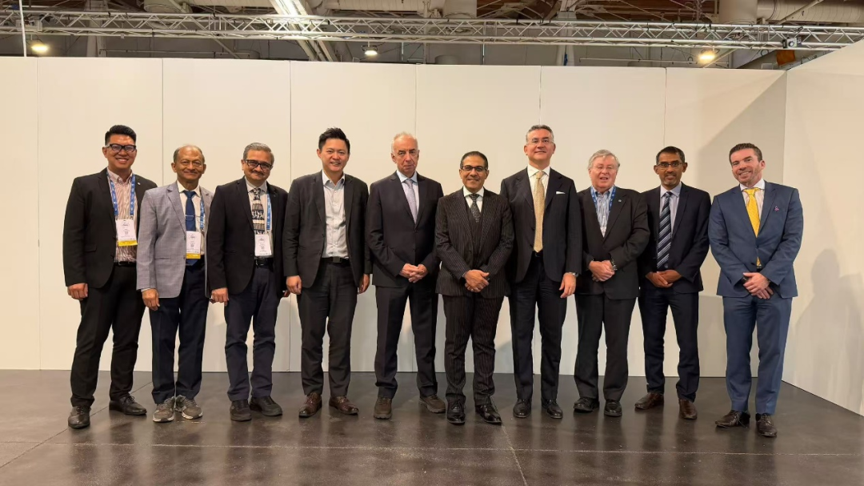
Group photo of SIU Board of Directors experts
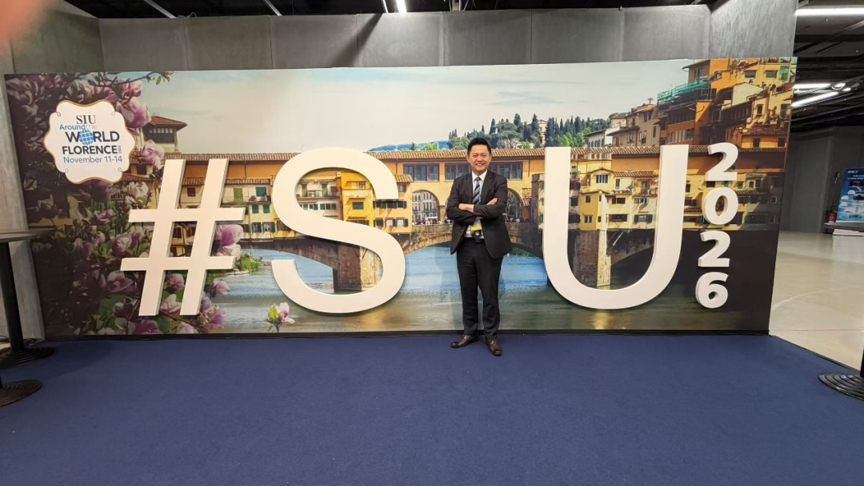
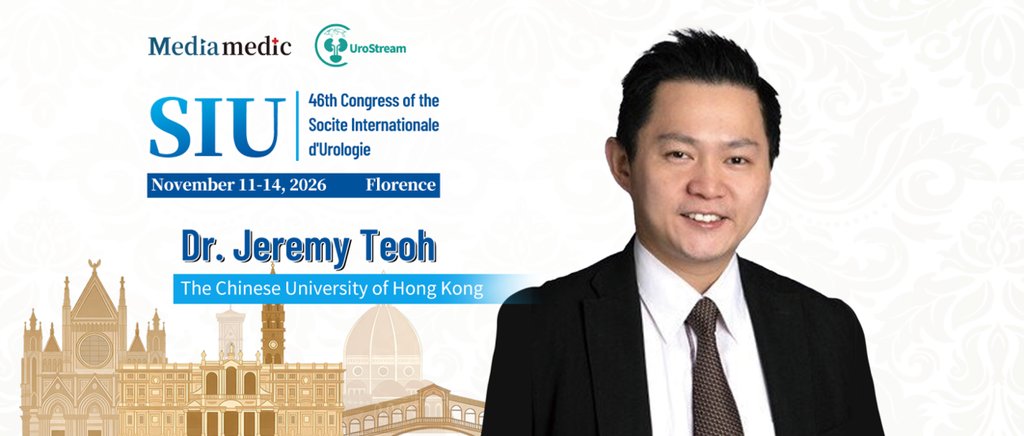
Professor Jeremy Teoh at the SIU Congress
The Internationalization Journey of a Chinese Clinician-Scientist
Professor Jeremy Teoh currently serves as Associate Dean (External Affairs) and Professor in the Department of Surgery at the Faculty of Medicine, The Chinese University of Hong Kong; Clinical Director of Urology at CUHK Medical Centre; and Director of the Robotic Surgery Centre. He is also a Visiting Professor at the Medical University of Vienna.
For more than a decade, Professor Teoh has devoted himself to the diagnosis and treatment of urologic cancers, making particularly important contributions to non-muscle-invasive bladder cancer (NMIBC). He has helped advance the standardization, accumulation of clinical evidence, and exploration of robotic applications for en bloc resection of bladder tumors (ERBT). From the underlying surgical concept to multicenter studies and the development of international consensus, he has consistently presented clinical evidence from Hong Kong, China, at major international academic conferences, including ASCO GU, EAU, and SIU. His work has also helped establish Chinese approaches as important strategies in minimally invasive diagnosis and treatment of bladder cancer.
In terms of academic achievements, Professor Teoh led the development of the international consensus on ERBT and is an Asian representative on the European Association of Urology (EAU) guideline panel for non-muscle-invasive bladder cancer. In 2021, he received the SIU Innovators Award. In 2026, he became the first Asian scholar to receive the American Urological Association (AUA) John K. Lattimer Lecture Award—a distinction established in 1977 that has historically been dominated by researchers from European and North American institutions.
From “Technology Dissemination” to “Co-Creating International Standards”
In the past, Chinese urology experts primarily showcased their research findings on the international academic stage. Today, with Professor Jeremy Teoh’s election as Secretary General–Elect of the SIU, Asian scholars are moving beyond participation in academic discussions to become part of the core leadership involved in shaping the global agenda and developing international standards. This not only highlights the growing international influence of Chinese urology but also offers opportunities to contribute to more balanced development in urology worldwide.
At present, global urology continues to face significant regional disparities. Leading centers in Europe and North America are focusing on cutting-edge topics such as robotic-assisted, individualized, function-preserving surgery, while resource-limited regions are still working to improve basic screening for prostate and bladder cancer and control surgical complications. Against this backdrop, Chinese scholars represented by Professor Teoh are working to translate advanced diagnostic and treatment strategies into accessible clinical pathways, helping strengthen healthcare capacity in low-income regions. Looking ahead, international academic organizations such as the SIU may provide a platform for promoting innovative techniques such as ERBT, training young professionals, and helping the latest advances take root in developing countries.
Conclusion: A New Beginning
From the research and clinical frontline at the Faculty of Medicine, The Chinese University of Hong Kong, to the international stage of the SIU Congress in Florence, Professor Jeremy Teoh’s election as Secretary General–Elect represents recognition of his academic contributions and a moment of distinction for the urological community in Hong Kong, China, and across Asia.
Looking ahead, under the leadership of Professor Teoh and the SIU Board of Directors, the Society is expected to further advance global urology toward greater standardization, minimally invasive treatment, evidence-based practice, and international connectivity. The expertise and insights of Asia, represented by Hong Kong, China, will bring further contributions to the high-quality development of international urology.
Professor Jeremy Teoh (Zhang Yuanjin)