——Insights from VOLGA and scientific exchange in Asia

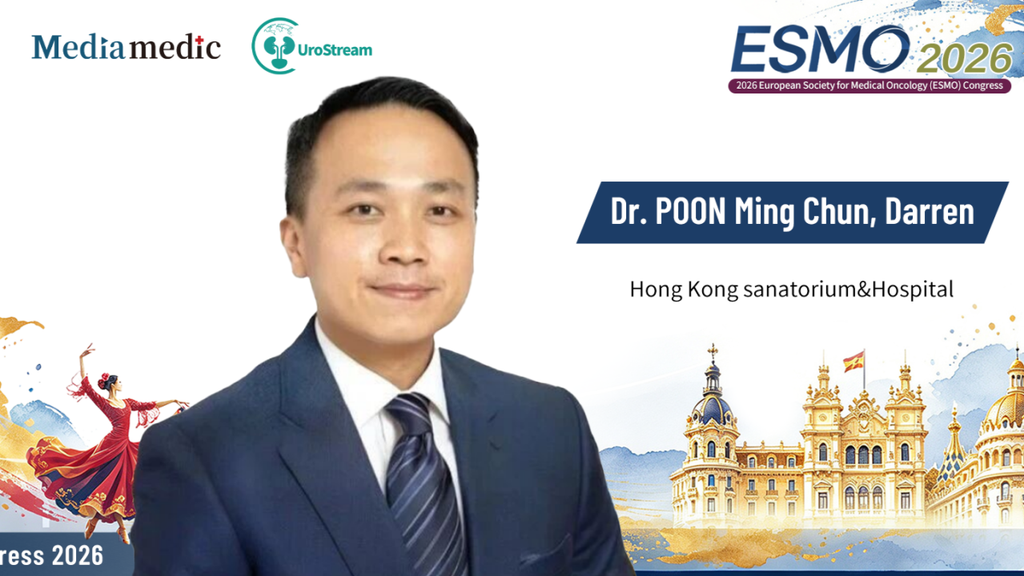
At the European Society for Medical Oncology (ESMO) Congress 2026, perioperative treatment for bladder cancer remained a key focus. How systemic therapies can be integrated with surgery, while balancing efficacy, cumulative toxicity and treatment burden, is an important clinical question. In this interview with Oncology Outlook · Urology Times, Professor Darren Poon discusses the implications of VOLGA, the potential impact on practice in Hong Kong, China, and his expectations for the inaugural ESMO Genitourinary Cancers Asia congress in 2027.Optimizing perioperative treatment: considering therapy before and after surgery
Q1: Which advances in bladder cancer presented at ESMO 2026 do you consider most noteworthy, and what is their clinical value?
Professor Darren Poon:
I consider VOLGA one of the most noteworthy advances in bladder cancer at ESMO 2026. To put it into context, we should first look at the evolution of perioperative treatment for muscle-invasive bladder cancer (MIBC). EV-303 and EV-304 have advanced the use of enfortumab vedotin (EV) plus pembrolizumab before and after cystectomy, providing new evidence of improved survival.
These advances raise an important question: do patients still need to continue EV after cystectomy? VOLGA provides useful insight into this issue. In its durvalumab-plus-EV regimen, patients received three cycles before radical cystectomy, followed by one year of adjuvant durvalumab without further EV.
Compared with radical cystectomy alone, this regimen improved overall survival (OS) and event-free survival (EFS). The first key message, in my view, is that a neoadjuvant approach without conventional chemotherapy, followed by surgery and adjuvant immunotherapy, can offer meaningful survival benefits in the population studied.
The second message concerns the duration of EV treatment. A survival improvement was observed with EV limited to three preoperative cycles and immunotherapy continued after surgery. This encourages us to consider which perioperative approaches may reduce postoperative EV exposure, rather than assuming that EV must continue after surgery in every regimen.
This has practical relevance for patients. Avoiding additional postoperative EV may reduce cumulative toxicity and the associated drug costs. VOLGA therefore informs not only efficacy, but also how perioperative treatment might be organized to better address the burden patients face.
Changing practice: re-emphasizing neoadjuvant systemic treatment
Q2: From the perspective of practice in Hong Kong, China, how might these advances affect treatment choices and survival outcomes for patients with bladder cancer? What key changes do you anticipate?
Professor Darren Poon:
The most important implication is the need to re-emphasize the value of neoadjuvant treatment in MIBC. Previously, the discussion centered on neoadjuvant chemotherapy. We now have approaches combining an antibody-drug conjugate (ADC), such as EV, with an immune checkpoint inhibitor. In the relevant study populations, these approaches without conventional chemotherapy have improved survival compared with cystectomy alone.
In my observation of practice in Hong Kong and mainland China, radical cystectomy alone remains the treatment received by most patients with MIBC. As the evidence develops, we should give greater attention to perioperative or neoadjuvant systemic treatment and consider how advances such as ADC–immunotherapy combinations can be integrated with surgery.
In the future, these combinations may also be explored in non-muscle-invasive bladder cancer (NMIBC). For example, in patients whose disease is refractory to bacillus Calmette–Guérin (BCG), we would like to investigate whether such treatment could help some patients avoid cystectomy. This remains a research direction and requires further clinical trials.
Scientific collaboration in Asia: bringing specialties together around regional needs
Q3: ESMO will hold its inaugural Genitourinary Cancers Asia congress in 2027. As a co-chair of the Scientific Committee, what are your expectations for its academic value, collaborative opportunities and clinical impact?
Professor Darren Poon:
I am honored to serve as a co-chair of the Scientific Committee for the inaugural ESMO Genitourinary Cancers Asia congress, which will take place in Hong Kong, China, in January 2027. I hope it will provide an important forum that brings disciplines together around the needs of patients in Asia.
There is a clear reason for a dedicated meeting on genitourinary cancers in Asia. The incidence of genitourinary cancers is increasing in Asia, and patient characteristics and clinical practice differ from those in other regions. These differences highlight unmet needs that deserve regionally relevant research and discussion.
At the same time, advances continue across surgery, medical treatment and diagnosis. The congress can bring these developments together and encourage exchange among urologists, medical oncologists, pathologists, radiation oncologists and radiologists. Discussion across specialties can create further opportunities for collaboration.
In particular, I hope the congress will create more opportunities for clinical trials focused on patients with genitourinary cancers in Asia, so that the questions relevant to this region can be studied more fully. I look forward to welcoming colleagues to Hong Kong in January 2027 for this inaugural meeting.
Summary
Professor Poon emphasizes that progress in perioperative bladder cancer treatment involves both improving survival and reconsidering treatment duration, cumulative toxicity and financial burden. VOLGA offers important insight into treatment optimization, while the clinical value of neoadjuvant systemic therapy deserves renewed attention. Multidisciplinary exchange and clinical research focused on Asian populations may help generate evidence that better addresses regional needs.

Prepared by the editorial team of Oncology Outlook · Urology Times