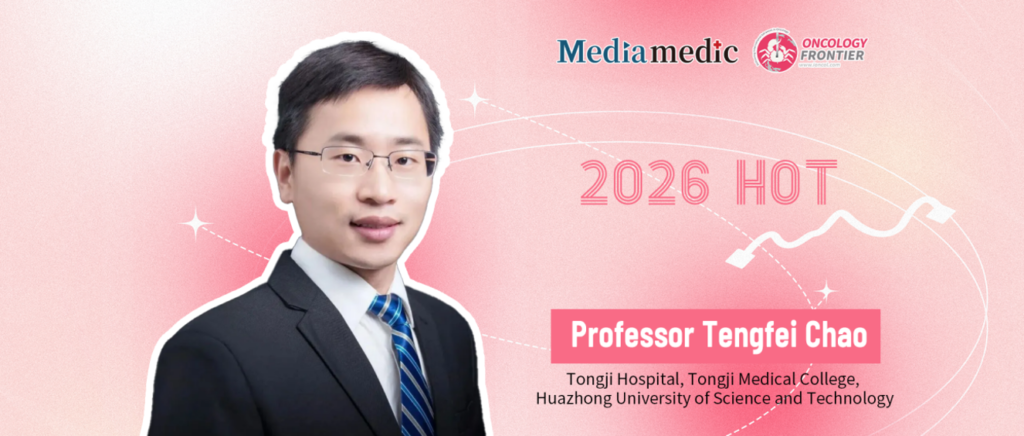
Editor’s Note: From April 16–18, 2026, the 18th Northern Breast Cancer HOT Conference was successfully held in Henan Province. The meeting focused on cutting-edge advances and clinical challenges in breast cancer diagnosis and treatment, bringing together leading Chinese experts to explore new pathways toward standardized and individualized care.During the conference, Professor Tengfei Chao from Tongji Hospital, Tongji Medical College, Huazhong University of Science and Technology, delivered a presentation entitled “Optimizing Targeted Therapy Combined With Endocrine Therapy After Progression on CDK4/6 Inhibitors.”
Today, first-line treatment for HR-positive/HER2-negative advanced breast cancer has fully entered the era of CDK4/6 inhibitors combined with endocrine therapy as the standard of care. However, optimal management strategies following progression or resistance to this regimen remain an urgent clinical challenge requiring further standardization and refinement.
Oncology Frontier invited Professor Tengfei Chao to provide an in-depth interpretation of the key treatment principles, clinical challenges, and future research directions in the post-CDK4/6 inhibitor setting.
01
Oncology Frontier: After progression on CDK4/6 inhibitor plus endocrine therapy, what is the core therapeutic principle behind prioritizing targeted therapy combined with endocrine therapy?
Professor Tengfei Chao:
“First-line treatment with CDK4/6 inhibitors combined with endocrine therapy has become the universally accepted standard approach for HR+/HER2− advanced breast cancer.
Because this regimen provides proven efficacy together with the convenience of oral administration, allowing many patients to receive treatment at home, it has become a preferred option widely accepted by both physicians and patients.
Once disease progression occurs on CDK4/6 inhibitor plus endocrine therapy, identifying the underlying resistance mechanism becomes the key basis for selecting subsequent treatment strategies.
Current research has identified multiple resistance-related alterations, including ESR1 mutations, abnormalities in the PI3K/AKT/mTOR (PAM) pathway, and dysregulation involving CDK1, CDK2, RB, TP53, and other cell-cycle regulators. Among these, ESR1 mutations and PAM pathway alterations are considered the major resistance mechanisms. Corresponding targeted therapies for these genomic alterations are already available clinically and can be combined with various endocrine agents.
For patients with ESR1 mutations, the therapeutic value of oral selective estrogen receptor degraders (SERDs) has been validated in multiple clinical studies. After progression on CDK4/6 inhibitors, oral SERD monotherapy—or continuation of CDK4/6 inhibition combined with a SERD—can provide meaningful tumor control and clinical benefit regardless of ESR1 mutation status.
For patients harboring PAM pathway alterations, the mTOR inhibitor everolimus demonstrated efficacy in the BOLERO-2 trial, while the AKT inhibitor capivasertib showed impressive progression-free survival results in the CAPItello-291 study among patients progressing after CDK4/6 inhibitor therapy.
Based on this evidence, PAM pathway-targeted agents represent important treatment options for patients with these mutations.
When designing an overall treatment strategy, clinicians must balance efficacy with long-term treatment management. Chemotherapy and antibody-drug conjugates (ADCs) are also potential options at this stage. However, chemotherapy is associated with relatively significant toxicities that may compromise treatment adherence.
In contrast, ADCs such as trastuzumab deruxtecan (T-DXd) have demonstrated stable efficacy in HER2-low disease, with efficacy appearing largely independent of mutation status or treatment line.
Therefore, our view is that if genomic testing identifies actionable mutations, clinicians should prioritize corresponding targeted therapies—in other words, ‘treat the target when a target exists.’ In the absence of actionable genomic alterations in later-line settings, chemotherapy or ADCs can then serve as fallback treatment options.”
02
Oncology Frontier: After failure of CDK4/6 inhibitor therapy, what major clinical challenges still remain for endocrine therapy combined with targeted treatment?
Professor Tengfei Chao:
“Although endocrine therapy combined with targeted agents offers clear advantages, several major clinical challenges remain after CDK4/6 inhibitor failure.
One challenge is that resistance is traditionally defined only after radiologic progression becomes evident, which represents a delayed form of assessment and limits opportunities for early intervention.
We are therefore exploring whether earlier biomarkers might allow resistance to be identified sooner. The SERENA-6 study suggested that peripheral blood ctDNA testing can detect emerging ESR1 mutations earlier. Based on these findings, timely switching of endocrine therapy while continuing CDK4/6 inhibition may provide longer disease control.
This offers a promising new strategy for early identification and intervention in resistance, although additional clinical studies are still needed to validate and refine this approach.
Another major issue is drug accessibility. Although multiple PAM pathway-targeted agents and oral SERDs are under active investigation, relatively few currently have formally approved indications or reimbursement coverage.
We hope that as more clinical data emerge, additional agents will gain regulatory approval and insurance coverage, thereby improving accessibility and reducing financial burden for patients.”
03
Oncology Frontier: Looking ahead, what additional directions remain worth exploring and optimizing in the treatment of patients with CDK4/6 inhibitor resistance?
Professor Tengfei Chao:
“Despite current challenges, the post-CDK4/6 inhibitor setting still offers broad opportunities for future exploration, both in optimizing existing strategies and in developing novel therapies.
First, there is still considerable room for further advancement of endocrine therapy combined with targeted agents.
For patients with BRCA mutations identified through genomic testing, PARP inhibitors may represent a promising option after CDK4/6 inhibitor resistance. Meanwhile, CDK2 inhibitors are currently under clinical investigation and show encouraging future potential.
In addition, abnormal RB phosphorylation represents another important resistance mechanism, although no effective targeted therapies are currently available, making this an important unmet need for future research.
Importantly, the recent SYSUCC-020 study conducted by Chinese investigators demonstrated that chidamide combined with metronomic capecitabine chemotherapy and endocrine therapy achieved meaningful efficacy after progression on CDK4/6 inhibitors. TP53 mutation status may potentially serve as a predictive biomarker in this setting, offering a new treatment direction for difficult-to-treat patients.
Second, both cytotoxic chemotherapy and ADC therapies still require further optimization. For chemotherapy, the major goal is reducing toxicity and improving treatment adherence. For ADCs, we need to identify predictive biomarkers and establish more precise criteria for patient selection in order to improve therapeutic precision and effectiveness.
Finally, emerging therapeutic approaches and more refined molecular classification systems may further expand future treatment possibilities.
Some Luminal breast cancers exhibit low ER/PR expression and display biological behavior more similar to triple-negative breast cancer, while others may undergo molecular subtype transformation during treatment. These patients may potentially benefit from immunotherapy or anti-angiogenic treatment strategies.
In the future, beyond conventional repeat tissue biopsies, peripheral blood ctDNA analysis may also help achieve more precise molecular classification.
The classification framework established by the Fudan University Shanghai Cancer Center team provides an important reference for distinguishing different Luminal subgroups and identifying which patients may benefit from therapies beyond endocrine treatment, including immunotherapy.
Ultimately, we hope Luminal breast cancer classification will evolve from traditional clinicopathologic categories toward more precise genomic and molecular stratification, allowing us to deepen our understanding of the disease at the molecular level and guide truly individualized treatment strategies.”