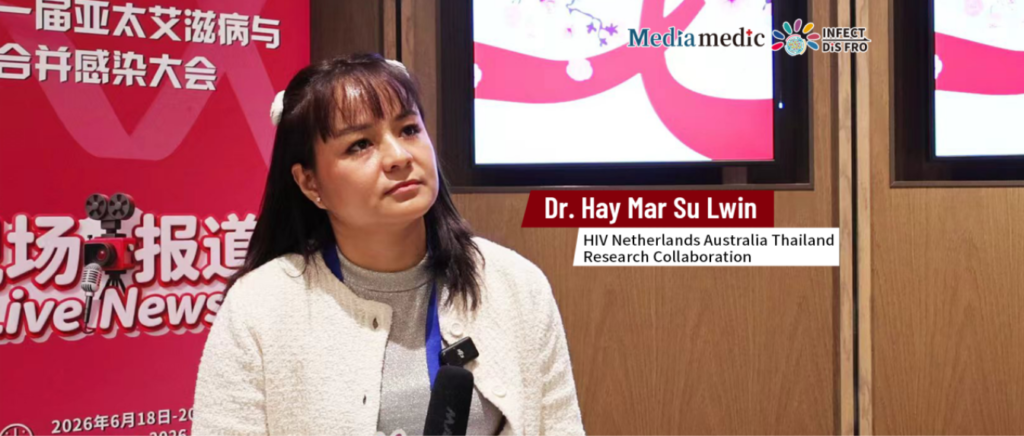

Editorial Note: The 2026 Asia-Pacific AIDS & Co-infections Conference (APACC 2026) was successfully held in Tokyo, Japan. Centered on the clinical hot topics of metabolic complications in people living with HIV (PLWH), the conference delivered cutting-edge insights for clinical practice across the Asia-Pacific region. During the conference, Infectious Disease Frontier conducted an exclusive interview with Dr. Hay Mar Su Lwin, Research Physician (MBBS MCTM) at the HIV Netherlands Australia Thailand Research Collaboration. Glycemic abnormality is a prevalent metabolic complication among PLWH receiving long-term antiretroviral therapy (ART), and intervention during prediabetes is a critical link in disease prevention and control. Drawing on long-term cohort studies, Dr. Lwin shared in-depth perspectives on risk factors linked to glycemic deterioration in PLWH, metabolic impacts of distinct antiretroviral regimens, and tailored clinical strategies for Asian populations. This interview integrates evidence-based data and practical clinical guidance, offering vital references for clinicians in domestic infectious disease departments to optimize glycemic screening, lifestyle intervention, and individualized selection of ART regimens. Infectious Disease Frontier: Your research investigated the impact of baseline impaired fasting glucose on diabetes progression among PLWH. Could you walk us through your core findings, and what implications do these results hold for clinical monitoring and treatment?
Dr. Lwin: Our study analyzed long-term diabetes outcomes in a cohort of PLWH after ART initiation through detailed population follow-up observations. The key finding is that PLWH with baseline impaired fasting glucose—also referred to as PLWH with prediabetes—carry a substantially higher risk of progressing to clinical diabetes compared to those without prediabetes. Prediabetes detected prior to or at the time of ART initiation represents a high-priority clinical indicator. This phase constitutes a critical window for diabetes prevention, during which preventive interventions can be effectively implemented.
Infectious Disease Frontier: Beyond baseline impaired fasting glucose, what other factors in your study cohort significantly elevated the risk of diabetes progression?
Dr. Lwin: Apart from prediabetes, our research identified multiple independent risk factors for diabetes onset among PLWH.
First, age: older individuals face greater risks of diabetes progression, a pattern consistent with the general population.
Second, body mass index (BMI): patients with elevated BMI exhibited approximately a twofold higher risk of developing diabetes.
Third, smoking history: a documented smoking record was associated with an increased diabetes risk.
We further analyzed data on varying ART exposure durations within our long-term follow-up cohort to assess how different regimens and treatment timing affect diabetes progression. Results demonstrated that older nucleoside reverse transcriptase inhibitors (NRTIs), namely didanosine (ddI) and stavudine (d4T), markedly raise diabetes progression risk, aligning with our cohort observations. Additionally, protease inhibitors (PIs) were linked to elevated diabetes risk, consistent with established consensus that PIs exacerbate metabolic disorder progression. In contrast, integrase strand transfer inhibitor (INSTI)-based regimens showed no statistically significant correlation with diabetes progression risk in this study.
We also evaluated other variables including sex, family history of metabolic comorbidities, and HIV-hepatitis co-infection, none of which demonstrated a statistically significant association with diabetes progression.
Infectious Disease Frontier: Asian PLWH may possess unique genetic and physical traits predisposing them to metabolic complications. Based on your research, what recommendations would you offer HIV clinics across Asia regarding glycemic screening frequency, lifestyle intervention, and ART regimen selection?
Dr. Lwin: This question carries profound practical relevance for clinical management throughout the Asia-Pacific region. PLWH in this region exhibit distinct metabolic profiles: compared with Caucasian populations in Europe and North America, Asian individuals generally present with lower BMI yet face disproportionately high risks of metabolic comorbidities even at low BMI thresholds. Drawing from our research, I put forward three clinical recommendations for glycemic screening, lifestyle modification, and ART selection tailored to Asian populations.
First, universal screening for diabetes and metabolic disorders must be performed upon patients’ ART initiation. Timely intervention is mandatory for those identified with prediabetes prior to treatment to halt progression to overt clinical diabetes.
Second, lifestyle intervention should be prioritized. Clinicians need to guide patients to adopt regular physical activity and balanced dietary habits to improve metabolic status and mitigate the risk of metabolic complications.
Finally, ART regimen selection must follow an individualized approach. Clinicians should comprehensively evaluate patients’ metabolic disease risks and comorbidity profiles to prescribe well-tolerated, suitable therapeutic regimens that minimize adverse metabolic drug effects.