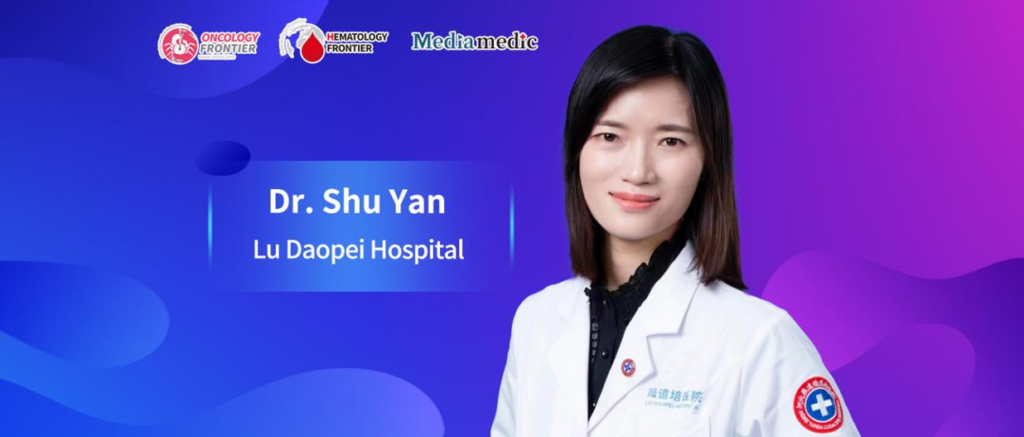
Editor's Note: Yanzhao brings together talented individuals while remaining true to its original mission for 14 years. On August 21, 2026, the 14th Lu Daopei Hematology Forum grandly opened at Hebei Yanda Lu Daopei Hospital. Building on 14 years of academic development, this year's conference focused on cutting-edge topics including hematopoietic stem cell transplantation, cellular immunotherapy, and precision diagnosis and treatment of hematologic diseases. Experts and scholars from across the field of hematology gathered to discuss advances in the discipline, making the conference an important academic platform for promoting progress in the diagnosis and treatment of hematologic diseases in China. During the conference, Oncology Frontier – Hematology Frontier invited Dr. Shu Yan of Hebei Yanda Lu Daopei Hospital for an exclusive interview. He shared his professional insights on the epidemiological characteristics of invasive fungal disease (IFD) after hematopoietic stem cell transplantation, comprehensive management pathways, and treatment optimization strategies.Oncology Frontier – Hematology Frontier: Your presentation at this conference focused on “Optimizing Comprehensive Management of Antifungal Infections.” Could you introduce the current epidemiological status of invasive fungal disease after hematopoietic stem cell transplantation? What are the major pathogens and risk factors?
Dr. Shu Yan: The incidence of invasive fungal disease among hematopoietic stem cell transplant recipients remains a significant concern, with an overall incidence of approximately 5%–15%. The incidence is relatively lower among autologous hematopoietic stem cell transplant recipients, but high-risk patients undergoing autologous transplantation still require close attention. IFD is associated with a relatively high mortality rate of approximately 30%, which is closely related to breakthrough infections caused by uncommon fungi such as Mucorales.
The distribution of pathogens varies significantly according to the post-transplant stage. During the pre-engraftment period, within one month after transplantation, Candida infections predominate and are directly associated with central venous catheter placement, mucosal injury, and neutropenia. During the first 1–3 months after transplantation, Aspergillus becomes the predominant pathogen, closely associated with the development of graft-versus-host disease (GVHD) and corticosteroid use. After three months (day 100) post-transplantation, in addition to Aspergillus, infections caused by Pneumocystis jirovecii, Mucorales, and other fungi become relatively common and are associated with chronic GVHD and continued use of immunosuppressive agents.
The clinical characteristics differ among pathogens. The first category is Candida, which accounts for approximately 20%–25% of IFD cases after transplantation. The main pathogens include Candida albicans as well as non-albicans Candida species such as C. krusei and C. parapsilosis. Infection is closely associated with mucosal injury. The second category is Aspergillus, mainly A. flavus and A. fumigatus, with pulmonary infection being common and disease development associated with environmental exposure. The third category comprises uncommon fungi. Infections caused by Mucorales, including Mucor and Rhizopus, account for approximately 5% of cases but are associated with high mortality. Some patients require surgical intervention, and disease development is associated with corticosteroid use and iron overload. Other, even rarer pathogens include Fusarium and Scedosporium species. Pathogen identification is critical for treatment decision-making.
The major risk factors for IFD after transplantation can be divided into several categories. First is the type of transplantation. Among allogeneic hematopoietic stem cell transplant recipients, the risk of infection is significantly higher following haploidentical or unrelated donor transplantation than following matched sibling transplantation. Second is the duration of neutropenia. Neutropenia lasting more than 10–14 days significantly increases the risk of infection. Third are GVHD and immunosuppressive therapy. Severe grade 2–4 acute GVHD and recurrent chronic GVHD require prolonged corticosteroid treatment. In vivo T-cell depletion with ATG during transplant conditioning, as well as the use of calcineurin inhibitors and corticosteroids after transplantation, are all high-risk factors. Fourth are other underlying factors, including placement of deep venous access devices such as PICC lines, cytomegalovirus infection, and a history of previous invasive fungal disease. Patients with a previous history of IFD have an increased risk of recurrent infection after transplantation.
Oncology Frontier – Hematology Frontier: What are the key components of comprehensive antifungal management? From prophylaxis and empirical therapy to targeted treatment, what are the decision-making pathways at each stage?
Dr. Shu Yan: Comprehensive antifungal management after transplantation can be divided into five core stages, each with clearly defined eligible populations and decision-making pathways.
The first is primary prophylaxis, which is intended for patients without symptoms of infection but with high-risk factors. Eligible patients include those with neutropenia lasting more than two weeks after transplantation, those requiring high-dose corticosteroid therapy because of GVHD, and those with a previous history of fungal infection. Triazole agents such as posaconazole and voriconazole are commonly used for primary prophylaxis. For patients unable to take oral medications, intravenous echinocandins may be considered.
The second is empirical therapy, which is appropriate for patients with persistent fever whose infection remains uncontrolled after 4–7 days of broad-spectrum antibacterial therapy. At the same time that empirical antifungal therapy is initiated, pathogen testing should be actively performed to provide evidence for subsequent treatment adjustments.
The third is preemptive therapy, or diagnostic-driven therapy, which is appropriate for patients who already have clinical symptoms or imaging findings but lack definitive microbiological evidence. If chest CT shows characteristic signs of fungal infection, such as nodules, the halo sign, or the air-crescent sign, or if blood, sputum, or bronchoalveolar lavage samples are positive for G or GM tests or fungal cultures, preemptive treatment can be initiated. Once definitive microbiological evidence becomes available, the treatment regimen can be further adjusted.
The fourth is targeted therapy, which is intended for patients with confirmed microbiological evidence. Pathogens can be identified through fungal culture, fungal PCR, or metagenomic next-generation sequencing. Susceptibility testing, when available, provides additional valuable guidance. Treatment can then be selected according to the pathogen. For Aspergillus infection, voriconazole or isavuconazole is preferred. For Candida infection, echinocandins can be used, while fluconazole may also be selected for susceptible isolates. For Mucorales infection, amphotericin B formulations are preferred. If lesions do not respond adequately to medical treatment after 2–3 weeks, surgical consultation can be considered for debridement to further improve treatment efficacy.
The final stage is secondary prophylaxis, which is intended for patients with a previous fungal infection who require subsequent chemotherapy or transplantation. In general, an antifungal agent with proven efficacy is selected based on the microbiological characteristics of the previous infection.
Oncology Frontier – Hematology Frontier: The rational use of antifungal agents and the issue of antifungal resistance are receiving increasing attention. In your view, how should antifungal treatment strategies be optimized in clinical practice to balance efficacy and safety?
Dr. Shu Yan: Optimizing antifungal therapy and balancing efficacy with safety can be approached from several perspectives.
First, the diagnosis should be clarified whenever possible to reduce unnecessary empirical therapy. Microbiological evidence can be obtained through fungal cultures, fungal PCR, G/GM testing, and metagenomic sequencing to achieve more precise diagnosis.
Second, drug selection should be tailored to the site of infection. For central nervous system infections, agents with good blood–brain barrier penetration should be selected, such as voriconazole and amphotericin B formulations. Posaconazole has poor blood–brain barrier penetration and is not recommended for central nervous system fungal infections. For pulmonary infections, most antifungal agents can achieve effective alveolar concentrations, and triazoles such as voriconazole, isavuconazole, and posaconazole can all be considered.
Third, treatment should be selected according to the pathogen. Liposomal amphotericin B is preferred for Mucorales infections, and surgical debridement can be considered when feasible. Most Candida krusei and Candida glabrata infections can be covered by echinocandins; if treatment response is inadequate, amphotericin B can also be considered.
Fourth, treatment should be adjusted according to organ function. In patients with hepatic dysfunction, triazoles should be avoided whenever possible to reduce the risk of liver injury, and agents with less hepatic impact, such as caspofungin or amphotericin B, may be considered. In patients with renal dysfunction, cumulative nephrotoxicity from amphotericin B should be avoided, and isavuconazole or echinocandins, which have low or minimal nephrotoxicity, can be selected. In patients with electrocardiographic abnormalities, triazoles should also be avoided whenever possible.
Fifth, therapeutic drug monitoring should be performed appropriately. Triazoles such as voriconazole and posaconazole show substantial interindividual differences in metabolism. This is particularly relevant in pediatric patients, who may have faster drug metabolism. Regular monitoring of trough plasma concentrations is therefore necessary to ensure adequate drug exposure while avoiding adverse reactions caused by excessive concentrations. For posaconazole, the recommended trough concentration is above 0.7 mg/L for prophylaxis and 1.2–2.0 mg/L for treatment.
Sixth, drug–drug interactions should be carefully considered. Transplant recipients often receive multiple medications. Calcineurin inhibitors such as cyclosporine, tacrolimus, and sirolimus, as well as triazole antifungals, are metabolized through hepatic CYP enzymes. When these drugs are used concomitantly, therapeutic drug levels should be monitored to prevent adverse reactions caused by excessive drug concentrations.
Seventh, treatment duration should be appropriately controlled to prevent antifungal resistance. Once microbiological tests become negative and clinical symptoms improve, particularly after neutrophil recovery, treatment should be de-escalated to narrow-spectrum therapy whenever possible. Prolonged broad-spectrum antifungal therapy may select for resistant strains. For example, resistance of Aspergillus fumigatus to voriconazole and resistance of some Candida species to echinocandins have both shown increasing trends. In clinical practice, treatment strategies can be developed through multidisciplinary consultation involving the pharmacy, microbiology laboratory, radiology department, and other relevant departments, incorporating local and institutional fungal epidemiological data and monitoring resistance trends throughout the treatment course.
Expert Profile
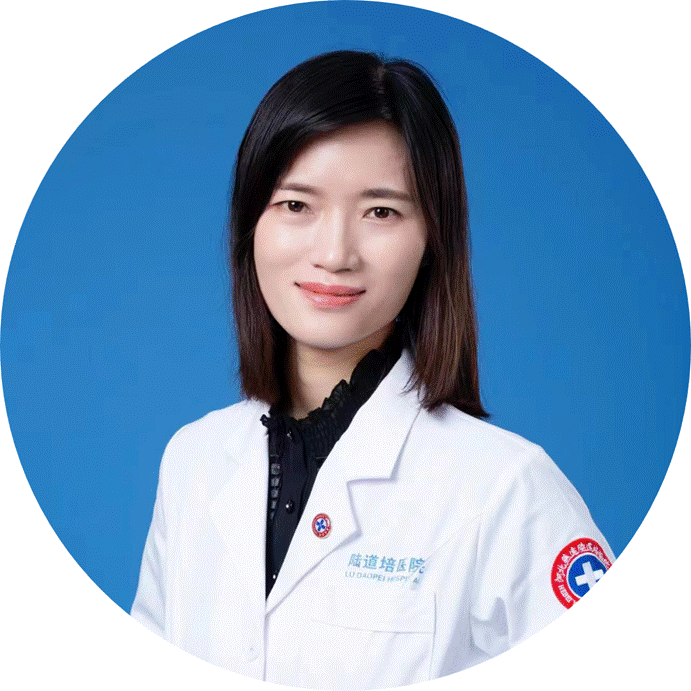
Shu Yan
Deputy Chief Physician, Department of Hematopoietic Stem Cell Transplantation, Hebei Yanda Lu Daopei Hospital
Dr. Shu Yan received his bachelor’s degree from Xiamen University School of Medicine and his master’s degree in Hematology from China Medical University. After graduating in 2012, he joined the transplantation department of the Daopei Medical Group and has worked there ever since.
She is highly experienced in the diagnosis and treatment of common hematologic diseases, including leukemia, myelodysplastic syndromes (MDS), aplastic anemia (AA), and immune thrombocytopenia (ITP), as well as in various hematopoietic stem cell transplantation protocols and the management of transplant-related complications.
She has participated in and completed more than 400 allogeneic hematopoietic stem cell transplantation procedures. In 2022, he completed a short-term international academic visit at the Hematopoietic Cell Transplantation Center of City of Hope Cancer Center in the United States.