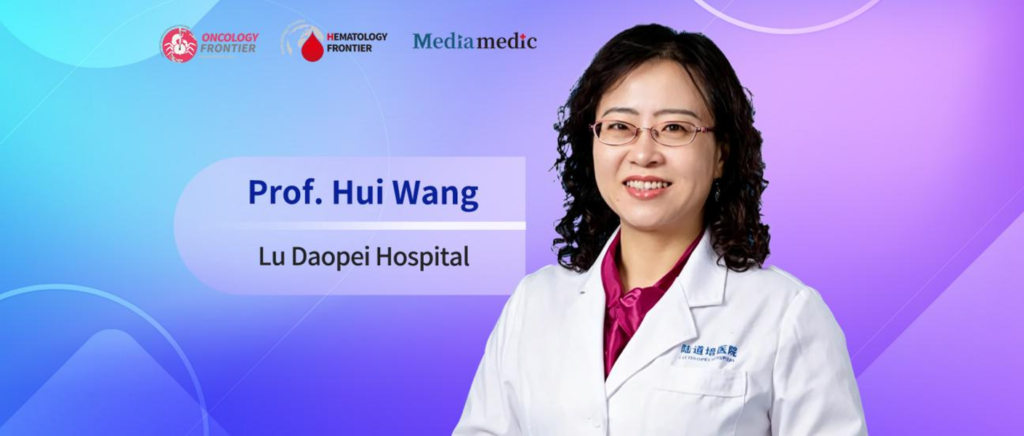
Editor's Note: Yanzhao brings together talented individuals while remaining true to its original mission for 14 years. On August 21, 2026, the 14th Lu Daopei Hematology Forum grandly opened at Hebei Yanda Lu Daopei Hospital. Building on 14 years of academic development, this year's conference focused on cutting-edge topics including hematopoietic stem cell transplantation, cellular immunotherapy, and precision diagnosis and treatment of hematologic diseases. Experts and scholars from across the field of hematology gathered to discuss advances in the discipline, making the conference an important academic platform for promoting progress in the diagnosis and treatment of hematologic diseases in China. During the conference, Oncology Frontier – Hematology Frontier invited Professor Hui Wang of Lu Daopei Hospital for an exclusive interview. She shared her professional insights on the opportunities and challenges facing laboratory diagnosis of hematologic diseases in the era of precision medicine, the value of multidisciplinary collaboration, and the prospects for artificial intelligence applications.Oncology Frontier – Hematology Frontier: As Deputy Director of the Department of Pathology and Laboratory Medicine, you served as chair of the laboratory medicine session at this conference. Could you discuss the new challenges and opportunities facing laboratory diagnosis of hematologic diseases in the era of precision medicine?
Professor Hui Wang: In the field of hematology, diagnosis is a critical component throughout the entire process of disease management. At the initial diagnosis stage, laboratory testing can provide clinicians with accurate, precise, and comprehensive diagnostic evidence. During treatment, laboratory testing can monitor changes in the patient’s disease status, identify new therapeutic targets, and facilitate prognostic assessment, providing important support for clinical decision-making.
Since the beginning of the 21st century, hematology has advanced rapidly, with targeted agents and novel immunotherapies emerging one after another. Determining which patients are suitable for these novel treatments, how their disease changes during treatment, and whether treatment regimens need to be adjusted all depend on information provided by immunological and molecular biological technologies such as flow cytometry, RNA sequencing (RNA-seq), and genetic testing. The widespread adoption and continued development of precision diagnostic and treatment technologies have provided tremendous support for clinical practice and have ultimately benefited patients, significantly improving response rates and survival.
Oncology Frontier – Hematology Frontier: Lu Daopei Hospital has accumulated extensive experience in laboratory diagnosis of hematologic diseases. From the perspective of discipline development, how do you view the importance of collaboration between laboratory medicine and clinical departments?
Professor Hui Wang: Lu Daopei Hospital has been established for more than 20 years. Under the leadership of Academician Lu and President Lu, the hospital has continued to develop, with new talent continuously joining our laboratory team. Our team has developed a healthy pyramid-shaped talent structure: senior experts and professors pass on their extensive clinical experience to younger colleagues, while younger physicians continue to learn and grow.
In the field of laboratory medicine, we can proudly say that “for difficult cases, turn to Daopei.” More than 100 hospitals across the country send specimens from challenging cases to our department for testing. However, our work goes far beyond simply issuing a diagnostic report. Laboratory medicine is never merely a cold output of results; behind every report lies a wealth of clinical information. Therefore, two-way communication and feedback between laboratory and clinical departments are extremely important.
In our daily work, even outside regular eight-hour working hours, we maintain communication with clinicians from hospitals at different levels, both within and outside our institution. By gaining a comprehensive understanding of patients’ clinical conditions, we can provide more accurate diagnostic and follow-up recommendations. Throughout this process, clinicians and laboratory specialists can also learn from and complement one another, promoting mutual improvement.
Oncology Frontier – Hematology Frontier: Artificial intelligence has broad application prospects in laboratory fields such as blood cell morphology. How do you think laboratory diagnosis can better empower clinical decision-making in the future?
Professor Hui Wang: We have now entered the era of artificial intelligence, and healthcare is gradually moving toward intelligent development. The application of AI is not limited to morphology and pathology; related research and exploration are also underway in laboratory fields such as genetics and flow cytometry.
In my laboratory, we have already established collaborations with several equipment manufacturers, covering commonly used clinical flow cytometers ranging from three-laser, eight- to ten-color systems to mass cytometry technologies with up to 43 colors. The results of these collaborations have begun to show promise, and we will soon apply for invention patents and implement the relevant technologies in clinical practice.
Artificial intelligence can be integrated throughout the entire workflow, from specimen processing and data analysis to comprehensive diagnosis. On the one hand, it can effectively reduce the workload on laboratory personnel. More importantly, it can extract much richer information.
Take flow cytometry as an example. Manual analysis generally involves simultaneously examining only two parameters in a two-dimensional plot, limited by the capabilities of human visual recognition. Fully interpreting a 24-color flow cytometry report can often take one to two hours. With hundreds of specimens processed every day, it is difficult to achieve comprehensive coverage. Manual analysis is also susceptible to fatigue and differences in individual experience.
By using predefined templates for AI-assisted analysis, we can not only reduce result discrepancies caused by differences in personnel experience but also analyze multidimensional parameter information and generate more comprehensive results.
The same principle applies beyond flow cytometry. In the future, if we can integrate the results of various laboratory technologies—including MICM classification, pathology, and viral testing—with patients’ clinical information to generate an intelligent, comprehensive diagnostic report, this will become an important direction for the entire field.
Perhaps three to five years from now, clinicians will be able to receive this type of multidimensional, integrated intelligent report. Of course, the journey of exploration will be long and challenging, but we have continued moving forward, and we are already beginning to see promising results.
Expert Profile
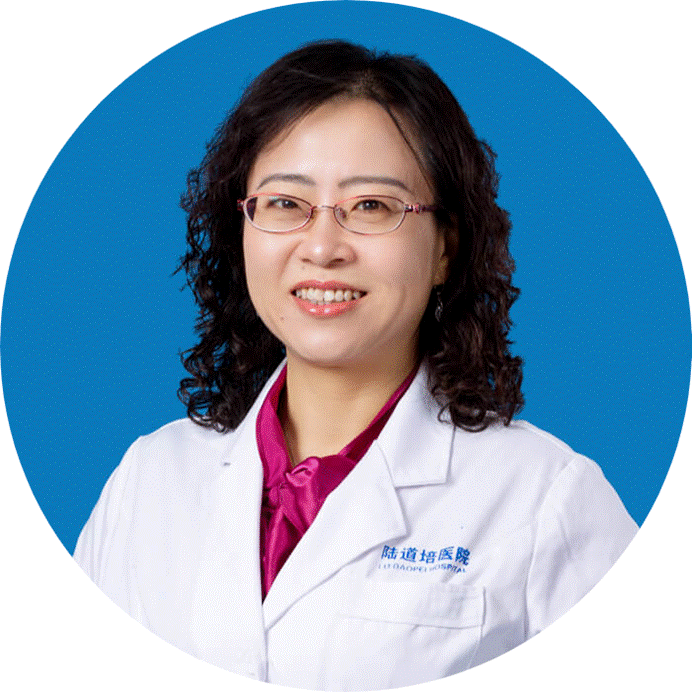
Hui Wang
Vice President, Beijing Lu Daopei Institute of Hematology; Deputy Director (Vice President Level), Department of Laboratory Medicine, Lu Daopei Hospital
Professor Hui Wang serves as an editorial board member of the Chinese Journal of Laboratory Medicine and a young editorial board member of the Chinese Journal of Hematology.
She is Chair of the Expert Committee on Flow Cytometry Analysis and Diagnosis of the Laboratory Medicine Professional Committee of the Chinese Association of Integrative Medicine, Vice President of the Beijing Society of Medical Laboratory Medicine, and Deputy Chair of the Flow Cytometry and Cell Identification Quality Management Group of the Medical Laboratory Quality Management Professional Committee of the China Association for Medical Quality.
She is also a Standing Committee Member of the Hematology Committee of the Chinese Non-government Medical Institutions Association; a member of the Clinical Hematology and Body Fluid Group of the 11th Committee of the Chinese Society of Laboratory Medicine, Chinese Medical Association; a member of the Clinical Laboratory Medicine Group of the 5th Committee of the Chinese Medical Doctor Association Laboratory Physicians Branch; a member of the Laboratory Medicine Professional Committee of the Chinese Association of Integrative Medicine; and a member of the Lymphoma Group of the Chinese Anti-Cancer Association, among more than 20 professional organizations.
Professor Wang has worked in flow cytometry testing for 24 years and has independently signed out more than one million clinical reports. She holds 10 Chinese national invention patents and 3 U.S. international invention patents.
As first author or corresponding author, she has led the development of six expert consensus documents. She has also participated in the development of 11 additional industry expert consensus documents and group standards. She has published more than 60 SCI-indexed and Chinese core-journal articles as first or corresponding author and has participated in the preparation of nearly 100 articles.