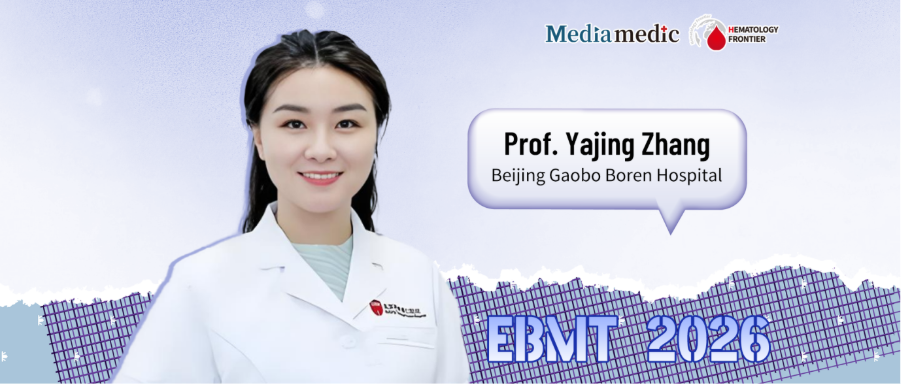
ASH China Voice | Prof. Yajing Zhang: Exploring Frontiers and Synergistic Innovation—A Multidimensional and Strategic Vision for CAR-T Therapy

ASH China Voice | Prof. Yajing Zhang: Exploring Frontiers and Synergistic Innovation—A Multidimensional and Strategic Vision for CAR-T Therapy

The 67th Annual Meeting of the American Society of Hematology (ASH) was held in Orlando from December 6 to 9, 2025, bringing together the latest global advances in hematologic research and clinical practice. At this year’s meeting, four studies led by Prof. Yajing Zhang from Beijing Gobroad Boren Hospital were accepted, including one oral presentation.
ASH China Voice | Professor Li Zhihui: A New Paradigm for Donor Selection and Transplant Strategies Driven by Hereditary Predisposition Genes

ASH China Voice | Professor Li Zhihui: A New Paradigm for Donor Selection and Transplant Strategies Driven by Hereditary Predisposition Genes

In recent years, with the rapid development of precision genomics, hereditary predisposition genes have gained increasing attention for their clinical value in the diagnosis and treatment of hematologic malignancies. At the 67th Annual Meeting of the American Society of Hematology (ASH), a study led by Professor Li Zhihui from Beijing Gaobo Boren Hospital was selected for oral presentation, systematically evaluating the impact of hereditary predisposition genes on outcomes of allogeneic hematopoietic stem cell transplantation (allo-HSCT) and donor selection. Hematology Frontier invited Professor Li for an in-depth interpretation of this study and its implications for clinical practice.
ASH Expert Insights | Professor Wang Jianxiang: Dual Drivers of FLT3 Ligand and Microclones Enable Precision Upgrading in FLT3-ITD–Negative AML

ASH Expert Insights | Professor Wang Jianxiang: Dual Drivers of FLT3 Ligand and Microclones Enable Precision Upgrading in FLT3-ITD–Negative AML

At the annual meeting of the American Society of Hematology (ASH), research in FLT3-ITD acute myeloid leukemia (AML) delivered important advances for clinical practice. Notably, the latest findings from the QUIWI study series further revealed that, among FLT3-ITD–negative patients, FLT3 ligand (FL) levels and microclonal status can help identify prognostic heterogeneity, offering a new paradigm for dynamic monitoring and risk-adapted intervention. On site, Oncology Frontier · Hematology Frontier invited Professor Wang Jianxiang from the Institute of Hematology, Chinese Academy of Medical Sciences, to discuss key advances, including the prognostic value of FLT3 ligand, the clinical relevance of microclonal detection, and the therapeutic potential of quizartinib, with the aim of building a comprehensive FLT3-marker–based management framework to advance AML care toward greater precision and dynamism.
ASH Expert Insights | Professor Jun Ma: Transforming FLT3-ITD AML Treatment from Dynamic Management and Optimized Maintenance to Targeted Breakthrough

ASH Expert Insights | Professor Jun Ma: Transforming FLT3-ITD AML Treatment from Dynamic Management and Optimized Maintenance to Targeted Breakthrough

At this year’s American Society of Hematology (ASH) Annual Meeting, advances in FLT3-ITD acute myeloid leukemia (AML) delivered important clinical insights. From evolving treatment paradigms to optimized maintenance strategies and breakthroughs in targeted therapy, these studies consistently centered on precision medicine, driving care toward greater efficiency and individualization. On site at ASH, Hematology Frontier invited Professor Jun Ma from the Harbin Institute of Hematology and Oncology to interpret key developments in dynamic management, maintenance therapy, and targeted drug application in FLT3-ITD AML, with the aim of informing clinical decision-making.