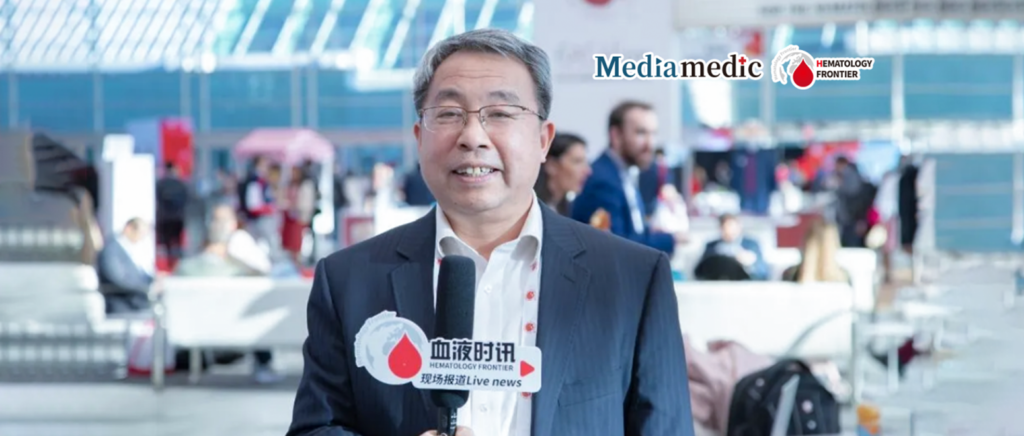
Dr. Hua Wang: New Approaches in Marginal Zone Lymphoma Treatment – Rethinking Chemotherapy-Free and Combination Strategies丨The 5th Tianjin International Lymphoma Symposium

Dr. Hua Wang: New Approaches in Marginal Zone Lymphoma Treatment – Rethinking Chemotherapy-Free and Combination Strategies丨The 5th Tianjin International Lymphoma Symposium

From September 6-8, 2024, the 5th Tianjin International Lymphoma Symposium was successfully held. The conference featured twelve specialized sessions, including immunotherapy, translational research, and new drug development, creating a platform for promoting international academic exchange and collaboration. During the event, Hematology Frontier invited Dr. Hua Wang from the Sun Yat-sen University Cancer Center to review the latest treatment strategies for marginal zone lymphoma (MZL).
Dr. Shahrukh Hashmi: Opening Pandora’s Box, Challenges in Long-Term Monitoring After CAR-T Therapy

Dr. Shahrukh Hashmi: Opening Pandora’s Box, Challenges in Long-Term Monitoring After CAR-T Therapy

As a shining new star in the medical field, CAR-T cell therapy, while significantly effective, is filled with unknowns much like Pandora's Box. From successful treatment to long-term monitoring, every step requires meticulous planning. Recently, at the 12th Lu Daopei Hematology Academic Forum, Hematology Frontier had the honor of inviting Dr. Shahrukh Hashmi from the Mayo Clinic Comprehensive Cancer Center to share in-depth insights on the optimization and practical experience of long-term monitoring strategies following CAR-T therapy.
SOHO 2024 | Dr. Valeria Santini: Imetelstat Demonstrates Durable Efficacy in the Treatment of LR-MDS

SOHO 2024 | Dr. Valeria Santini: Imetelstat Demonstrates Durable Efficacy in the Treatment of LR-MDS

Low-risk myelodysplastic syndromes (LR-MDS) are complex blood disorders characterized by the abnormal proliferation and dysfunction of marrow cells, leading to increased risks of anemia, bleeding, and infection. Although the progression of LR-MDS is relatively slow, the treatment of this disease still faces significant challenges. Existing therapeutic options, such as erythropoiesis-stimulating agents (ESAs) and immunomodulators, may alleviate symptoms to some extent but often struggle to achieve long-term disease control and can be associated with significant side effects. Against this backdrop, Dr. Valeria Santini explored the potential of Imetelstat, a first-in-class oligonucleotide telomerase inhibitor, in treating patients with LR-MDS through the IMerge trial. The 12th Annual Meeting of the Society for Hematologic Oncology (SOHO 2024) took place in Houston, USA, from September 4 to 7, 2024, bringing together top experts in the field of hematologic oncology worldwide to share the latest research findings and discuss new treatment strategies. Hematology Frontier specially invited Dr. Valeria Santini from the University of Florence, MDS Unit, Hematology, DMSC, AOUC, Florence, Italy, to delve into the research outcomes of this Phase III clinical trial, discussing the significant progress achieved by Imetelstat in improving the precision and effectiveness of LR-MDS patient treatment, and how this discovery may provide a new direction for future strategies in the MDS treatment field.
Serum Albumin as a Prognostic Factor in Acute Myeloid Leukemia

Serum Albumin as a Prognostic Factor in Acute Myeloid Leukemia

In June 2024, Blood Science published a pivotal study led by Dr. Hui Wei from the Institute of Hematology & Blood Diseases Hospital, Chinese Academy of Medical Sciences & Peking Union Medical College , investigating the prognostic significance of serum albumin levels in patients with acute myeloid leukemia (AML). AML is a highly aggressive hematological malignancy with outcomes influenced by various factors, including age, white blood cell count, and risk classification. Serum albumin, a critical component of blood, plays a role in maintaining colloid osmotic pressure and has been identified as a prognostic marker in various cancers, including AML.
Plerixafor-Based Mobilization and Increased Mononuclear Cell Counts: Risk Factors for Engraftment Syndrome Post-Autologous Hematopoietic

Plerixafor-Based Mobilization and Increased Mononuclear Cell Counts: Risk Factors for Engraftment Syndrome Post-Autologous Hematopoietic

In June 2024, Blood Science published a significant study led by Dr. Xiaohui Zhang and colleagues from the Peking University People's Hospital, focusing on the incidence and risk factors of engraftment syndrome (ES) following autologous hematopoietic stem cell transplantation (ASCT) in the era of plerixafor-based mobilization. ASCT remains a critical therapy for hematologic malignancies, particularly in lymphoma and plasma cell disease, despite advancements in other treatments. However, ES, characterized by non-infectious fever, skin rash, diarrhea, and other clinical manifestations, remains a common and concerning complication post-ASCT.
Ivosidenib in Chinese Patients with Relapsed or Refractory IDH1-Mutated Acute Myeloid Leukemia: A Registry Study

Ivosidenib in Chinese Patients with Relapsed or Refractory IDH1-Mutated Acute Myeloid Leukemia: A Registry Study

In June 2024, Blood Science published an important study led by Dr. Jie Jin and colleagues from the The First Affiliated Hospital, Zhejiang University School of Medicine, investigating the safety, pharmacokinetics, and efficacy of ivosidenib in Chinese patients with relapsed or refractory (R/R) isocitrate dehydrogenase 1 (IDH1)-mutated acute myeloid leukemia (AML). AML, a heterogeneous and aggressive hematological malignancy, presents significant treatment challenges, especially in its relapsed or refractory stages. For patients with R/R AML, survival rates are dismal, with a median overall survival of approximately five months.
Subcutaneous Daratumumab in Chinese Patients with Relapsed/Refractory Multiple Myeloma: A Phase 1 Study

Subcutaneous Daratumumab in Chinese Patients with Relapsed/Refractory Multiple Myeloma: A Phase 1 Study

In April 2024, the journal Blood Science published an important study led by Dr. Gang An and colleagues from the Institute of Hematology & Blood Diseases Hospital, Chinese Academy of Medical Sciences & Peking Union Medical College, investigating the use of subcutaneous daratumumab in Chinese patients with relapsed/refractory multiple myeloma (R/R MM). Multiple myeloma is a challenging hematological malignancy characterized by the proliferation of abnormal plasma cells in the bone marrow. Despite significant advances in treatment, many patients experience relapse or develop resistance to existing therapies, necessitating new and more effective approaches.
Targeting HMGCS1 Restores Chemotherapy Sensitivity in Acute Myeloid Leukemia

Targeting HMGCS1 Restores Chemotherapy Sensitivity in Acute Myeloid Leukemia

In June 2024, Blood Science published a groundbreaking study led by Dr. Hui Zeng and colleagues from the The First Affiliated Hospital of Jinan University , focusing on the role of 3-hydroxy-3-methylglutaryl coenzyme A synthase 1 (HMGCS1) in acute myeloid leukemia (AML). AML is a severe hematological malignancy characterized by the rapid proliferation of immature white blood cells, leading to significant dysfunction in the blood and bone marrow. Despite advancements in treatment, relapsed and refractory (RR) AML continues to pose a significant clinical challenge with a poor prognosis, emphasizing the need for novel therapeutic targets to enhance patient outcomes.
Pomalidomide Enhances CAR-T Therapy Effectiveness in Hematological Malignancies: A Promising Synergy

Pomalidomide Enhances CAR-T Therapy Effectiveness in Hematological Malignancies: A Promising Synergy

Relapsed and refractory multiple myeloma (R/R MM) and B-cell leukemia/lymphoma with extramedullary disease (EMD) represent some of the most formidable challenges in hematology. These conditions often carry a bleak prognosis due to their resistance to conventional therapies and the complex nature of extramedullary disease, where cancer cells spread outside the bone marrow. Chimeric antigen receptor (CAR)-T cell therapy has revolutionized the treatment landscape for these malignancies, offering hope where few options existed. However, even with CAR-T cell therapy, patients with EMD have experienced limited success, highlighting the need for innovative approaches to improve outcomes.
Interview with Dr. Swaminathan P iyer at the EHA 2024: Exploring Breakthroughs in Secondary HLH Treatment with ELA26

Interview with Dr. Swaminathan P iyer at the EHA 2024: Exploring Breakthroughs in Secondary HLH Treatment with ELA26

At this year’s European Hematology Association (EHA) conference, we had the opportunity to speak with Dr. Swaminathan P iyer, Professor of Medicine at MD Anderson Cancer Center, about the groundbreaking phase I study on ELA26 for secondary hemophagocytic lymphohistiocytosis (HLH). Dr. Iyer shared the promising data from the treatment-naive cohort, which showed a remarkable 100% response rate by two months, offering new hope to patients dealing with this life-threatening complication. As HLH has a high mortality rate, with most patients unable to receive adequate malignancy treatment due to complications, this study opens new doors for future integration with chemotherapy.