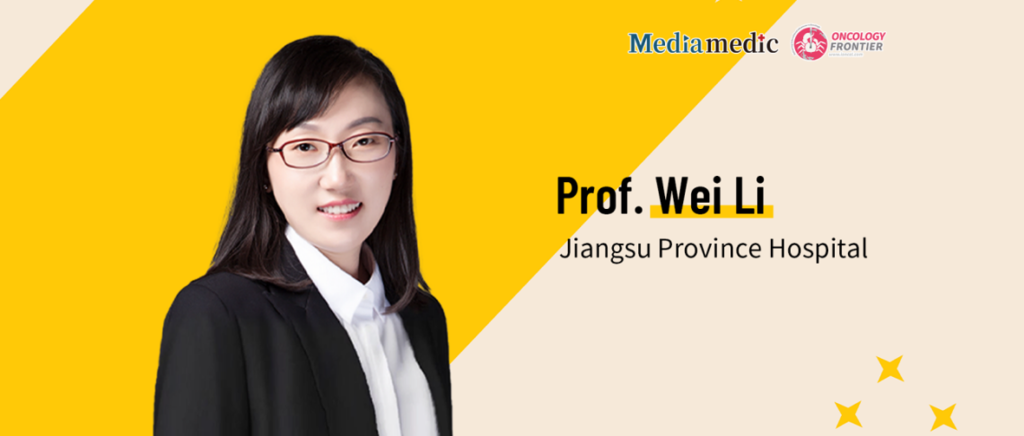
The Samsung Breast Cancer Forum, a national meeting bringing together young breast cancer specialists from China's four leading academic breast cancer organizations, was recently held in Zhengzhou. The meeting focused on advances in precision oncology, multidisciplinary collaboration, and the development of the next generation of breast cancer specialists.During the conference, Wei Li from Jiangsu Province Hospital delivered a presentation titled “Integrated Care in Action: Building a Breast Center Through Collaborative Practice.” Drawing on her institution’s experience, she discussed how integrating clinical departments, strengthening multidisciplinary management, and optimizing operational workflows can break down traditional specialty barriers and establish truly patient-centered care. In an interview with Oncology Frontier, she further shared practical insights into breast center development, the challenges encountered, and the important role of young physicians in driving future innovation.
Oncology Frontier: Your presentation focused on integrated care in breast center development. How is this collaborative model implemented in daily practice?
Wei Li:
At Jiangsu Province Hospital, our breast center has been built around an integrated, collaborative model that brings together multiple disciplines.
The first step was structural integration. Medical oncology, breast surgery, pathology, radiation oncology, reproductive medicine, radiology, and other supporting specialties work closely together within a coordinated framework. This has helped eliminate traditional departmental barriers, streamline clinical workflows, and establish a solid foundation for one-stop, patient-centered care throughout the entire treatment journey.
Comprehensive patient management is another essential component. We hold regular multidisciplinary team (MDT) meetings and routinely discuss treatment plans for patients receiving neoadjuvant or adjuvant therapy. Complex cases are reviewed through both in-person and virtual consultations, allowing specialists to address clinical challenges collaboratively while continuously improving the quality and standardization of MDT decision-making.
Operational integration is equally important. Beyond our own institution, we have established regional collaborative networks and provide ongoing support to county-level and community hospitals. Through provincial and national educational programs, we help expand access to standardized breast cancer care and promote consistent clinical practice across the region.
Oncology Frontier: What are the biggest challenges when establishing an integrated breast center, and how can they be addressed?
Wei Li:
Building an integrated breast center is not without obstacles.
Initially, one of our greatest challenges was physical separation. Our medical oncology and surgical departments were located on different campuses, making collaboration less efficient. After relocating both specialties to the same hospital site, communication improved significantly. Today, our breast center occupies five floors, with three surgical wards and two medical oncology wards, allowing much smoother coordination across disciplines.
Organizational issues also required careful planning. Personnel management, performance evaluation, and compensation all had to be aligned under unified leadership. Our current system allocates responsibilities and performance assessment according to dedicated working groups, and the collaborative model has been well accepted by our team.
Cross-disciplinary collaboration presents additional logistical challenges, such as coordinating specialists’ schedules and organizing both online and outpatient multidisciplinary clinics. These efforts require commitment from the entire team—not only physicians, but also our nursing staff, who play an indispensable role in delivering comprehensive, patient-centered care.
Although integration is a complex process, we have found that these challenges become increasingly manageable as the concept of collaborative care gains broader acceptance throughout the institution.
Oncology Frontier: Your presentation in the Young Investigators session highlighted the growing role of early- and mid-career physicians in advancing integrated care. What unique contributions can young physicians make, and what advice would you offer them?
Wei Li:
Young physicians have been central to the development of our breast center. Our hospital deliberately entrusted many leadership responsibilities to early- and mid-career specialists because they bring fresh perspectives and new ideas to clinical practice.
Many of the innovations we have introduced—including the adoption of artificial intelligence technologies and other new clinical approaches—have originated from younger colleagues. Their willingness to embrace change has been instrumental in driving continuous improvement.
My advice to young physicians is to maintain an open mindset and continue challenging conventional ways of working. Innovation is not limited to new therapies or technologies—it also includes improving clinical workflows, strengthening multidisciplinary collaboration, and finding better ways to organize patient care. By bringing new ideas into breast center development, the next generation can help create more efficient, more integrated, and ultimately more patient-centered healthcare systems.
Professor
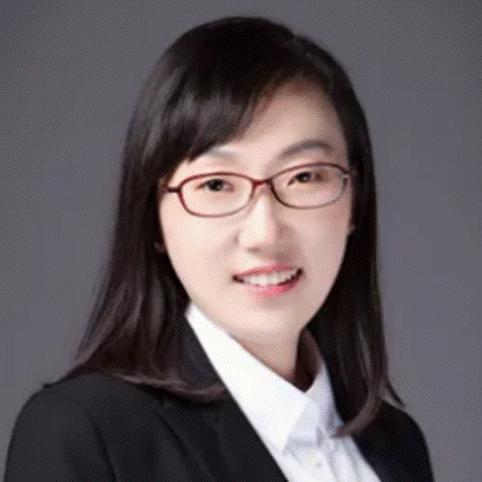
Wei Li
Jiangsu Province Hospital