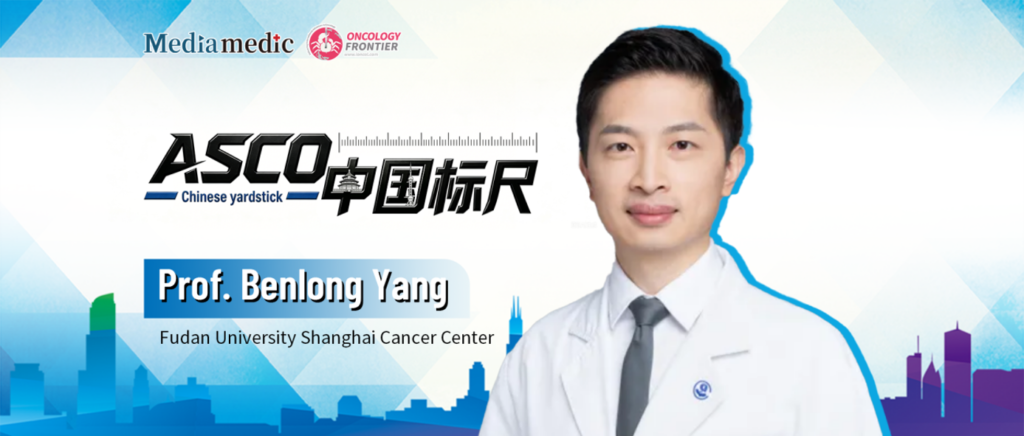
The Samsung Breast Cancer Forum, a national meeting bringing together young breast cancer specialists from China's four leading academic breast cancer organizations, was recently held in Zhengzhou. The conference featured a comprehensive scientific program focused on advances in precision breast cancer care, multidisciplinary collaboration, and the development of future clinical leaders.During the meeting, Oncology Frontier interviewed the conference Executive Chair, Benlong Yang from Fudan University Shanghai Cancer Center. He discussed the highlights of this year’s program, the evolution of precision treatment across different breast cancer subtypes, and offered practical advice for young clinicians seeking to build successful careers in both clinical practice and research.
Oncology Frontier: As Executive Chair of this year’s meeting, what were the key highlights of the scientific program, and what do you hope young specialists gained from the conference?
Benlong Yang:
First, I would like to thank Oncology Frontier for its continued support of the Samsung Breast Cancer Forum.
The forum was co-founded by Keda Yu from Fudan University Shanghai Cancer Center and Yingying Xu from the First Hospital of China Medical University. Its mission has always been to bring together young members of China’s four major breast cancer academic organizations and create a platform that addresses the issues most relevant to early- and mid-career physicians.
This year, we selected Zhengzhou as the host city and invited young specialists from the Henan Anti-Cancer Association to join us. Since its inception, the forum has remained committed to supporting young physicians, focusing on their professional development, and giving back to the next generation.
The program was intentionally designed with two distinct themes.
The morning session, “Guiding the Future,” featured keynote lectures from leading experts including Binghe Xu and Zhimin Shao, who shared their perspectives on the future direction of breast cancer research and clinical practice.
In the afternoon, the spotlight shifted entirely to young specialists. Speakers presented innovative clinical research, shared experiences in hospital and departmental management, explored the growing role of artificial intelligence in medicine, and even participated in academic debates on important clinical topics. The diversity of perspectives reflected the energy, creativity, and enthusiasm that define today’s younger generation of breast cancer physicians.
Oncology Frontier: Precision treatment across different breast cancer subtypes was a major focus of the meeting. How do you view the current landscape, and where should young investigators focus their efforts?
Benlong Yang:
Precision medicine has been discussed in breast cancer for more than a decade, but over the past three to five years it has truly become part of everyday clinical practice.
Today, when a patient is diagnosed with breast cancer, both physicians and patients expect molecular testing and biomarker assessment before making treatment decisions. Precision medicine is no longer simply a concept—it has become standard clinical care.
For HR-positive breast cancer, we now have an expanding range of therapeutic targets, including PI3K inhibitors, AKT inhibitors, and an increasing number of oral SERDs. This year’s international meetings have showcased remarkable progress in oral SERD development, reflecting how rapidly this field is evolving.
At the conference, our session on HR-positive disease highlighted this evolution toward increasingly individualized treatment strategies driven by multiple therapeutic targets.
For triple-negative breast cancer, we reviewed advances in molecular subtyping, including the Fudan classification system developed under the leadership of Zhimin Shao, together with the rapidly expanding role of antibody-drug conjugates (ADCs).
For HER2-positive breast cancer, we also discussed emerging work integrating artificial intelligence into treatment selection. Although numerous effective therapies are now available, choosing the optimal treatment remains challenging. In the past, clinicians often relied on trial and error, but artificial intelligence may eventually help guide treatment decisions more accurately. As these technologies continue to evolve, they have the potential to make treatment more personalized while reducing unnecessary toxicity.
Oncology Frontier: The conference placed strong emphasis on developing young physicians. What advice would you give early-career breast cancer specialists?
Benlong Yang:
I believe this is both the best era and one of the most demanding eras for young physicians.
Clinical workloads are heavier than ever, particularly at major cancer centers, and competition is intense. To distinguish yourself, you need your own unique strengths. We are not trying to train identical physicians—we want every young doctor to develop individual expertise and contribute something distinctive.
My first piece of advice is to stay firmly grounded in clinical practice. Caring for patients is our primary responsibility. Successful treatment is not measured only by disease control but also by patient satisfaction. Beyond curing the disease, we should strive to preserve quality of life, cosmetic outcomes, psychological well-being, and meet each patient’s individual needs.
Second, focus on generating evidence from your own clinical practice. Large international Phase III trials and novel drug development are often beyond the reach of young investigators. However, many meaningful research questions arise from everyday clinical care. Optimizing combinations of established therapies, refining surgical techniques, improving drain management, antibiotic use, wound care, or rehabilitation protocols all represent valuable opportunities for impactful research. High-quality local data can make important contributions to clinical practice.
Third, develop a habit of continuous learning. New therapies, clinical trials, and scientific information emerge at an extraordinary pace. If physicians stop learning, patients may become better informed than their doctors. Keeping up with new evidence is now an essential professional responsibility.
Finally, embrace new technologies. Artificial intelligence, large language models, robotics, and other emerging tools are already transforming healthcare. Those who learn to use these technologies early will have a significant advantage. We should actively embrace innovation, adapt quickly, and take advantage of every opportunity to improve both patient care and clinical research.
Professor
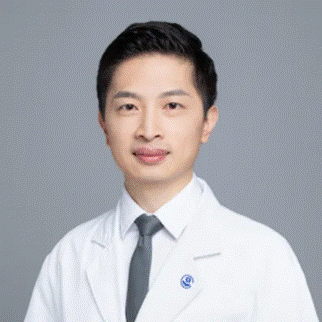
Benlong Yang
Fudan University Shanghai Cancer Center