
As the prevalence of kidney stones continues to rise and complex stone disease becomes increasingly common, there is growing demand for minimally invasive, effective, and safe treatment strategies. Flexible ureteroscopy has become a cornerstone of upper urinary tract stone management; however, its role in treating large stone burdens, infection-related stones, and anatomically complex cases remains a subject of debate. Meanwhile, advances such as laser lithotripsy, single-use ureteroscopes, and suction-assisted access sheaths continue to expand treatment possibilities. Balancing maximal stone clearance with minimal complications remains one of the key challenges in modern endourology.To discuss these important issues, UroStream interviewed Prof. John D. Denstedt of Western University (Canada) about the evolution of ureteroscopic technology, management strategies for complex renal stones, complication prevention, and future directions in the field.
UroStream:
Over the past two decades, advances such as flexible ureteroscopes, holmium and thulium lasers, suction access sheaths, and single-use ureteroscopes have continuously expanded the indications for ureteroscopy. In your opinion, what now defines the limits of ureteroscopic treatment—technology or clinical considerations?
Prof. John D. Denstedt:
Thank you for the interview.
Over the past 20 years, both ureteroscopy (URS) and percutaneous nephrolithotomy (PCNL) have advanced tremendously. In particular, improvements in ureteroscopic technology—including higher-quality imaging systems, various laser platforms and their evolving technologies, as well as suction-assisted access sheaths—have significantly expanded the range of renal stones that can be managed through a retrograde approach.
Historically, 2 cm was generally considered the upper size limit for ureteroscopic stone treatment. Today, however, that boundary is increasingly being challenged.
That said, we need to proceed cautiously. We still lack sufficient high-quality randomized controlled trials comparing different treatment strategies in terms of stone-free rates, complication rates, and healthcare costs. Therefore, future progress will depend not only on continued technological innovation but also on stronger evidence to guide clinical decision-making.
UroStream:
When treating large or infection-related renal stones, how do you balance achieving complete stone clearance in a single procedure against the risk of serious complications?
Prof. John D. Denstedt:
There are two major concerns: the risk of sepsis and the risk of ureteral stricture.
For patients at higher risk of sepsis—such as women, individuals with diabetes, patients with infection stones, or those with positive preoperative urine cultures—it is essential to perform a thorough preoperative evaluation and adequately treat any existing infection. Intravenous antibiotics should be routinely administered during the perioperative period to minimize infectious complications.
Operative time is also a critical factor. In general, I do not recommend procedures lasting longer than 90 minutes. Careful surgical planning and efficient operative technique can substantially reduce the risks of intraoperative infection and postoperative sepsis.
On the other hand, although ureteral stricture is relatively uncommon, occurring in approximately 1%–2% of patients, it remains a serious complication that can significantly affect long-term quality of life. It may result from repeated or aggressive retrograde manipulation. While newer technologies may help reduce this risk, longer-term follow-up data are still needed to confirm their benefit.
UroStream:
Looking ahead over the next five to ten years, what do you believe will truly drive the evolution of ureteroscopy—technological innovation, real-world evidence, or guideline updates?
Prof. John D. Denstedt:
Predicting technological advances over the next five to ten years is always challenging because urology is a rapidly evolving specialty.
One thing is certain: we should not assume that current technology represents the endpoint. New devices and innovations will continue to emerge and further transform clinical practice.
At the same time, real-world evidence and high-quality randomized controlled trials will become increasingly important. Only through rigorous clinical research can we accurately compare different treatment strategies in terms of efficacy, complication rates, and cost-effectiveness, ultimately providing the evidence needed to refine future clinical guidelines.
Overall, whether driven by technological innovation or guideline updates, the future of ureteroscopy will ultimately depend on high-quality evidence-based medicine.
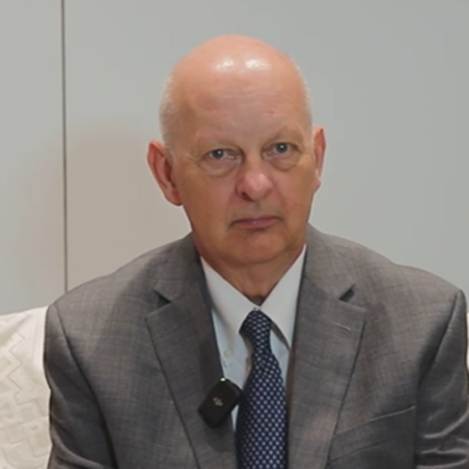
Prof. John D. Denstedt
Western University, Canada