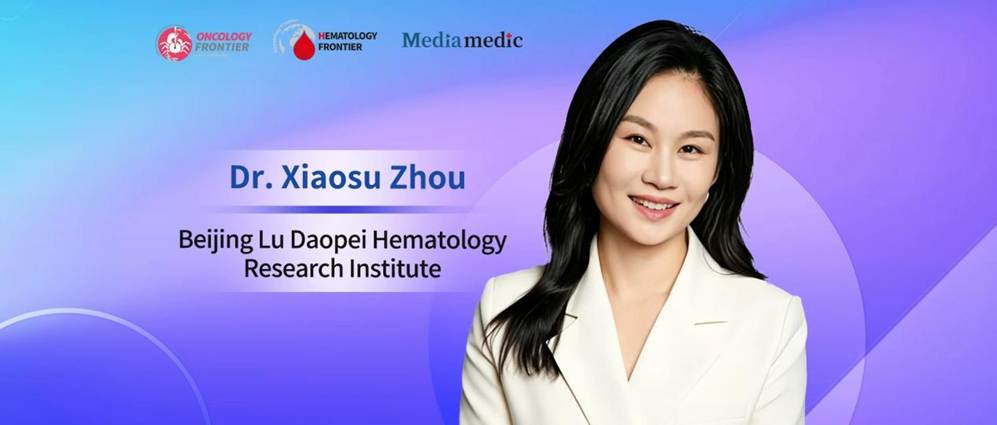
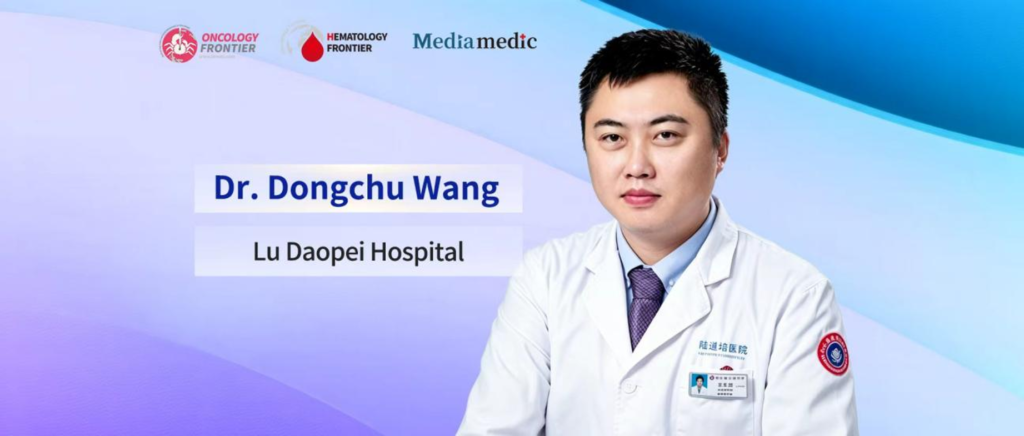
EHA 2026 Echoes | Hui Wang and Dongchu Wang: Cytokine Profiles Following CD7 CAR-T Therapy Correlate with GVHD After Bridging Allogeneic Hematopoietic Stem Cell Transplantation

EHA 2026 Echoes | Hui Wang and Dongchu Wang: Cytokine Profiles Following CD7 CAR-T Therapy Correlate with GVHD After Bridging Allogeneic Hematopoietic Stem Cell Transplantation

The 2026 Congress of the European Hematology Association (EHA 2026) was held from June 11–14 in Stockholm, Sweden. As one of the world's premier hematology meetings, EHA brings together leading experts across basic research, translational medicine, and clinical practice to showcase the latest advances in blood disorders.
ASCO Voice of China | Prof. Yinying Wu Reviews Advances in Gastrointestinal Oncology: RAS-Targeted Therapy Reaches a Milestone as Multiple Chinese Original Studies Take Center Stage

ASCO Voice of China | Prof. Yinying Wu Reviews Advances in Gastrointestinal Oncology: RAS-Targeted Therapy Reaches a Milestone as Multiple Chinese Original Studies Take Center Stage

The 2026 American Society of Clinical Oncology (ASCO) Annual Meeting was held in grand fashion in Chicago, showcasing numerous highlights and breakthroughs in gastrointestinal oncology. On this occasion, Oncology Frontier invited Prof. Yinying Wu from the First Affiliated Hospital of Xi’an Jiaotong University to share her perspectives and discuss the impressive contributions of Chinese investigator-initiated research presented at this year’s meeting.
CGOG 2026 Day 4 | Precision Translational Medicine Forum

CGOG 2026 Day 4 | Precision Translational Medicine Forum

Following the successful online sessions held during the first three days of the CGOG Annual Meeting, including six ASCO Highlights sessions and six thematic symposia, the on-site program officially commenced on June 12. On Day 4 of the 16th Peking University Gastrointestinal Oncology Forum and CGOG Annual Meeting, two parallel forums attracted strong interest from attendees. The Precision Translational Medicine Forum brought together experts from a wide range of academic disciplines for in-depth exchange and discussion.
A New Breakthrough in Adjuvant Endocrine Therapy: lidERA Study Confirms Giredestrant Significantly Improves iDFS in Pre/Postmenopausal HR+ Early Breast Cancer

A New Breakthrough in Adjuvant Endocrine Therapy: lidERA Study Confirms Giredestrant Significantly Improves iDFS in Pre/Postmenopausal HR+ Early Breast Cancer

At the recent 2026 ASCO Annual Meeting, Professor Peter Schmid, representing the lidERA study group from the Barts Cancer Institute, Queen Mary University of London, detailed the efficacy and safety analysis results based on menopausal status (pre/perimenopausal vs. postmenopausal) from the Phase III lidERA BC clinical trial. The study aims to evaluate the clinical value of Giredestrant (GIRE), a next-generation oral selective estrogen receptor degrader (SERD), in the adjuvant treatment of patients with estrogen receptor-positive (ER+), HER2-negative (HER2-) early breast cancer (eBC).
Regardless of Trop-2, BRCA, or HER2 Status, SG plus Pembrolizumab Significantly Improves PFS in 1L PD-L1+ mTNBC Patients: Subgroup Analysis of the ASCENT-04 Study

Regardless of Trop-2, BRCA, or HER2 Status, SG plus Pembrolizumab Significantly Improves PFS in 1L PD-L1+ mTNBC Patients: Subgroup Analysis of the ASCENT-04 Study

At the 2024 American Society of Clinical Oncology (ASCO) Annual Meeting, Professor Sara M. Tolaney from Dana-Farber Cancer Institute and Harvard Medical School, representing the research team, presented the latest exploratory analysis results of the ASCENT-04 study (NCT04612127). This analysis delved into the impact of biomarkers—Trop-2 expression levels, BRCA mutation status, and HER2 expression status—on the efficacy of Sacituzumab Govitecan (SG) combined with Pembrolizumab as a first-line treatment for PD-L1 positive metastatic triple-negative breast cancer (mTNBC), providing key evidence for the precise selection of benefited populations in clinical practice.
Balancing QoL Improvement Against Implant Risk: The Phase III Randomized PREPEC Trial Reveals Short- and Long-Term Benefits of Prepectoral Breast Reconstruction

Balancing QoL Improvement Against Implant Risk: The Phase III Randomized PREPEC Trial Reveals Short- and Long-Term Benefits of Prepectoral Breast Reconstruction

At a recent international academic conference, Professor Walter Weber from University Hospital Basel, Switzerland, detailed the results of the international randomized Phase III PREPEC trial (OPBC-02). The study aimed to compare the impact of two implant placement strategies—Prepectoral versus traditional Subpectoral—on the quality of life and safety of patients undergoing implant-based breast reconstruction (IBBR) following therapeutic or prophylactic mastectomy.
Overcoming the Dilemma of First-line TKI Resistance: Olverembatinib Second-line Treatment Achieves 76% CCyR in CP-CML without T315I Mutation

Overcoming the Dilemma of First-line TKI Resistance: Olverembatinib Second-line Treatment Achieves 76% CCyR in CP-CML without T315I Mutation

The treatment of Chronic Myeloid Leukemia (CML) has entered the era of Tyrosine Kinase Inhibitors (TKIs), but the choice of treatment for patients after the failure of first-line therapy remains a focus of clinical attention. Olverembatinib (HQP1351), as the first third-generation TKI independently developed in China, has previously demonstrated excellent efficacy in populations carrying the T315I mutation. However, what is the value of Olverembatinib for patients in the chronic phase (CP-CML) who do not carry the T315I mutation and have developed resistance or intolerance after first-line TKI therapy? At a recent academic conference, Professor Li Weiming from Union Hospital, Tongji Medical College, Huazhong University of Science and Technology shared the latest efficacy and safety data of Olverembatinib in the second-line treatment of CP-CML patients. This article is specially organized for readers.