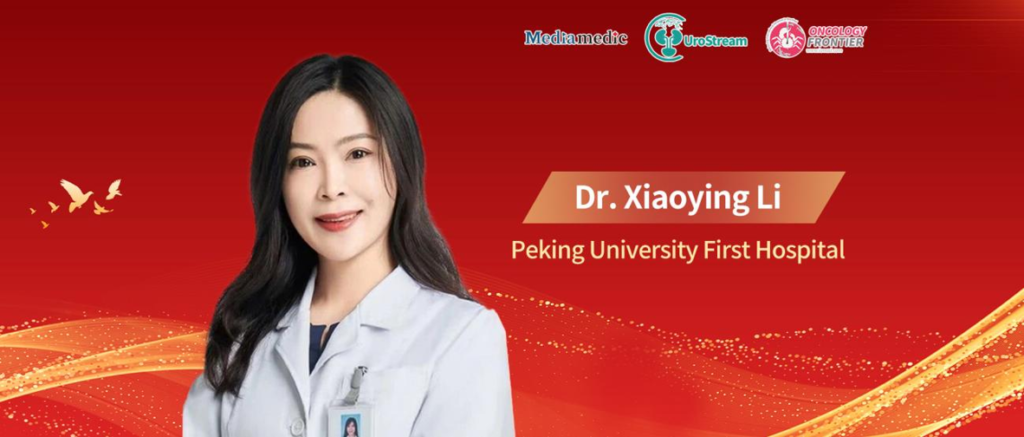
The 2026 Annual Meeting of the Chinese Urological Association (CUDA) was held in Zhengzhou from June 11–14, bringing together leading experts in urology and related disciplines under the theme "Unity, Collaboration, Innovation, and Development." The meeting focused on advancing high-quality clinical research, technological innovation, multidisciplinary collaboration (MDT), and regional cooperation, while promoting the continued development of comprehensive care for urologic diseases.During the meeting, Oncology Frontier – UroStream interviewed Prof. Xiaoying Li from Peking University First Hospital to discuss how emerging technologies are reshaping clinical practice, the pathway toward generating original high-quality clinical evidence, and the evolving role of MDT in the comprehensive management of urologic malignancies.
Oncology Frontier – UroStream: Robotic surgery, AI-assisted technologies, precision radiotherapy, targeted therapies, and immunotherapy are reshaping urologic oncology. How do you view their impact on everyday clinical practice?
Prof. Xiaoying Li: Thank you very much to Oncology Frontier for the invitation. I am Dr. Xiaoying Li from the Department of Radiation Oncology at Peking University First Hospital. In our daily clinical practice, we work closely with colleagues from urologic surgery, medical oncology, radiology, nuclear medicine, and other specialties through multidisciplinary team (MDT) collaboration. As radiation oncologists, we therefore remain actively engaged with advances in surgical techniques as well as the broader treatment landscape of urologic malignancies.
In recent years, the rapid development of robotic surgery and other innovative technologies has significantly transformed clinical practice. Procedures that previously required open surgery—or were considered technically challenging—can now be performed in a more minimally invasive and precise manner, providing patients with better treatment options and improved outcomes.
At the same time, the emergence of novel systemic therapies has brought substantial benefits to patients with urologic cancers. For metastatic disease that cannot be completely controlled through surgery or radiotherapy alone, these new treatment strategies have significantly reduced the risk of postoperative or post-radiotherapy recurrence and metastasis, ultimately improving both survival outcomes and patients’ quality of life.
Oncology Frontier – UroStream: High-quality clinical evidence is essential for increasing China’s international academic influence. In your opinion, how can the field of urology move from following international evidence to generating original evidence that shapes global practice?
Prof. Xiaoying Li: Clinical guidelines represent the highest level of medical recommendations and are built upon robust evidence generated from high-quality clinical studies, particularly multicenter randomized controlled trials. During this year’s CUDA meeting, we saw numerous clinical studies presented by colleagues in both urology and radiation oncology. However, given China’s current research environment, many of these remain investigator-initiated single-center studies. In fields such as surgery and radiotherapy, conducting randomized controlled trials is inherently more challenging than in pharmaceutical research.
Nevertheless, these investigator-initiated studies have already demonstrated meaningful clinical benefits, with some producing outcomes that go beyond current international guideline recommendations. In our routine MDT practice at Peking University First Hospital, treatment decisions are not based solely on published guidelines. Instead, we place greater emphasis on each patient’s individual clinical characteristics to develop personalized treatment strategies that may provide superior outcomes.
Looking ahead, the key challenge is how to translate these successful individualized treatment experiences into high-quality clinical evidence that can be widely recognized both nationally and internationally. Achieving this goal will require close collaboration among clinicians, medical device manufacturers, and pharmaceutical developers to establish more rigorous evidence capable of influencing future clinical guidelines.
Oncology Frontier – UroStream: This year’s CUDA meeting featured live surgical demonstrations alongside multidisciplinary discussions. How do you view the value of MDT in the comprehensive management of urologic malignancies, and what challenges remain in promoting this model more broadly?
Prof. Xiaoying Li: I also participated in the MDT session during this year’s meeting. At Peking University First Hospital, we have established a well-developed multidisciplinary team for urologic oncology that brings together specialists from urologic surgery, radiation oncology, medical oncology, radiology, pathology, and nuclear medicine. This collaborative model enables us to provide highly individualized and comprehensive treatment strategies for our patients.
However, through interactions with colleagues from across the country, we have also recognized that many hospitals still lack the necessary infrastructure to establish a complete MDT system. Some institutions do not have dedicated medical oncology, radiation oncology, or nuclear medicine departments, making multidisciplinary collaboration difficult to implement. Consequently, expanding MDT nationwide remains a significant structural challenge.
As radiation oncologists, one of our responsibilities is to increase awareness of the important role that radiotherapy plays within comprehensive cancer care. At the same time, we hope to promote the standardization of our specialty by conducting high-quality clinical research and actively sharing our findings through national and international academic platforms. By strengthening the evidence base and improving understanding among clinicians, we believe radiotherapy will become an even more integral component of MDT-based management for patients with urologic malignancies.

Prof. Xiaoying Li