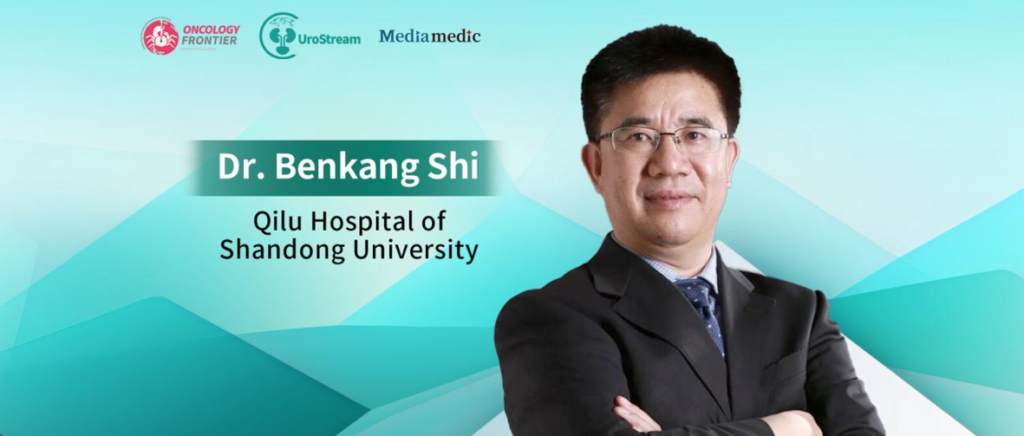
The 3rd Yellow River Urology Congress and the 31st Academic Conference on Urology of the Shandong Medical Association were recently held, bringing together leading urologists from across China to discuss the latest advances in the field, innovations in clinical practice, talent development, and regional collaboration.During the meeting, UroStream interviewed Prof. Benkang Shi, Honorary Chairman of the congress, to discuss the conference’s role in strengthening regional academic exchange, promoting the high-quality development of urology in Shandong Province, and outlining the future direction of the specialty.
Building Academic Consensus and Accelerating the Adoption of Advanced Concepts and Technologies
UroStream:
As the Honorary Chairman of this congress, how do you view the significance of the 3rd Yellow River Urology Congress and the 31st Academic Conference on Urology of the Shandong Medical Association in advancing the development of urology in Shandong and across China?
Prof. Benkang Shi:
The Yellow River Urology Congress is an important academic platform established by the Shandong Medical Association. As one of the key provinces along the Yellow River, Shandong is well positioned to contribute to the national strategy for high-quality development of the Yellow River Basin. Hosting this congress is not only a practical step toward supporting that initiative but also an important opportunity to strengthen regional medical collaboration and promote coordinated development within urology.
This year’s meeting brought together many distinguished experts from across the country in Weihai to engage with colleagues from Shandong on topics including cutting-edge scientific advances, clinical practice, and technological innovation.
On one hand, the congress introduced advanced treatment concepts, innovative technologies, and standardized management strategies from leading institutions nationwide, creating an excellent platform for translating new ideas and technologies into clinical practice within Shandong.
On the other hand, it also provided an important opportunity for urologists in Shandong to showcase the province’s achievements in specialty development, clinical practice, and regional innovation.
Through high-level academic exchange, we hope to further enhance the overall quality of urologic care and the academic influence of Shandong Province, ultimately meeting the growing healthcare needs of the public.
At the same time, we hope this congress will serve as a bridge for closer collaboration between Shandong and urology colleagues across China, enabling Shandong to contribute more expertise and innovation to the continued development of Chinese urology and to the realization of the Healthy China 2030 initiative.
Driving Innovation While Strengthening the Talent Pipeline
UroStream:
Shandong has made remarkable progress in clinical practice, scientific innovation, and physician training in recent years. What do you consider to be the province’s major strengths, and what areas require further development?
Prof. Benkang Shi:
Innovation has always been the driving force behind the advancement of our specialty.
For more than a decade, urologists in Shandong have consistently prioritized innovation—not only by embracing new treatment concepts but also by advancing clinical techniques and improving models of patient care.
As disease patterns, patient expectations, and medical technologies continue to evolve, urologists must remain attentive to developments at the forefront of the field, continually update their knowledge, and refine clinical strategies based on real-world practice in order to provide patients with increasingly standardized, precise, and high-quality care.
Equally important, however, is building a sustainable talent pipeline and ensuring effective mentorship across generations.
In recent years, we have devoted considerable effort to supporting the development of young and mid-career physicians by creating more opportunities for learning, academic exchange, and clinical practice.
We encourage young physicians to participate actively in both domestic and international academic meetings, study high-quality scientific literature, carefully analyze their clinical experience, and identify and solve problems encountered in everyday practice.
Looking ahead, Shandong’s urology community should further strengthen the integration of clinical needs with scientific research, promote multicenter collaboration and high-quality clinical studies, and accelerate the translation of innovative research into clinical practice.
At the same time, we should continue improving our physician training system and fully harness the creativity and enthusiasm of young investigators. By doing so, we hope to develop more innovative concepts, technologies, and treatment strategies with distinctive strengths from Shandong that address real clinical challenges and provide a stronger foundation for the long-term development of the specialty.
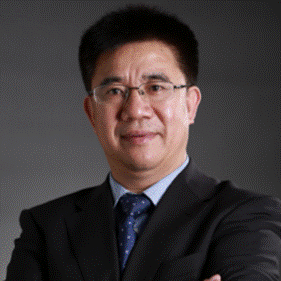
Prof. Benkang Shi