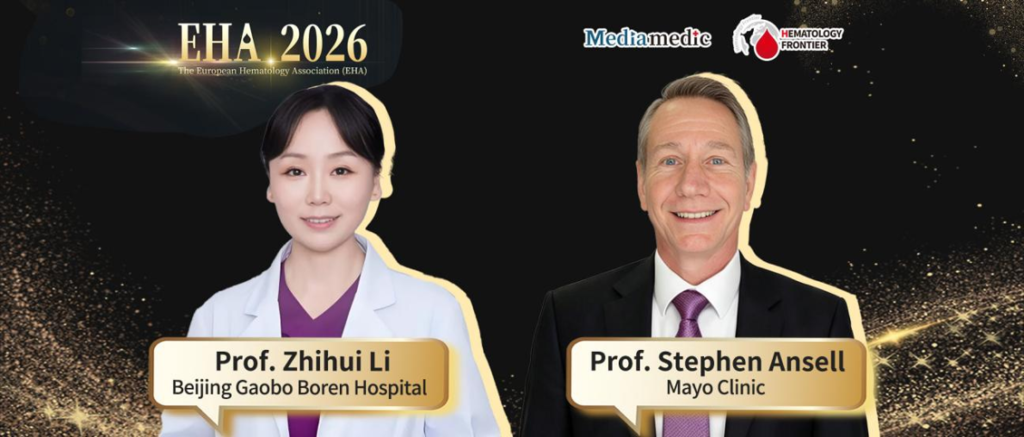
Crossing borders, exchanging insights, and exploring the frontiers of hematology. During the 2026 Congress of the European Hematology Association (EHA), Oncology Frontier – Hematology Frontier invited Dr. Zhihui Li, Director of Beijing Gaobo BoRen Hospital, and Prof. Stephen Ansell of Mayo Clinic for an in-depth discussion on the tumor immune microenvironment and precision treatment of Hodgkin lymphoma (HL).Prof. Ansell reviewed the translational journey of PD-1 blockade, discussed the clinical significance of CD30 expression and 9p24.1 amplification, and shared his perspectives on the future of transplant-deescalation strategies and novel immunotherapies. The two experts also exchanged views on the challenges of translating findings from HL research into the treatment of T-cell lymphomas. The following article summarizes the key points of their discussion to provide insights for clinical practice.
Dr. Zhihui Li: Over the past decade, researchers have gained a much deeper understanding of the interaction between Reed-Sternberg cells and the immune microenvironment. At the same time, PD-1 blockade has achieved remarkable clinical success in the treatment of Hodgkin lymphoma. In your view, what has been the most influential biological discovery in HL research over the past decade? How has this progress changed our treatment concepts and everyday clinical practice?
Prof. Stephen Ansell: That is a very good question. Overall, I think there have been two major discoveries that have had a profound impact on the treatment of HL. The first was the recognition, more than a decade ago, that CD30 is highly expressed on the tumor cells. The second, which we have come to understand more clearly over the past decade, is that amplification or increased copy number of chromosome 9p24.1 is the fundamental mechanism driving the overexpression of PD-L1 and PD-L2.
The clinical translation of these discoveries has been particularly important. We can target CD30 with brentuximab vedotin, while nivolumab and pembrolizumab target the pathway associated with PD-L1 and PD-L2 overexpression. These developments have truly transformed the treatment landscape of Hodgkin lymphoma.
Oncology Frontier – Hematology Frontier: PD-1 inhibitors have significantly improved outcomes for patients with HL. Nevertheless, increasing cure rates, reducing the risk of relapse, and optimizing long-term disease management remain major unmet clinical needs. From a biological perspective, which patient populations are most likely to benefit from early immunotherapy intervention? Do you believe that PD-1 inhibitors will continue to move into earlier lines of treatment and further reshape the current HL treatment landscape?
Prof. Stephen Ansell: First, regarding which patient populations derive the greatest benefit, the reality is that many patients can benefit substantially from these therapies. Two groups stand out in particular.
The first is patients with relapsed or refractory disease. In the past, patients who failed autologous transplantation often had very limited treatment options. The introduction of PD-1 blockade has completely changed that situation, providing meaningful clinical benefit to many patients who previously had few effective therapeutic options.
The second group is older patients. Because this population often has limited tolerance for conventional chemotherapy, newer immunotherapies such as nivolumab and pembrolizumab have not only expanded treatment options but have also substantially improved treatment tolerability for older patients.
The second part of your question concerns moving these therapies into the first-line setting. What is clear today is that immunotherapy has already become part of established first-line treatment. In the United States, for example, nivolumab combined with AVD chemotherapy has become one of the standard treatment approaches.
In addition, the use of these therapies is gradually expanding toward first-line treatment of patients with earlier-stage disease and lower tumor burden. Clinical trials are currently underway to further define the precise benefits of PD-1 blockade in these patient populations.
Dr. Zhihui Li: Your research into immune escape and the tumor microenvironment in HL has been highly informative for our work. Our team is currently focusing on aggressive T-cell malignancies, including T-lymphoblastic lymphoma (T-LBL) and peripheral T-cell lymphomas. How can findings from research into the HL tumor microenvironment and immune escape be translated into the treatment of T-cell lymphomas? Which mechanisms and biomarkers do you believe hold the greatest potential for clinical translation?
Prof. Stephen Ansell: That is an excellent question, although the situation is certainly complex. Some findings from HL research have translated relatively well into T-cell lymphomas, while other areas remain challenging.
As mentioned earlier, CD30 is not only an important target in HL but also has significant clinical value in many T-cell lymphomas. Clinical trials have demonstrated that patients with CD30-expressing T-cell lymphomas can achieve excellent outcomes with brentuximab vedotin combined with chemotherapy. However, it is important to recognize that this is a targeted therapeutic approach and, strictly speaking, is not equivalent to immunotherapy.
Compared with targeted therapy, PD-1 blockade has shown considerably more variable efficacy in T-cell lymphomas. Clinical data indicate that only approximately one-third of patients with T-cell lymphomas may benefit from PD-1 blockade. At the same time, some patients can experience hyperprogression or abnormal immune activation and other adverse events. Overall, the efficacy of immune checkpoint therapies in T-cell lymphomas remains heterogeneous, and their clinical application is subject to significant limitations.
As for the lessons we can draw from research into the tumor immune microenvironment, I believe this is precisely where one of the major challenges lies. In T-cell lymphomas, we want to activate the “good” immune cells so that they can mount a strong antitumor response, while avoiding activation of the “bad” malignant T cells. This is extremely challenging because current treatment approaches do not have sufficient specificity. They may affect beneficial immune cells while also potentially stimulating malignant cells.
Therefore, we still have a great deal of work to do to understand these mechanisms and develop more selective therapeutic strategies.
Oncology Frontier – Hematology Frontier: With the rapid development of modern immunotherapy, treatment options for HL are becoming increasingly diverse. Could you share your perspective on the future roles of autologous stem cell transplantation, cellular therapies, and novel immunotherapies in HL? Furthermore, can emerging biological discoveries help us achieve more precise patient stratification, identify patients who require treatment intensification, and avoid unnecessary overtreatment?
Prof. Stephen Ansell: At present, autologous stem cell transplantation remains the standard treatment for patients with relapsed or refractory disease. However, for patients with lower-risk disease who receive less intensive first-line treatment, a number of clinical trials are actively investigating transplant-deescalation strategies to determine whether non-transplant approaches can achieve comparable outcomes.
We are following these data very closely. Nevertheless, at the current stage, a substantial proportion of patients still require intensified treatment, including transplantation.
With regard to whether novel therapies can eventually replace transplantation, immunotherapy and CAR-T cell therapy are certainly among the most promising approaches. However, as we all know, their translation into clinical practice has proven more challenging than initially anticipated.
Although bispecific antibodies, CAR-T cell therapy, and bispecific T-cell engagers (BiTEs) have demonstrated very high response rates, the durability of these responses has often been less satisfactory. For younger patients in particular, our ultimate goal is cure. Therefore, one of the major challenges for the future is determining how to improve the durability of responses achieved with bispecific antibodies and CAR-T cell therapy in HL.
I believe combination strategies may provide an important avenue forward. For example, combining these approaches with PD-1 antibodies or introducing them earlier in the course of treatment could potentially improve the durability of responses. These are areas that warrant further investigation.
Finally, regarding how precision medicine can help us achieve these goals, existing research on circulating tumor DNA (ctDNA) has already demonstrated the potential to identify patients with different levels of risk. In the future, biomarkers such as ctDNA may enable us to stratify patients more precisely and tailor treatment intensity accordingly, ultimately leading to better outcomes while avoiding unnecessary treatment.
Expert Profiles

Prof. Stephen Ansell
Mayo Clinic
Prof. Stephen Ansell, M.D., Ph.D., is a hematologist and oncologist as well as a cancer researcher. His research focuses primarily on the biology of B-cell malignancies, including Hodgkin lymphoma, Waldenström macroglobulinemia, and non-Hodgkin lymphoma. He has also conducted extensive research into the role of the tumor microenvironment in supporting cancer cell growth and survival.
Since 2022, Prof. Ansell has served as Deputy Director and Senior Associate Director of the Mayo Clinic Comprehensive Cancer Center, Midwest Campus. He has served as Chair of the Scientific Advisory Board of the International Waldenström’s Macroglobulinemia Foundation since 2015 and as a member of the Scientific Advisory Board of the Lymphoma Research Foundation since 2015. He has also served on the Scientific Committee of the Leukemia & Lymphoma Society since 2015 and has been Associate Editor of the American Journal of Hematology since 2011.
In 2022, he was appointed the Dorotha W. and Grant L. Sundquist Professor of Hematologic Malignancies and received the Leukemia & Lymphoma Society (LLS) Distinguished Service Award. In 2021, he received the Ernest Beutler Lecture and Prize for Achievement in Hematology from the American Society of Hematology.
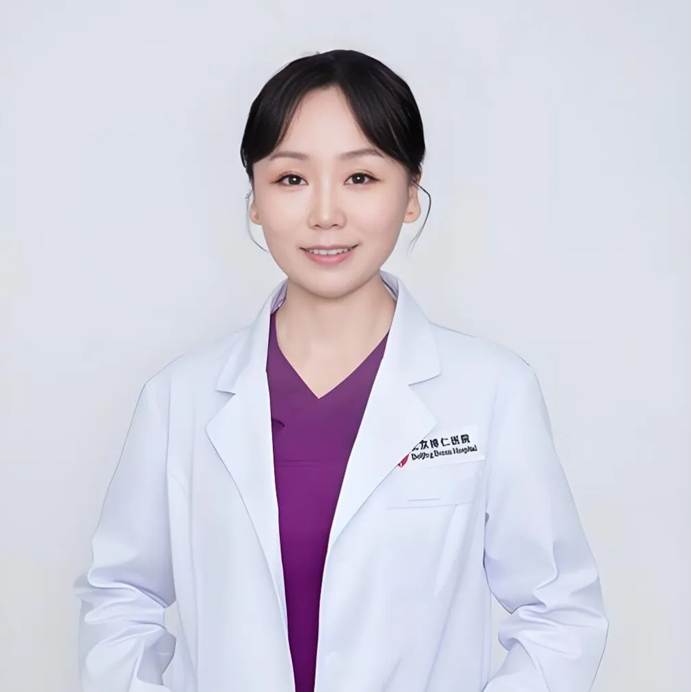
Dr. Zhihui Li
Beijing Gaobo BoRen Hospital
Dr. Zhihui Li is a Chief Physician and M.D. She serves as Director of the Hematology Department, Hematopoietic Stem Cell Transplantation Unit, at Beijing Gaobo BoRen Hospital, Gaobo Medical (Hematology) Beijing Research Center.
Dr. Li has extensive experience in clinical hematology and laboratory research, with particular expertise in CAR-T bridging to allogeneic hematopoietic stem cell transplantation for B-ALL, T-ALL, and NK/T-cell lymphomas, as well as hematopoietic stem cell transplantation and the prevention and management of transplant-related complications in hemophagocytic lymphohistiocytosis, aplastic anemia, myelodysplastic syndromes, and other hematologic disorders.
She serves as Deputy Chair and Secretary-General of the Hematologic Disease Digital Diagnosis and Treatment Committee of the Beijing Imaging Technology Innovation Alliance, and is a member of the Hematologic Oncology Committee of the Chinese Anti-Cancer Association and several other professional organizations. She also serves on the editorial board of Radiology Science.
Her research has been published in journals including Bone Marrow Transplantation, Frontiers in Immunology, and Transplantation and Cellular Therapy. She has delivered presentations and presented posters at major international hematology conferences, including the American Society of Hematology (ASH) Annual Meeting, the European Hematology Association (EHA) Congress, the European Society for Blood and Marrow Transplantation (EBMT) Congress, and the Asia-Pacific Blood and Marrow Transplantation Congress (APBMT), with more than 30 presentations and poster contributions.