Overcoming the Dilemma of First-line TKI Resistance: Olverembatinib Second-line Treatment Achieves 76% CCyR in CP-CML without T315I Mutation

Overcoming the Dilemma of First-line TKI Resistance: Olverembatinib Second-line Treatment Achieves 76% CCyR in CP-CML without T315I Mutation

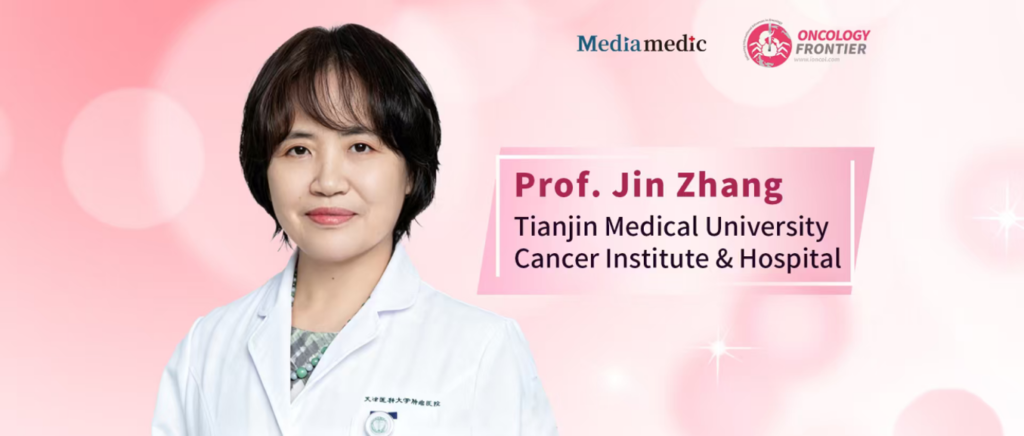
The treatment of Chronic Myeloid Leukemia (CML) has entered the era of Tyrosine Kinase Inhibitors (TKIs), but the choice of treatment for patients after the failure of first-line therapy remains a focus of clinical attention. Olverembatinib (HQP1351), as the first third-generation TKI independently developed in China, has previously demonstrated excellent efficacy in populations carrying the T315I mutation. However, what is the value of Olverembatinib for patients in the chronic phase (CP-CML) who do not carry the T315I mutation and have developed resistance or intolerance after first-line TKI therapy? At a recent academic conference, Professor Li Weiming from Union Hospital, Tongji Medical College, Huazhong University of Science and Technology shared the latest efficacy and safety data of Olverembatinib in the second-line treatment of CP-CML patients. This article is specially organized for readers.
EHA Echoes | Prof. Liang Wang: CD19/CD22 Dual-Target CAR-T Plus  Maintenance Therapy Breaks Through the Long-Term Survival Bottleneck in R/R LBCL

EHA Echoes | Prof. Liang Wang: CD19/CD22 Dual-Target CAR-T Plus  Maintenance Therapy Breaks Through the Long-Term Survival Bottleneck in R/R LBCL

At the 2026 Congress of the European Hematology Association (EHA), Prof. Liang Wang from Beijing Tongren Hospital, Capital Medical University, delivered an oral presentation unveiling the latest follow-up results of CAR2219, a CD19/CD22 dual-target CAR-T cell therapy for patients with relapsed/refractory large B-cell lymphoma (R/R LBCL). The study reported an impressive 12-month progression-free survival (PFS) rate of 59.8%.
Science Without Borders, Advancing Toward Cure: EHA 2026 Opens in Stockholm, Charting a New Era of Global Collaboration and High-Quality Development in Hematology

Science Without Borders, Advancing Toward Cure: EHA 2026 Opens in Stockholm, Charting a New Era of Global Collaboration and High-Quality Development in Hematology

In June 2026, the European Hematology Association (EHA) Congress officially opened in Stockholm, Sweden, bringing together the global hematology community for one of the field’s most influential scientific events. As the largest and most prestigious annual meeting in hematology, EHA 2026 not only showcased groundbreaking scientific discoveries but also unveiled strategic initiatives that will help shape the future of hematology research and patient care over the next decade.
EHA 2026 Echoes | Hui Wang and Man Chen: Impact of Two Antithymocyte Globulin Conditioning Regimens on Immune Reconstitution After Allogeneic Hematopoietic Stem Cell Transplantation

EHA 2026 Echoes | Hui Wang and Man Chen: Impact of Two Antithymocyte Globulin Conditioning Regimens on Immune Reconstitution After Allogeneic Hematopoietic Stem Cell Transplantation

The 2026 Congress of the European Hematology Association (EHA 2026), held from June 11–14 in Stockholm, Sweden, brought together leading experts from around the world to showcase the latest advances in hematology research, translational medicine, and clinical practice.
EHA 2026 Echoes | Ruijuan Sun and Hai He: Allogeneic HSCT Overcomes the Poor Prognosis Associated with NUP98::NSD1-Positive Acute Myeloid Leukemia

EHA 2026 Echoes | Ruijuan Sun and Hai He: Allogeneic HSCT Overcomes the Poor Prognosis Associated with NUP98::NSD1-Positive Acute Myeloid Leukemia

The 2026 Congress of the European Hematology Association (EHA 2026) was held from June 11 to 14 in Stockholm, Sweden. As one of the most influential international meetings in hematology, EHA brings together leading experts from around the world to showcase the latest advances in basic science, translational research, and clinical practice.