CSCO 2026 | Professor Yongmei Yin: OptiTROP-Breast05 Wins the “2026 Innovation Research Award,” as China’s First Homegrown TROP2 ADC Advances First-Line TNBC Treatment

CSCO 2026 | Professor Yongmei Yin: OptiTROP-Breast05 Wins the “2026 Innovation Research Award,” as China’s First Homegrown TROP2 ADC Advances First-Line TNBC Treatment

The 29th Annual Meeting of the Chinese Society of Clinical Oncology (CSCO) was held in Jinan, Shandong Province, from September 16 to 19, 2026. During the meeting, Professor Yongmei Yin of Jiangsu Province Hospital presented updated results from OptiTROP-Breast05, a multicenter Phase II study evaluating first-line sacituzumab tirumotecan (sacituzumab govitecan? No—sacituzumab tirumotecan, SKB264/MK-2870), China's first independently developed TROP2-directed antibody–drug conjugate (ADC), in advanced triple-negative breast cancer (TNBC). The objective response rate (ORR) reached 70.7%, and median overall survival (OS) was 32.8 months. At the opening ceremony on the first day of the CSCO Annual Meeting, the study received the “2026 Innovation Research Award,” reflecting strong recognition from Chinese experts. Oncology Frontier invited Professor Yongmei Yin, Lead Principal Investigator of OptiTROP-Breast05, to contribute this article exploring the far-reaching implications of China's innovative medicines. The full text follows.
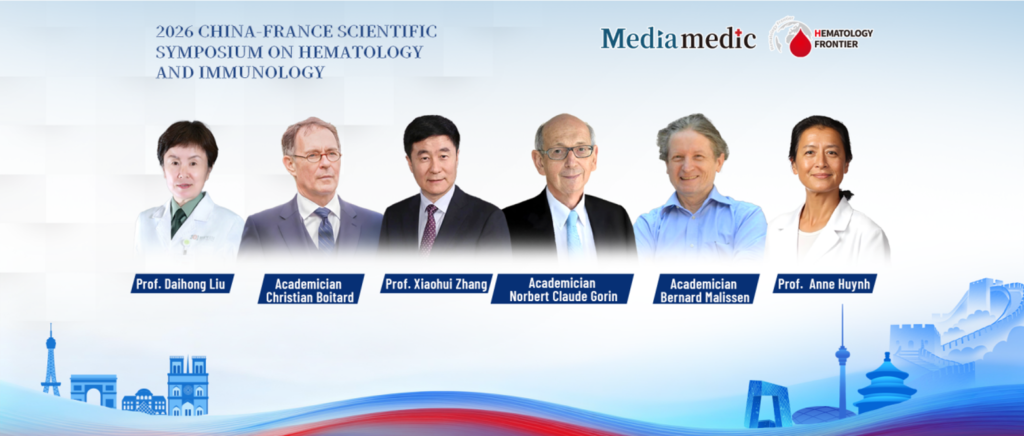
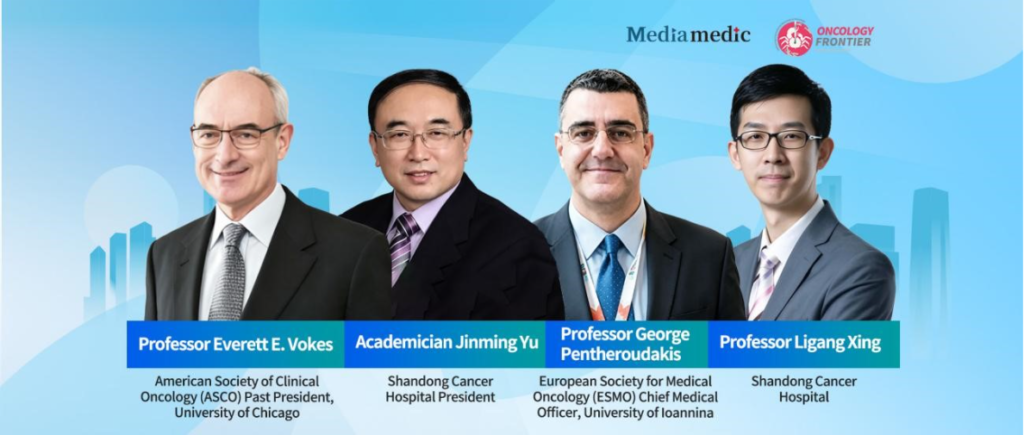
Blood × Immunology: Six Leading Chinese and French Experts Discuss Frontiers, Breakthroughs, and Clinical Translation | 2026 China-France Scientific Symposium on Hematology and Immunology

Blood × Immunology: Six Leading Chinese and French Experts Discuss Frontiers, Breakthroughs, and Clinical Translation | 2026 China-France Scientific Symposium on Hematology and Immunology

The 2026 China-France Scientific Symposium on Hematology and Immunology was held in Beijing from September 11 to 13, 2026. Building on the longstanding tradition of academic exchange between China and France in hematology, this year's meeting further expanded its scope to the intersection of hematology and immunology, bringing together renowned experts from both countries to explore scientific frontiers and exchange ideas.
Professor Lei Wang: Applications of Holographic Imaging in Partial  Nephrectomy

Professor Lei Wang: Applications of Holographic Imaging in Partial  Nephrectomy

As the concept of precision surgery continues to advance, partial nephrectomy (PN) has become the gold standard for the treatment of early-stage renal cancer. However, accurately identifying anatomy intraoperatively, shortening warm ischemia time, and preserving renal function remain major challenges for urologists, particularly when treating complex hilar and endophytic renal tumors. Recently, at the CACA GU meeting, Professor Lei Wang, Chief Physician in the Department of Urology at Peking University Shougang Hospital, delivered an in-depth presentation on the applications of holographic imaging in partial nephrectomy. Drawing on years of clinical experience and research findings from his team, Professor Wang outlined the technological evolution from three-dimensional reconstruction to medical holographic imaging and demonstrated the potential advantages of this technology in supporting complex surgical decision-making and improving the likelihood of achieving the “Trifecta” outcome.
A New Chapter of Innovation: Fudan University Shanghai Cancer Center Officially Establishes Its Urologic Oncology Center

A New Chapter of Innovation: Fudan University Shanghai Cancer Center Officially Establishes Its Urologic Oncology Center

In October 2026, as the autumn season ushers in a new chapter of progress and the spirit of excellence is passed on to the next generation, the Urologic Oncology Center of Fudan University Shanghai Cancer Center was officially established. In line with the hospital's strategic plan for the 15th Five-Year Plan period (2026–2030), which calls for the development of disease-specific centers, the initiative aims to build a nationally leading and internationally first-class center for urologic cancer diagnosis, treatment, and research. This milestone marks a new stage in the development of urologic oncology at the hospital, characterized by centralized leadership, coordinated operations across two campuses, and integrated development.
Professor Lei Wang: Applications of Holographic Imaging in Partial Nephrectomy 

Professor Lei Wang: Applications of Holographic Imaging in Partial Nephrectomy 

The urothelial carcinoma research team led by Professor Hailong Hu, Principal Investigator (PI) of the urothelial carcinoma subspecialty in the Department of Urology at the Second Hospital of Tianjin Medical University, has published the TRUCE-04 clinical study as an Original Investigation in JAMA Oncology, a leading international oncology journal with an impact factor of 23.9. The journal is part of the JAMA Network and is classified as a Chinese Academy of Sciences Q1 Top journal. The article is entitled “Disitamab Vedotin Plus Tislelizumab in Transurethrally Unresectable, ERBB2-Positive, Non-Muscle-Invasive Bladder Cancer.”
Professor Aili Zhang: Rapid Testosterone Suppression, Stable Inhibition, and Long-Term Management—Reassessing the Role of LHRH Antagonists in Prostate Cancer ADT

Professor Aili Zhang: Rapid Testosterone Suppression, Stable Inhibition, and Long-Term Management—Reassessing the Role of LHRH Antagonists in Prostate Cancer ADT

Androgen deprivation therapy (ADT) is the cornerstone of comprehensive prostate cancer management. When choosing between the two pharmacological approaches to castration—luteinizing hormone-releasing hormone (LHRH) agonists and antagonists—clinical practice has long tended to favor familiar, established drugs. However, this pattern is now being reconsidered. In an interview with Oncology Frontier, Professor Aili Zhang of the Fourth Hospital of Hebei Medical University discussed common pharmacological castration regimens, highlighting the key advantages of LHRH antagonists, particularly degarelix. Their direct receptor-blocking mechanism enables rapid and sustained testosterone suppression without the initial testosterone surge known as the “flare effect.” While novel androgen receptor pathway inhibitors (ARPIs) are profoundly transforming systemic treatment for prostate cancer, ADT remains the foundation of endocrine therapy.
CSCO 2026 | Professor Yungan Tao: Perioperative Immunotherapy Combined with Local Treatment Is Reshaping the Head and Neck Cancer Treatment Landscape 

CSCO 2026 | Professor Yungan Tao: Perioperative Immunotherapy Combined with Local Treatment Is Reshaping the Head and Neck Cancer Treatment Landscape 

For patients with resectable head and neck cancer, postoperative concurrent chemoradiotherapy has been the standard of care for two decades. With the advent of immunotherapy, this long-established treatment paradigm is undergoing a fundamental transformation, and the integration of perioperative immunotherapy with local treatment has become a major focus of academic discussion.
Growing Alongside CSCO | Professor Rui Ge: Gaining Knowledge and Friendship at CSCO While Exploring the Path to Precision Oncology 

Growing Alongside CSCO | Professor Rui Ge: Gaining Knowledge and Friendship at CSCO While Exploring the Path to Precision Oncology 

The plenary sessions of the 29th Annual Meeting of the Chinese Society of Clinical Oncology (CSCO) were successfully held in Jinan, Shandong Province, from September 17 to 19, 2026. As CSCO approaches its 30th anniversary, this year's meeting centered on the theme of “Upholding Standards and Embracing Digital and Intelligent Innovation,” focusing on standardized cancer diagnosis and treatment as well as innovation driven by digital and intelligent technologies.
Professor Wing Cheong Chow: Controversies, Risk-Stratified Pathways, and Localization of Breast Cancer Screening Strategies in Asia | 2026 Lingnan Breast Cancer Academic Forum

Professor Wing Cheong Chow: Controversies, Risk-Stratified Pathways, and Localization of Breast Cancer Screening Strategies in Asia | 2026 Lingnan Breast Cancer Academic Forum

Breast cancer is one of the most common malignancies among women worldwide. Optimizing screening strategies is essential to improving early detection and reducing mortality. The 2026 Lingnan Breast Cancer Academic Forum was recently held in Guangzhou. At the meeting, Professor Wing Cheong Chow, Medical Director of the Comprehensive Breast Care Centre at Hong Kong Yan Hong Medical Centre, delivered a presentation entitled “Controversies of Breast Cancer Screening Strategies in Asia,” examining the challenges that breast characteristics among Asian women pose for mammography and outlining potential screening approaches. Following the presentation, Oncology Frontier invited Professor Chow to discuss current controversies surrounding the choice of breast cancer screening modalities in Asia, as well as how to balance the risks of overdiagnosis and missed diagnoses.