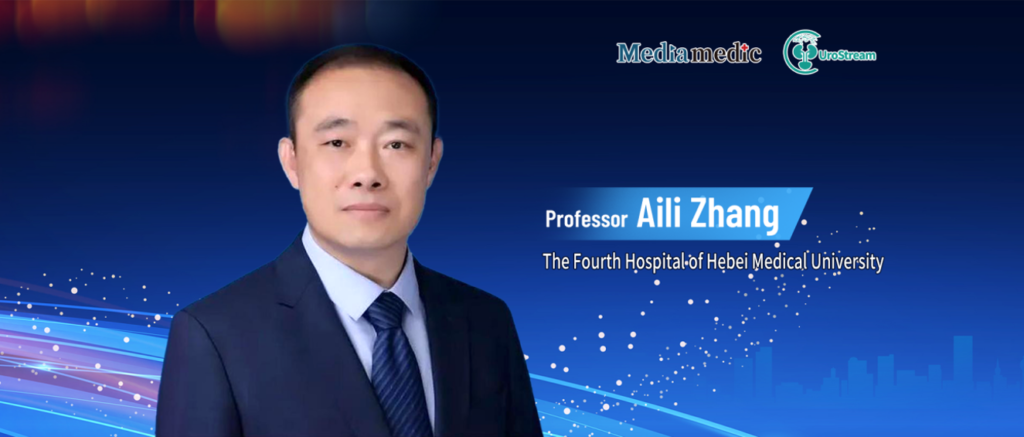
Editor's Note: Androgen deprivation therapy (ADT) is the cornerstone of comprehensive prostate cancer management. When choosing between the two pharmacological approaches to castration—luteinizing hormone-releasing hormone (LHRH) agonists and antagonists—clinical practice has long tended to favor familiar, established drugs. However, this pattern is now being reconsidered. In an interview with Oncology Frontier, Professor Aili Zhang of the Fourth Hospital of Hebei Medical University discussed common pharmacological castration regimens, highlighting the key advantages of LHRH antagonists, particularly degarelix. Their direct receptor-blocking mechanism enables rapid and sustained testosterone suppression without the initial testosterone surge known as the “flare effect.” While novel androgen receptor pathway inhibitors (ARPIs) are profoundly transforming systemic treatment for prostate cancer, ADT remains the foundation of endocrine therapy.PART 1
Medical vs. Surgical Castration: Is Reversibility the Key Difference?
Oncology Frontier: What exactly does “medical castration” suppress? Is it the same as what we commonly call “surgical castration”? How should clinicians choose between these approaches in practice?
Professor Aili Zhang: Medical and surgical castration are both approaches to castration therapy for prostate cancer, collectively referred to as androgen deprivation therapy (ADT). Prostate cancer cells depend on a key group of hormones called androgens for growth, with testosterone being an important component. Cutting off the cancer cells’ access to testosterone can effectively inhibit tumor growth and may even cause tumors to shrink. This is the rationale behind castration therapy, a commonly used treatment for prostate cancer. There are two main approaches: surgical castration, or orchiectomy, and medical castration.
Surgical castration, performed through orchiectomy, eliminates the primary source of testosterone. However, the resulting changes are irreversible. The procedure has permanent physical consequences and can impose a substantial psychological burden on patients. As a result, it is now used less frequently in clinical practice.
Medical castration, by contrast, offers greater flexibility and is generally more patient-friendly. It achieves castration-level testosterone suppression through medication without requiring surgery, and the effect is reversible: testosterone levels can gradually recover after treatment is discontinued. This preserves more options for patients and substantially reduces their psychological burden. For these reasons, medical castration is often the preferred approach in contemporary prostate cancer treatment.
PART 2
Common Medical Castration Agents: Mechanistic Differences Shape Clinical Outcomes
Oncology Frontier: What medical castration options are currently available in clinical practice? How should we understand the value of ADT in the modern treatment era?
Professor Aili Zhang: Medical castration can be divided into treatment with LHRH antagonists and LHRH agonists. Both suppress testicular androgen production and lower testosterone levels, achieving an effect comparable to surgical castration. These drugs are primarily administered by subcutaneous or intramuscular injection and represent major treatment options in clinical practice. Broadly, there are two categories.
LHRH agonists are commonly used in clinical practice. Representative agents include leuprorelin, triptorelin, and goserelin. Their mechanism is somewhat counterintuitive: they initially stimulate the pituitary gland, then continuously suppress the secretion of gonadotropins, ultimately maintaining testosterone at a low level.
LHRH antagonists, such as degarelix, offer a different advantage. They directly block pituitary receptors, rapidly suppressing gonadotropin secretion and interrupting testosterone production at its source. Unlike agonists, they do not cause the initial transient rise in testosterone known as the “flare” response. This makes them particularly suitable for patients with spinal cord compression symptoms or difficulty urinating.
In recent years, the introduction of novel androgen receptor pathway inhibitors (ARPIs) on top of conventional ADT has further improved the efficacy of endocrine therapy for prostate cancer and expanded its clinical applications. The combination of ADT and an ARPI has become a mainstream treatment strategy. Nevertheless, ADT’s position as the foundation of endocrine therapy has not been weakened; rather, its indispensable physiological role has become even more apparent in combination regimens.
Regardless of how effectively an ARPI blocks the androgen receptor, ADT remains essential because it suppresses testicular androgen production at its source. This is critical for achieving profound testosterone suppression and supporting long-term survival. In the dual-blockade approach combining ADT with an ARPI, ADT establishes the castrate testosterone environment required for the ARPI to block androgen signaling more completely. The two treatments therefore have a substantial synergistic effect.
Accordingly, in today’s era of precision medicine, ADT remains a central pillar of comprehensive prostate cancer management throughout the disease course. Optimization of clinical treatment strategies must be built on a foundation of appropriate and sustained ADT.
Of course, testosterone levels, prostate-specific antigen (PSA), and other relevant indicators should be monitored regularly during treatment. Patients should promptly communicate any discomfort or new symptoms to their doctors to ensure that treatment remains as safe and effective as possible.
PART 3
LHRH Antagonists: Rapid, Sustained Suppression Without the “Flare” Effect
Oncology Frontier: What advantages do newer LHRH antagonists offer, and what clinical benefits can patients expect? How should clinicians select an appropriate treatment in practice?
Professor Aili Zhang: LHRH antagonists, such as degarelix, bind competitively and directly to LHRH receptors, ultimately suppressing testosterone secretion. This avoids the transient testosterone elevation, or “flare,” associated with LHRH agonists. Testosterone can be rapidly reduced to castration levels within three days of injection.
Rapid testosterone suppression and blockade of androgen activity in prostate cancer can help inhibit tumor growth quickly. For patients with a high tumor burden, spinal cord compression, or significant difficulty urinating, this may help relieve symptoms promptly.
Over the longer term, sustained testosterone suppression may reduce the vascular effects associated with hormonal fluctuations. Meta-analyses have shown that LHRH antagonists are associated with a lower risk of cardiovascular adverse events than LHRH agonists. These findings support considering LHRH antagonists as a preferred option for patients with a high tumor burden or coexisting cardiovascular disease.
Of course, every treatment approach has its own advantages and limitations. The most appropriate regimen should be selected according to tumor characteristics, the patient’s overall health and comorbidities, age, the treatment options available at the treating institution, and the patient’s preferences and decisions.
PART 4
Beyond Testosterone Suppression: Evidence-Based Management of Adverse Effects Associated With Medical Castration
Oncology Frontier: What common adverse effects may occur during medical castration for prostate cancer, and how should they be managed?
Professor Aili Zhang: For patients with prostate cancer, medical castration is an important component of anticancer treatment. However, several key issues require attention during therapy, as they affect not only treatment outcomes but also quality of life.
Medical castration lowers androgen levels and disrupts the body’s previous hormonal balance, potentially leading to a range of adverse effects. Patients and their families can prepare for these effects in advance and take an active approach to managing them.
Many patients experience sudden episodes of heat, redness of the face and neck, and sometimes profuse sweating. These symptoms are known as hot flashes. Wearing loose, breathable clothing, keeping indoor spaces cool and well ventilated, and avoiding spicy or excessively hot foods may help alleviate the discomfort associated with hot flashes.
A decline in androgen levels can also affect sexual function, potentially causing erectile difficulties and reduced libido. These changes can have a considerable psychological impact, but patients should understand that they may occur during treatment. Open communication with one’s partner, mutual understanding and support, and seeking medical advice when necessary can help prevent these concerns from becoming an additional psychological burden.
Medical castration is a long-term treatment journey, and patients may face various challenges along the way. By understanding the key issues, actively managing adverse effects, monitoring important clinical indicators, and maintaining close communication with their healthcare team, patients can better manage their disease and further improve both survival and quality of life.

Professor Aili Zhang