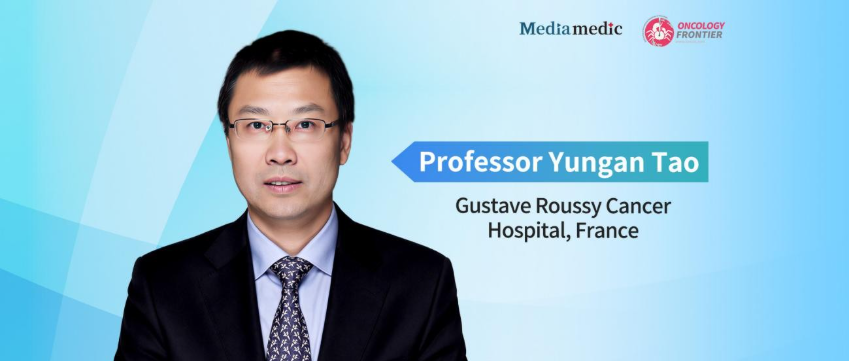
Editor's Note: For patients with resectable head and neck cancer, postoperative concurrent chemoradiotherapy has been the standard of care for two decades. With the advent of immunotherapy, this long-established treatment paradigm is undergoing a fundamental transformation, and the integration of perioperative immunotherapy with local treatment has become a major focus of academic discussion. During the 29th Annual Meeting of the Chinese Society of Clinical Oncology (CSCO), Professor Yungan Tao of Gustave Roussy Cancer Center, France, delivered a presentation on perioperative immunotherapy and local treatment for resectable head and neck cancer, systematically reviewing advances in the field and future directions. Taking this opportunity, Oncology Frontier interviewed Professor Tao to discuss the evolving landscape of perioperative treatment for head and neck cancer and the ongoing research efforts in this area.
Oncology Frontier: At this year’s CSCO annual meeting, you delivered a presentation on perioperative immunotherapy and local treatment for resectable head and neck cancer. How do you assess the role of immunotherapy in the perioperative management of head and neck cancer? How has it affected the overall treatment landscape?
Professor Yungan Tao: For patients with resectable, high-risk head and neck cancer, postoperative concurrent chemoradiotherapy has been the standard treatment for 20 years. The publication of results from two global Phase III clinical trials in 2025 changed this treatment landscape.
The first was the Phase III NIVOPOSTOP GORTEC 2018-01 trial, which investigated the addition of adjuvant immunotherapy to postoperative concurrent chemoradiotherapy and demonstrated a significant improvement in disease-free survival (DFS). The second was the KEYNOTE-689 trial, which showed that initiating immunotherapy in the neoadjuvant setting, followed by postoperative radiotherapy combined with pembrolizumab and continued adjuvant immunotherapy after radiotherapy, could effectively prolong event-free survival (EFS).
Based on the evidence from these two studies, the standard treatment approach for head and neck cancer is gradually shifting worldwide toward combining immunotherapy with local treatment, including surgery, radiotherapy, or chemoradiotherapy.
In clinical practice, neoadjuvant immunotherapy is being used more widely. Postoperative treatment is then adjusted according to the pathological findings, with options including concurrent chemoradiotherapy plus immunotherapy or concurrent radiotherapy plus immunotherapy. Adjuvant immunotherapy is generally continued after radiotherapy is completed. Clinical practice in Europe and the United States is progressively transitioning toward this treatment model.
Oncology Frontier: In the perioperative management of resectable head and neck squamous cell carcinoma (HNSCC), coordinating immunotherapy with local treatment is an important current research priority. Which emerging research directions in this field deserve particular attention?
Professor Yungan Tao: These two practice-changing studies have also provided a roadmap for subsequent clinical research. In Europe and the United States, neoadjuvant treatment still primarily involves immunotherapy alone. However, the pathological response rates achieved with monotherapy remain unsatisfactory: the pathological complete response (pCR) rate is below 4%, while the major pathological response (MPR) rate—defined as 10% or fewer residual cancer cells—is only around 10%. Therefore, improving pathological response rates and creating more favorable conditions for surgery are important priorities for current research.
Research in China has focused more heavily on combining immunotherapy with chemotherapy before surgery. Meanwhile, novel combination strategies designed to reduce toxicity are advancing rapidly. These include bispecific antibodies targeting EGFR or PD-1, which are being investigated as alternatives to conventional immunotherapy or in combination with existing immunotherapeutic approaches.
Antibody–drug conjugates (ADCs) are another important area of investigation. ADCs targeting different antigens, including EGFR and B7-H3, and carrying different payloads can be explored in combination with immunotherapy. In addition, technologies such as cancer vaccines and cell therapies represent promising areas for future development.
Overall, clinical trials investigating ADCs and bispecific antibodies to improve pathological response rates are particularly active worldwide.
Oncology Frontier: Identifying patients who are most likely to benefit is a critical component of perioperative immunotherapy. Could you explain the selection strategies currently used in clinical practice? Based on your clinical research experience, which approaches are relatively reliable, and what further investigations might help define the benefiting population more precisely?
Professor Yungan Tao: Compared with cancers such as lung and breast cancer, head and neck cancer has relatively few established biomarkers for predicting treatment efficacy.
The most commonly used clinical selection marker is the PD-L1 combined positive score (CPS). Results from the KEYNOTE-689 trial showed that the higher the CPS, the greater the benefit from immunotherapy. The benefit was most pronounced among patients with CPS ≥10, while patients with CPS ≥1 also benefited more than those with CPS <1. Accordingly, the neoadjuvant pembrolizumab monotherapy indication approved in Europe and the United States is currently restricted to patients with CPS ≥1.
Beyond PD-L1, circulating tumor DNA (ctDNA) has attracted increasing attention as a potential predictive tool. ctDNA can be monitored after neoadjuvant treatment, surgery, and radiotherapy to help predict treatment efficacy and guide subsequent adjustments to the treatment plan.
Analyses of ctDNA in the KEYNOTE-689 trial are currently ongoing, with results expected next year. These findings should help clarify the predictive value of ctDNA before neoadjuvant treatment and the potential role of postoperative residual ctDNA in guiding decisions about radiotherapy or chemoradiotherapy. Other indicators, including immunohistochemical markers, are also being investigated, collectively advancing efforts to identify patients most likely to benefit.
Oncology Frontier: From your perspective, what changes in academic research on head and neck cancer in China over recent years have impressed you most? What are your expectations or recommendations for future collaboration with Chinese experts?
Professor Yungan Tao: Over the past three to five years, clinical research in head and neck cancer in China has advanced remarkably. The most important driving force has been the rapid development of domestically developed innovative drugs, which has in turn stimulated a substantial number of high-quality clinical trials.
In the field of bispecific antibodies, PD-1/EGFR-targeting bispecific antibodies developed in China have emerged globally as important treatment backbones that may offer an alternative to PD-1 monoclonal antibody-based approaches.
China is also among the global leaders in ADC development. An EGFR-targeting ADC has received approval for an indication in nasopharyngeal carcinoma. At the World Conference on Lung Cancer held just last week, two B7-H3-targeting ADCs achieved breakthroughs in small cell lung cancer. In addition, EGFR/HER3-targeting bispecific ADCs have reported positive results in breast cancer, including triple-negative breast cancer, as well as in esophageal cancer.
These domestically developed innovative drugs have also stimulated extensive academic research in China, exploring how new agents can be further combined with surgery, radiotherapy, and chemotherapy. This work has generated a considerable body of valuable clinical evidence from China.
Looking ahead, I hope to draw on research experience from France and Europe to deepen collaboration with outstanding Chinese expert teams and innovative pharmaceutical companies, working together to advance global research in head and neck cancer.

Professor Yungan Tao