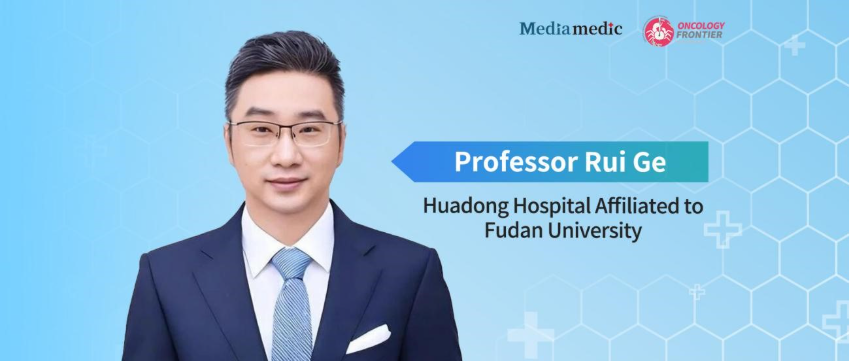
Editor's Note: The plenary sessions of the 29th Annual Meeting of the Chinese Society of Clinical Oncology (CSCO) were successfully held in Jinan, Shandong Province, from September 17 to 19, 2026. As CSCO approaches its 30th anniversary, this year's meeting centered on the theme of “Upholding Standards and Embracing Digital and Intelligent Innovation,” focusing on standardized cancer diagnosis and treatment as well as innovation driven by digital and intelligent technologies. At the meeting, Oncology Frontier interviewed Professor Rui Ge of Huadong Hospital Affiliated with Fudan University, inviting him to share his journey of participating in CSCO’s annual meetings and growing alongside the organization. During the interview, he reflected on the knowledge and friendships he has gained through CSCO and shared his experiences in planning, preparing, and organizing this year’s breast cancer sessions and the breast cancer continuing education session. Drawing on his presentation on early-stage triple-negative breast cancer (TNBC), he also discussed the evolution of treatment strategies, the balance between standardized and individualized care, and ongoing efforts to advance precision diagnosis and treatment.
Oncology Frontier: As a member of CSCO, could you share your journey of professional growth within the organization?
Professor Rui Ge: This year’s CSCO annual meeting was held in Jinan, and returning to the meeting venue once again was a particularly meaningful experience for me. Every year, I look forward to the CSCO annual meeting and come away with a great deal. We can see that the CSCO organizing committee carefully designs and arranges the various sessions based on the development of oncology in China and the needs of clinical practice.
Since my work focuses primarily on breast cancer and thyroid cancer, I pay particular attention to the corresponding sessions. This year, the CSCO annual meeting featured three breast cancer sessions, and I was personally responsible for planning, preparing, and organizing the breast cancer continuing education session. We therefore collected topics of concern to clinicians as well as patients’ treatment needs, designed presentations to address these issues, and held in-depth discussions and debates on challenging and emerging topics. We also conducted multidisciplinary analyses of several representative clinical cases, with the aim of using these presentations to provide better guidance for clinical practice.
As a member of CSCO, I have gained not only professional knowledge but also valuable experience in collaborating with experts across China to conduct further clinical research. I have also learned how to work with colleagues at other institutions and experts across the field to initiate new collaborative projects. In addition, CSCO has given us the opportunity to build lasting friendships. I met many other mid-career and young experts through this academic community, and we have grown and progressed together, forming deep friendships along the way. These relationships have helped advance our clinical work, personal development, and the development of our specialties.
Oncology Frontier: You presented on early-stage triple-negative breast cancer in the breast cancer session. Based on your presentation, how are treatment strategies for early-stage TNBC evolving? In clinical practice, how can tools such as molecular subtyping help strike the optimal balance between standardized and individualized treatment, enabling more precise treatment plans for patients with different subtypes of early-stage disease?
Professor Rui Ge: For this year’s CSCO annual meeting, the organizing committee gave me a specific assignment: to review and analyze the treatment of patients with early-stage TNBC and offer a perspective on future treatment trends. TNBC is one of the most difficult breast cancer subtypes to treat. With the growing emphasis in recent years on early diagnosis, screening, and treatment, an increasing number of patients are being diagnosed at an early stage. We therefore have a particular hope that patients with this subtype will have a genuine opportunity for cure when their disease is detected early. Accordingly, research and treatment strategies are increasingly providing support for both surgical planning and subsequent systemic therapy.
My presentation at this year’s meeting focused primarily on the changes in treatment concepts and strategies for TNBC systemic therapy in recent years. We are seeing more and more patients being incorporated into neoadjuvant treatment pathways, with a growing range of therapeutic agents available within these pathways. Treatment for TNBC has evolved from a traditional chemotherapy-centered approach to one based primarily on immunotherapy combined with chemotherapy. This shift has been supported by the release of event-free survival (EFS) and overall survival (OS) results, both positive, as well as follow-up data from the KEYNOTE-522 trial.
Immunotherapy combined with chemotherapy has now become the standard treatment for patients with early-stage TNBC. However, even with a standard regimen in place, there are many questions worth exploring further. For example, must immunotherapy always be administered throughout both the neoadjuvant and adjuvant phases, as in the established treatment model? Could treatment be de-escalated for certain patients? If immunotherapy is given only during the neoadjuvant phase, might some patients be able to omit it during the adjuvant phase?
We also need to consider whether immunotherapy must always be administered at the full dose for the entire recommended duration. Exploratory work by Indian researchers suggests that a reduced dose of immunotherapy combined with a longer treatment duration can also produce encouraging efficacy. Such approaches to de-escalation, which aim to preserve efficacy while reducing toxicity, may point toward promising avenues for further investigation.
There are also multiple options for the chemotherapy backbone used in combination with immunotherapy. The KEYNOTE-522 trial employed a four-drug combination regimen, which some patients may find difficult to tolerate in routine clinical practice. We are therefore exploring additional approaches to identify better treatment options.
Of course, we have also seen many innovative drugs developed in China enter Phase III clinical trials. Other immunotherapeutic agents have demonstrated clinical benefits comparable to those of pembrolizumab, although their final clinical indications and reimbursement support have yet to be approved. We can therefore look forward to more novel agents and treatment approaches becoming available in the neoadjuvant setting, offering clinicians a wider range of options.
In addition, for patients who do not receive neoadjuvant therapy, treatment intensification with newer agents in the adjuvant setting will also be an important area for future investigation.
Overall, however, we still lack several major breakthroughs in our understanding of early-stage TNBC. These include how to refine subtype classification, which biomarkers can guide treatment decisions, and whether additional, more precise therapeutic strategies can be developed. These questions will need to be addressed through further clinical research.
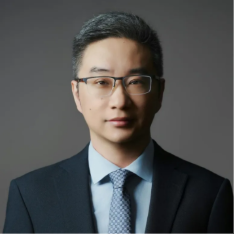
Professor Rui Ge