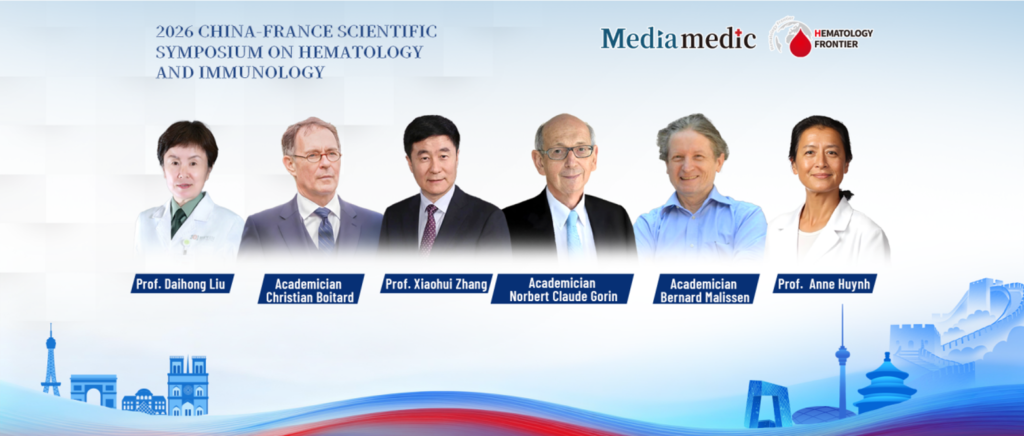
Editor's Note: The 2026 China-France Scientific Symposium on Hematology and Immunology was held in Beijing from September 11 to 13, 2026. Building on the longstanding tradition of academic exchange between China and France in hematology, this year's meeting further expanded its scope to the intersection of hematology and immunology, bringing together renowned experts from both countries to explore scientific frontiers and exchange ideas.On this occasion, Oncology Frontier – Hematology Frontier organized a special roundtable entitled “Thirteen Years of Partnership, Moving Forward Through Innovation: A Meeting of Minds at the Frontiers of Hematology and Immunology Between China and France.” The discussion brought together six distinguished experts: Professor Xiaohui Zhang of Peking University People’s Hospital; Academician Norbert Claude Gorin of the French National Academy of Medicine; Academician Christian Boitard of the French National Academy of Medicine; Academician Bernard Malissen of the Marseille-Luminy Immunology Center; Professor Anne Huynh of Toulouse University Hospital in France; and Professor Daihong Liu of the Chinese PLA General Hospital. They engaged in an in-depth discussion of the convergence of hematology and immunology, cutting-edge immunological research and clinical breakthroughs, and future China–France collaboration and academic succession.
From First Encounters to Lasting Partnership: Thirteen Years of China–France Exchange in Hematology
Professor Xiaohui Zhang: I believe the most important change over the past 13 years is that we have come to understand each other better and can now discuss complex clinical challenges with greater ease and openness. As our exchanges have gradually developed into long-term partnerships, we have gained a deeper understanding of each other’s research areas, and mutual trust has continued to grow.
The rapid development of hematology in China has created more opportunities for both sides to share experience and explore new ideas together. For example, in areas such as haploidentical transplantation, post-transplant relapse, and immune regulation, we can share China’s clinical experience in depth and exchange scientific perspectives. Looking at the same clinical problem from different angles often leads to new insights and inspiration. For me, this process of exchanging views, engaging in discussion, and continually generating new ideas is one of the most important values of academic collaboration.
We share a common vision: to improve treatment and bring hope to patients. Looking ahead, this partnership will continue to deepen through sustained experience-sharing, candid discussions of clinical challenges, and the active involvement of younger physicians.
Academician Norbert Claude Gorin: The China–France Academic Conference on Hematology was officially launched in 2013. However, even before that, many young Chinese scholars had traveled to Paris to pursue advanced training at relevant institutions, focusing on areas such as cryopreservation, autologous transplantation, and allogeneic transplantation. After returning to China, they went on to establish transplantation and cryopreservation centers across the country. Consequently, when the academic exchange platform was established in 2013, the two sides already shared longstanding personal ties and a strong foundation for collaboration. Building on our long-term cooperation with the European Society for Blood and Marrow Transplantation (EBMT), we introduced established French and broader European technical approaches to China.
In the early stages of collaboration, Chinese experts primarily learned from advanced French experience. As the research progressed, however, they gradually developed and established innovative approaches tailored to China’s clinical context, drawing on their outstanding research capabilities. Overall, China–France collaboration has evolved from sharing clinical experience and jointly publishing academic findings to preparing for randomized controlled studies. We hope this productive partnership will continue to deepen and yield further achievements.
From Hematopoietic Reconstitution to Immune Remodeling: How Hematology and Immunology Inform Each Other
Professor Xiaohui Zhang: Transplantation has taught us an important lesson about the need to control disease effectively while patients rebuild a functional immune system. In allogeneic hematopoietic stem cell transplantation, donor immune cells can eliminate residual leukemia cells through the graft-versus-leukemia effect. However, they can also trigger graft-versus-host disease (GVHD). Therefore, one of the central challenges in transplantation remains maximizing the antileukemic effect while minimizing damage to healthy tissues.
Clinical practice has also shown that the recovery of blood cell counts does not necessarily coincide with immune reconstitution. Some patients remain at high risk of infection even after their blood counts have improved. This reminds us that post-transplant recovery should be assessed not only by the number of immune cells, but also by their function and capacity to provide immune protection. Accordingly, follow-up management needs to extend throughout the patient’s entire immune recovery process.
At the same time, immune reprogramming raises further questions worth exploring, including how different immune cell populations and their functions change dynamically after transplantation, and how immune tolerance is re-established. As our understanding of these mechanisms deepens, future research may increasingly integrate immunological findings with residual disease monitoring and treatment response assessments. This could help us identify the optimal timing for interventions and develop more rational treatment strategies. The ultimate goal is to achieve more durable disease control and further improve patients’ long-term quality of life.
Academician Christian Boitard: Research on regulatory T cells (Tregs) has a long history. They were first described in animal models of diabetes approximately 40 years ago. Although my own specialty is neither immunology nor hematology, but rather the interactions between lymphocytes and insulin-secreting beta cells in type 1 diabetes, I have witnessed important advances in this field. Early studies established the differentiation characteristics of several Treg subsets and revealed a central mechanism: type 1 diabetes does not arise simply from a one-way attack by effector T cells against pancreatic beta cells. At its core, the disease reflects an imbalance in immune homeostasis between regulatory T cells and effector T cells.
Type 1 diabetes is a distinctive autoimmune disease with a strong genetic component. Unlike many other chronic diseases, its development is determined primarily by a relatively small number of key genes, most notably those in the region encoding the major histocompatibility complex (MHC). MHC molecules not only determine allogeneic transplant rejection but also play a central role in type 1 diabetes.
This makes it essential to precisely characterize the antigenic peptides presented by high-risk MHC molecules, determine how they activate both effector T cells and regulatory T cells, and establish how this ultimately leads to an imbalance between the two populations. In mouse models of type 1 diabetes, functional defects in regulatory T cells have been demonstrated. Thus, the disease is not merely a consequence of abnormal effector-cell activation; it also involves immune dysregulation resulting from impaired Treg function.
Although treating type 1 diabetes remains a major challenge, restoring immune tolerance offers hope for a potential cure. Several cutting-edge research programs are now working to restore regulatory T-cell function. One particularly representative strategy draws on the success of CAR-T cells in cancer immunotherapy to develop chimeric antigen receptor regulatory T cells (CAR-Tregs). The goal is to reverse autoimmune responses at their source through precise immune regulation.
Academician Bernard Malissen: Extensive research has been conducted on the T-cell receptor (TCR). As the key molecule responsible for recognizing peptide–MHC complexes, the TCR plays a central role in T-cell activation. Nevertheless, our current understanding remains incomplete. The TCR does not act in isolation; it works in coordination with various coreceptors and regulatory molecules on the cell surface.
We still lack a comprehensive framework for understanding how the TCR integrates the co-stimulatory and inhibitory signals provided by these molecules. Furthermore, although the intracellular components involved in TCR signal transduction have been extensively identified, the precise mechanisms regulating these signaling processes have yet to be fully elucidated.
At the translational medicine level, engineered receptors such as chimeric antigen receptors (CARs) have simpler structures than natural T-cell receptors (TCRs), yet their functional regulatory mechanisms are still not fully understood. In clinical applications, one persistent challenge is maintaining the appropriate strength of receptor signaling. Excessively strong signaling can lead to T-cell exhaustion and severe functional impairment, whereas insufficient signaling leaves T cells unable to mount an effective antitumor response. Precisely regulating TCR signaling strength therefore remains an extremely complex challenge. Leading research teams in China and elsewhere are working to overcome this bottleneck. Overall, although substantial progress has been made in TCR research, further investigation is needed to enable precise programming of T-cell function and its effective clinical application.
Professor Anne Huynh: Regulatory T cells (Tregs) are at a critical juncture in the field of allogeneic hematopoietic stem cell transplantation (allo-HSCT). Their applications span several key areas, including graft-versus-host disease (GVHD) prevention and treatment, disease control—particularly relapse prevention—and infection management. For GVHD prevention, Tregs used in conjunction with the Orca-T platform have shown considerable promise. Tregs also play a crucial role in treating steroid-refractory GVHD.
In immune reconstitution and disease control, maintaining a balance between GVHD suppression and the graft-versus-leukemia (GVL) effect is essential. Advances in early immune profiling techniques now allow this complex immune balance to be assessed more precisely, providing an important basis for clinical risk stratification involving GVHD and GVL effects.
The management of cytomegalovirus (CMV) reactivation is another issue that cannot be overlooked. Although preventive treatment options are available, CMV reactivation can still substantially reshape the process of immune reconstitution in patients, a phenomenon well documented in recent literature.
Taken together, from the perspective of the convergence of hematology and immunology, these disciplines can no longer be regarded as independent fields developing in parallel; they must work closely together. The central strategy is to implement multidimensional, precision immune monitoring to guide disease control, assess the impact of CMV on immune reconstitution, and improve clinical risk stratification.
Professor Daihong Liu: Chinese physicians have achieved world-leading expertise in hematopoietic stem cell transplantation, particularly in the technical system for haploidentical transplantation using related donors. Breakthroughs in haploidentical transplantation have made donor sources available to almost all patients who need transplantation, largely overcoming the problem of donor shortages while substantially improving the safety and effectiveness of transplantation.
Over the past decade, major progress has been made in the use of antithymocyte globulin (ATG) and in GVHD prevention within transplantation protocols. Western researchers began exploring haploidentical transplantation nearly a decade later than their Chinese counterparts. In the early stages, they widely adopted post-transplant cyclophosphamide (PTCy), a regimen that is relatively inexpensive and straightforward to administer.
However, with increasing clinical experience, Western physicians have gradually recognized the limitations of PTCy-based approaches. In contrast, the “Beijing Protocol,” which uses ATG and incorporates immune regulation through granulocyte colony-stimulating factor (G-CSF) mobilization, has attracted growing attention in Europe and the United States. The combination of ATG and PTCy has now become an area of active investigation among Western researchers, with the potential to overcome some of the limitations of PTCy alone.
Over the past seven years, our team at the Chinese PLA General Hospital has also conducted a series of studies to optimize ATG dosing and administration strategies, effectively improving the quality and speed of immune reconstitution after transplantation. The recent publication of population pharmacokinetic data has provided a scientific basis for further optimizing individualized dosing strategies beyond fixed weight-based dosing.
Regarding clinical advances in GVHD, treatment strategies have continued to evolve since ruxolitinib was approved in 2019 and mesenchymal stem cells were incorporated into second-line treatment for steroid-refractory GVHD of Grade II or higher. Building on conventional first-line corticosteroid therapy, the exploration of new treatment approaches has substantially improved both efficacy and safety.
Across these advances in transplantation, the central objective remains the improvement of post-transplant immune reconstitution. The success of hematopoietic stem cell transplantation depends not only on successful stem cell engraftment, but, more importantly, on the quality and speed of hematopoietic and immune recovery after transplantation. Consequently, current technological innovations, regimen optimization, and evolving treatment strategies are fundamentally aimed at establishing a more effective post-transplant immune reconstitution system and continuously improving long-term transplant outcomes. We believe that only by going beyond being first can we truly become the leader.
From Immune Mechanisms to Clinical Breakthroughs: Where Is Next-Generation Hemato-Immunotherapy Headed?
Academician Norbert Claude Gorin: Professor Arnon Nagler and I co-authored a study in Bone Marrow Transplantation based on a dedicated survey conducted by the European Society for Blood and Marrow Transplantation (EBMT). The paper systematically outlined key priorities for the future development of hematopoietic stem cell transplantation worldwide.
The first priority is to strengthen professional education and academic training to consolidate the foundations of the field. The second is to improve the reporting of data to transplant registries. Global registries have now accumulated approximately 800,000 transplant cases. However, as treatment technologies continue to evolve, and particularly as haploidentical transplantation assumes an increasingly prominent clinical role, more patient data are needed to improve registry coverage, strengthen the evidence base, and support further optimization of transplantation techniques.
The third priority is to advance standardized accreditation of transplant centers. Most transplant centers in Europe have now completed accreditation, helping standardize transplantation procedures and clinical workflows and safeguard the quality of care. Building on these foundations, the next major priority is to continue conducting high-quality clinical trials to drive innovation and further advance transplantation technology.
Meanwhile, as cutting-edge technologies such as novel targeted agents and immunotherapies continue to evolve rapidly, the landscape of hematologic disease diagnosis and treatment is undergoing sustained transformation. Looking further ahead, whether hematopoietic stem cell transplantation will retain its value over the next decade remains an open question.
Academician Christian Boitard: Compared with other autoimmune diseases, such as polyarthritis, type 1 diabetes has several distinctive characteristics. For the vast majority of patients with type 1 diabetes, life expectancy at diagnosis is comparable to that of the general population. Although complications such as diabetic nephropathy may eventually affect survival, it is difficult for physicians to predict accurately at an early stage whether a patient will develop severe complications 30 to 40 years later.
Given this clinical characteristic, conventional systemic immunosuppressive therapy alone may carry potential adverse effects that far outweigh the risks posed by the disease itself, making such an approach clearly unfavorable. Therefore, treatment of type 1 diabetes requires antigen-specific immunotherapy. Treg therapy, for example, offers the key advantage of precisely targeting epitopes presented by MHC molecules and specifically expressed on pancreatic beta cells. Several cutting-edge research programs are now moving in this direction of precision targeting, which represents an important trend in future treatment.
Academician Bernard Malissen: Improving the precision and in vivo efficacy of therapeutic T cells, such as CAR-T cells and tumor-infiltrating lymphocytes (TILs), is a major challenge facing the global immunotherapy field. Research teams around the world, including those in China, have invested considerable effort and achieved excellent results in certain areas. Nevertheless, the current situation remains highly complex.
Research has proposed dozens of strategies to enhance T-cell function. Unfortunately, there is still no universal “magic bullet” that works in every case. The central challenge in translating laboratory discoveries into clinical practice is selecting the optimal approach from among the many proposed enhancement strategies. Because clear predictive criteria are lacking, each potential mechanism of improvement ultimately has to be validated in patients, substantially increasing the uncertainty and difficulty of development. A solution will eventually be found, but determining how to select the best strategy precisely and translate laboratory findings effectively into clinical applications remains an urgent challenge.
Professor Anne Huynh: Although CAR-T-cell therapy has fundamentally transformed the treatment landscape for hematologic malignancies, cellular therapy remains at an early stage of development. Looking ahead, the field faces three major challenges.
First, the durability of remission must be improved. Antigen escape, T-cell exhaustion, and relapse resulting from inadequate persistence of CAR-T cells in the body remain major clinical challenges. We therefore need to optimize CAR design and develop strategies to sustain effective immune surveillance over the long term.
Second, treatment safety must continue to improve. Although significant progress has been made in managing cytokine release syndrome (CRS) and neurotoxicity, prolonged cytopenias, infection risk, and immune dysfunction remain important clinical problems that require further attention.
Third, treatment accessibility and timing need to be improved. Allogeneic cellular therapies with “off-the-shelf” potential could substantially shorten manufacturing timelines, enabling patients to receive treatment more promptly. In addition, administering cellular therapy earlier in the disease course—when tumor burden is lower and patients have better immune fitness—may further improve outcomes.
Importantly, transplantation and cellular therapy are not competing approaches; they are complementary. The key challenge for the future is to define their respective roles: when CAR-T-cell therapy can replace transplantation, when transplantation is needed to consolidate treatment efficacy, and how cellular therapies can be used after transplantation to prevent or treat relapse.
Cellular therapy exemplifies the deep convergence of hematology and immunology. Immunologists investigate the mechanisms underlying T-cell activation, exhaustion, and tolerance, while hematologists contribute clinical questions and treatment experience. Through close collaboration, the two disciplines may help realize the goal of delivering the right treatment to the right patient at the right time.
Professor Daihong Liu: Whether haploidentical, allogeneic, or autologous, hematopoietic stem cell transplantation is fundamentally intended to cure diseases that cannot be eradicated by conventional treatments, including hematologic malignancies and bone marrow failure disorders. In this sense, transplantation is a potentially curative treatment. Despite substantial advances in cellular therapy and immunotherapy in recent years, hematopoietic stem cell transplantation continues to hold a strong and irreplaceable position in clinical practice.
As mentioned earlier, many of the clinical advances achieved to date, including improvements in post-transplant immune reconstitution, have depended on continued breakthroughs in basic laboratory research. In recent years, Professor Huidong Guo, working with Academician Xiaojun Huang’s team, together with numerous basic science researchers, has conducted extensive innovative research on the restoration of immune homeostasis after transplantation. This work has encompassed immunotherapy, cellular therapy, and integrated approaches combining these strategies with hematopoietic stem cell transplantation, further deepening our understanding of the mechanisms underlying post-transplant immune reconstitution.
Over the next three to five years, we can expect continued translation of innovations from these basic research fields into clinical practice, supporting the evolution of treatment technologies and further improving the overall efficacy of hematopoietic stem cell transplantation.
From Today to the Next Decade: How Can China and France Continue to Advance Hematology and Immunology Together?
Professor Xiaohui Zhang: I suggest starting with the clinical questions that matter most to patients: how to effectively reduce post-transplant infection and relapse rates and improve long-term quality of life. To address these issues, our two sides could conduct joint prospective studies to systematically track immune reconstitution and clinical outcomes, while using cutting-edge technologies such as single-cell analysis to investigate the underlying mechanisms.
As a practical first step, we could select one priority research area and establish common standards for clinical data collection, testing procedures, and follow-up protocols. On this basis, we should adhere to patient privacy protections and the ethical review requirements of both countries, sharing data and research findings in an orderly manner to establish a strong foundation for lasting collaboration.
In talent development, I hope we can introduce a joint China–France mentorship model, with supervisors from both countries, supported by short-term exchange visits and regular case discussions. Young physicians should be encouraged to participate throughout collaborative projects, from developing the initial research concept and implementing the study to completing the project, and should be supported in contributing their own independent perspectives. Senior experts, meanwhile, can pass on practical clinical skills and the decision-making wisdom accumulated through managing complex cases.
I believe this deeper model of academic mentorship will not only accelerate the development of the next generation of medical professionals but also continue to elevate the partnership between our two countries.
Academician Norbert Claude Gorin: This is an extremely important and challenging issue, one that I have followed for many years and regard as increasingly urgent. Academic collaboration in hematology between China and France began with small-scale exchanges. I first visited Tianjin in 1983. When the China–France Academic Conference on Hematology was launched in 2013, most participants still belonged to the younger generation. Today, attendance has grown to nearly 600 people.
The key challenge now is how to attract and cultivate a new generation of young researchers and ensure the succession of academic leadership, so that they can carry forward the work of senior experts, including those of my generation.
To achieve this, we need coordinated efforts involving the French Society for Transplantation, relevant Chinese institutions, and the leading academies of both countries. The French National Academy of Medicine currently has 20 foreign members who are Chinese nationals, while the Chinese Academy of Engineering has also appointed several foreign members. I am fortunate to be among them. Strengthening long-term collaboration through these high-level academic platforms is an essential path toward the continued development of China–France cooperation in hematology.
Funding remains a practical obstacle, particularly because of high travel costs. Online meetings cannot fully replace the value of face-to-face exchanges when developing research protocols and conducting in-depth discussions, so we must continue seeking ways to overcome these barriers.
To address the challenges arising from differences in scientific and regulatory requirements in international clinical trials, I propose a “parallel protocol” strategy: equivalent but independent clinical protocols would be implemented separately in China and France. We previously attempted a similar approach in collaboration with the United States in studies of autologous stem cell transplantation for multiple myeloma and drugs targeting FLT3 mutations. Although some study results differed, such variation is a normal part of scientific exploration.
In the future, if it proves impossible to establish a single globally harmonized protocol, conducting parallel studies of the same type in China and France could be an extremely valuable and necessary path forward. I very much look forward to seeing this approach advance.