Progress of ctDNA in predicting prognosis of patients with urological tumors

Progress of ctDNA in predicting prognosis of patients with urological tumors

Circulating tumor DNA (ctDNA) for predicting tumor prognosis and guiding individualized treatment is a hot topic in malignant tumor research. ctDNA exists in the peripheral blood of tumor patients in a cell-free state and can dynamically evaluate the tumor condition, overcoming tumor heterogeneity biases. The 2023 American Association for Cancer Research (AACR) Annual Meeting was held from April 14 to 19, 2023, in Orlando, USA. In this AACR conference, three ctDNA-related studies evaluated its application value in urological tumors.
Exploring New Breast Cancer Risk Genes, Biomarkers, and Prognostic Models at AACR 2023

Exploring New Breast Cancer Risk Genes, Biomarkers, and Prognostic Models at AACR 2023

The American Association for Cancer Research (AACR) held its annual conference from April 14th to 19th, 2023 in Orlando, USA. With numerous reports on clinical, fundamental, and translational cancer research presented each year, this year's AACR conference delved deep into the realm of breast cancer. Research focused on the analysis of various susceptibility genes and risk-related biomarkers, aiming to discover new therapeutic targets and develop prognostic models, with the hope of providing improved services for patients.
Emerging Lymphoma Therapies at AACR 2023: Promising Results in CD19 Immunotherapy, CAR-T Cells, and Dual-Specific Antibodies

Emerging Lymphoma Therapies at AACR 2023: Promising Results in CD19 Immunotherapy, CAR-T Cells, and Dual-Specific Antibodies

The 2023 American Association for Cancer Research (AACR) Annual Meeting was held in Orlando, USA, from April 14 to 19, 2023. Every year, the AACR Congress reports numerous clinical, basic, and translational studies on cancer, especially innovative therapies in the preliminary phase I/II research stages. At this year's AACR conference, three clinical trials were reported in the lymphoma field, including anti-CD19 immunotherapy Tafasitamab, CD19/CD20 CAR naive/memory T cells, and bispecific quadrivalent antibody (innate cell engager) AFM13.
Dr. Lu Si: mRNA Vaccines and TIGIT Monoclonal Antibodies — New Stars of 2023 AACR

Dr. Lu Si: mRNA Vaccines and TIGIT Monoclonal Antibodies — New Stars of 2023 AACR

PD-1 inhibitors have become the international standard for adjuvant treatment of stage IIB-IV melanoma after surgery. Research on the neoadjuvant use of PD-1 monotherapy (pembrolizumab) for resectable melanoma was just published in the New England Journal of Medicine in March of this year. With this, PD-1 inhibitors cover the two major treatment areas of neoadjuvant and adjuvant treatment of melanoma. Two studies presented at this year's AACR conference have brought new breakthroughs to this field.
Combining PD-1 Monoclonal Antibody and HDAC Inhibitor with Conventional P-Gemox Significantly Improves the Treatment Outcome for NK/T Cell Lymphoma

Combining PD-1 Monoclonal Antibody and HDAC Inhibitor with Conventional P-Gemox Significantly Improves the Treatment Outcome for NK/T Cell Lymphoma

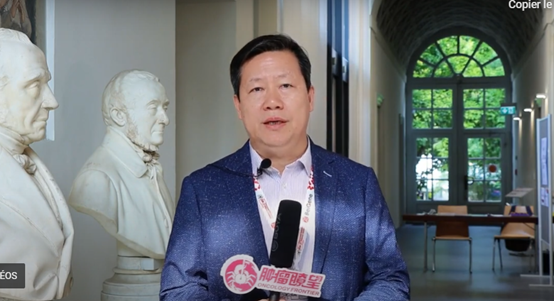
From June 17th to 23rd, 2023, the 17th International Conference on Malignant Lymphoma (ICML) was held grandly in Lugano, Switzerland. As the world's largest conference on malignant lymphoma, ICML has become an essential event in the field of lymphoma research and treatment over the past decades, aiming to present and discuss the latest basic, translational, and clinical research on lymphoma. NK/T cell lymphoma is a relatively rare hematological malignancy with no standardized treatment regimen. At this conference, Dr. Huiqiang Huang from the Cancer Center of Sun Yat-sen University,China,  gave an enlightening lecture on the treatment strategy for NK/T cell lymphoma. Oncology Frontier has specially interviewed Professor Huang and compiled the contents as follows:
ILTS 2023|Shifting Paradigms in Radiological Assessment of Tumor Load in Liver Transplantation for HCC

ILTS 2023|Shifting Paradigms in Radiological Assessment of Tumor Load in Liver Transplantation for HCC

Liver transplantation is a crucial option for treating Hepatocellular Carcinoma (HCC) as it not only removes the tumor but also addresses underlying liver disease. Accurate prediction of post-transplantation outcomes for patients with HCC tumors exceeding MELD standards or awaiting transplantation due to donor shortages is essential to enhance surgical success rates and optimize liver allocation. At the International Liver Transplantation Society (ILTS) Annual Meeting held in Rotterdam, the Netherlands, from May 3rd to 6th, 2023, Dr. Leonardo Centonze from Niguarda Hospital in Milan, Italy, presented a recent clinical study. The study suggests that dynamic grading based on the Liver Imaging Reporting and Data System (LI-RADS) has a significant impact on preoperative outcome prediction. The research indicates that for HCC patients with multiple nodules, every nodule in the liver (not just highly suspicious lesions) should be considered for preoperative evaluation. This will influence the accuracy of liver transplantation outcome prediction.