EBMT Interview Highlight | Optimizing Outcomes After Transplantation: Updates to International Guidelines

EBMT Interview Highlight | Optimizing Outcomes After Transplantation: Updates to International Guidelines

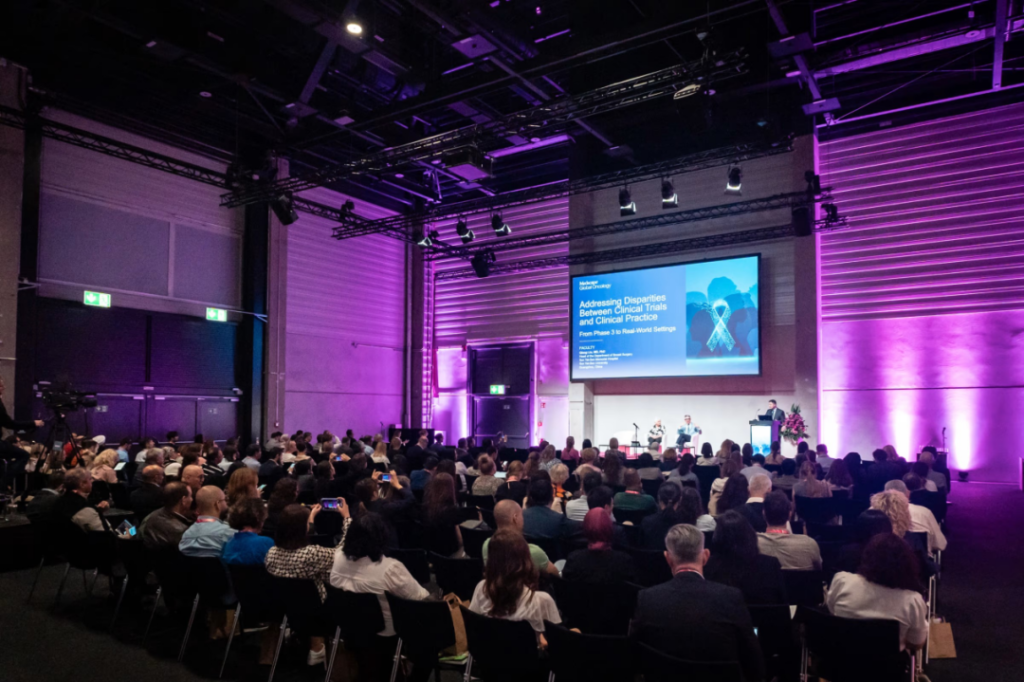
In recent years, advancements in Hematopoietic Cell Transplantation (HCT) technology have significantly improved long-term survival rates, with about 80% of patients achieving disease-free survival for more than two years post-transplant. However, as time progresses, long-term survivors of transplantation still face the risk of chronic complications, which directly impact their quality of life and outcomes post-transplant. The 50th European Society for Blood and Marrow Transplantation (EBMT) annual meeting took place from April 14 to 17, 2024, in Glasgow, UK. At the meeting, Professor Rachel Phelan from the Children's Hospital of Wisconsin, a specialist in blood and marrow transplantation, introduced the recently updated "International Guidelines for Screening and Prevention Measures for Long-Term Survivors of Transplant and Cell Therapy" (Bone Marrow Transplant. 2024 Feb 27. Epub ahead of print). Hematology News invited Professor Phelan to share and interpret the key updates of the guidelines with a broad readership.
EBMT China Voice | Professor Yue Lu ‘s Team: Clinical Characteristics and Prognosis of Allogeneic Hematopoietic Stem Cell Transplantation Combined with Mucormycosis

EBMT China Voice | Professor Yue Lu ‘s Team: Clinical Characteristics and Prognosis of Allogeneic Hematopoietic Stem Cell Transplantation Combined with Mucormycosis

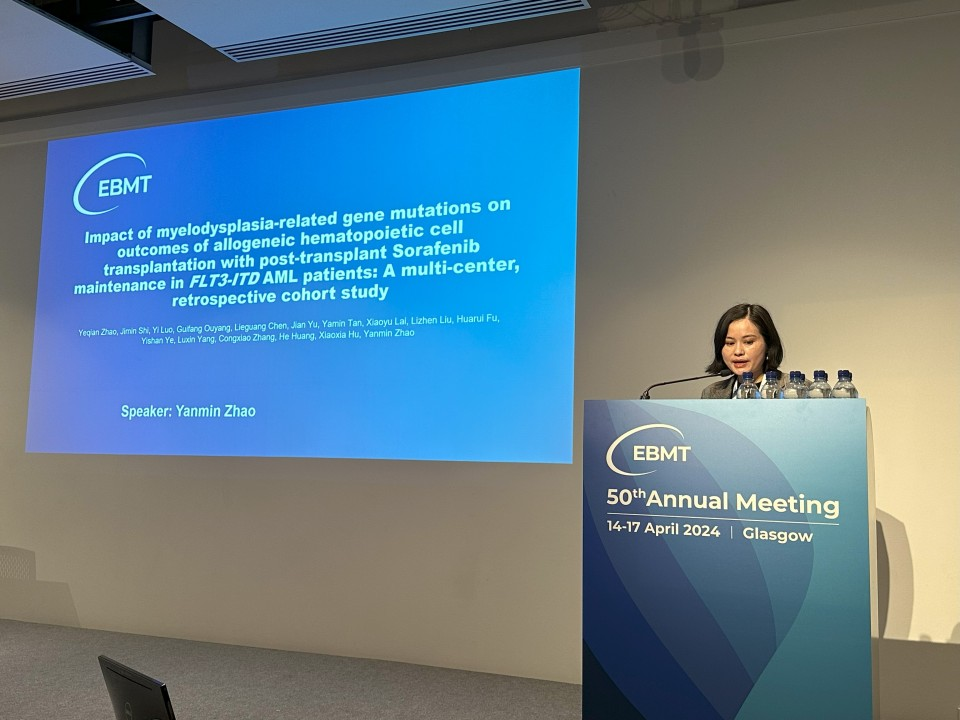
Mucormycosis is a group of rare and highly invasive fungal diseases, and its combination with allogeneic hematopoietic stem cell transplantation increases the difficulty of diagnosis and treatment. Previously, the difficulty in rapidly diagnosing mucormycosis often led to poor prognosis in patients with transplantation-associated mucormycosis. At the 50th European Society for Blood and Marrow Transplantation (EBMT) Annual Meeting, Dr. Xu Fang from Professor Yue Lu 's team at Hebei Yanda Lu Daopei Hospital reported a recent clinical study that analyzed the characteristics and prognostic factors of patients with allogeneic hematopoietic stem cell transplantation combined with mucormycosis.
EBMT Hot Commentary | Professor Jie Jin: Turning the Tide, Extending Survival — Pre-Transplant Salvage Chemotherapy for Relapsed/Refractory AML Based on Venetoclax

EBMT Hot Commentary | Professor Jie Jin: Turning the Tide, Extending Survival — Pre-Transplant Salvage Chemotherapy for Relapsed/Refractory AML Based on Venetoclax

Acute myeloid leukemia (AML) is a common and aggressive hematological malignancy with poor prognosis. For patients with relapsed/refractory (R/R) AML, allogeneic hematopoietic stem cell transplantation (allo-SCT) is one of the important treatment options. However, patients with R/R AML often face primary or secondary drug resistance and limited treatment options due to complications and physical condition, resulting in low re-induction remission rates. Therefore, selecting the appropriate chemotherapy regimen before transplantation to achieve deeper remission and secure better timing for transplantation, thereby optimizing the outcome of allo-SCT and extending patient survival, is a critical clinical issue. From April 14 to 17, 2024, the 50th European Society for Blood and Marrow Transplantation (EBMT) Annual Meeting was held in Glasgow, UK, focusing on the latest advances in stem cell transplantation and cellular therapy, and pushing forward better clinical outcomes for patients with hematological diseases and malignancies. In this issue, we are pleased to have Professor Jie Jin share her insights on the latest research in pre-transplant chemotherapy for patients with relapsed/refractory AML.
Relapsed and refractory AML is a very difficult clinical problem, and there is currently no unified and efficient treatment plan.

Relapsed and refractory AML is a very difficult clinical problem, and there is currently no unified and efficient treatment plan.

Relapsed and refractory acute myeloid leukemia (AML) presents one of the most formidable challenges in oncology, lacking a unified and efficient treatment strategy. Dr. Johannes Schetelig, Head of the Cell Therapy Unit at the Technical University of Dresden and Chair of the Clinical Trials Unit within the DKMS, offers invaluable insights into the complexities and evolving approaches in managing this condition. From the nuances of defining refractory AML at various stages to the critical decision-making involved in stem cell transplantation, Dr. Schetelig's expertise sheds light on current practices and future directions. This article delves into the multifaceted strategies for treating relapsed and refractory AML, focusing on patient suitability for stem cell transplantation, predictive clinical characteristics for better outcomes, and proactive measures to prevent relapse post-transplantation. 
2024 Edition of CSCO Kidney Cancer Guidelines Surgical Updates | 2024 CSCO Guidelines Conference

2024 Edition of CSCO Kidney Cancer Guidelines Surgical Updates | 2024 CSCO Guidelines Conference

Hosted jointly by the Chinese Society of Clinical Oncology (CSCO) and the Beijing Hisco Clinical Oncology Research Foundation, the 2024 CSCO Guidelines Conference was held in Jinan on April 26-27. It is understood that updates to the CSCO guidelines for kidney cancer treatment are currently under discussion. "Oncology Frontier" interviewed Professor Pei Dong from the Sun Yat-sen University Cancer Center at the venue to interpret the upcoming updates to the new CSCO guidelines for kidney cancer treatment.
Expert Perspective | Professor Dong Ji: Prognostic Studies on Drug-Induced Liver Injury

Expert Perspective | Professor Dong Ji: Prognostic Studies on Drug-Induced Liver Injury

Drug-induced liver injury (DILI) is liver damage caused by prescription or over-the-counter chemical medicines, biological products, traditional Chinese medicines, herbal and natural medicines, health products, dietary supplements, or their metabolites, additives, contaminants, and impurities. It is one of the most concerning drug-related diseases globally. At the inaugural 2024 Jinling Liver Disease Conference, Professor Dong Ji from the Fifth Medical Center of the Chinese PLA General Hospital delivered a keynote report on the prognosis of DILI, discussing the histological and biochemical characteristics of chronic DILI and their relationship to its prognosis, and introducing a new non-invasive predictive model for forecasting the prognosis of chronic DILI.
Professor Qing Cao’s Team: FA-ME Improves Diagnostic Efficacy for Children with Meningitis/Encephalitis | ESCMID Global 2024

Professor Qing Cao’s Team: FA-ME Improves Diagnostic Efficacy for Children with Meningitis/Encephalitis | ESCMID Global 2024

Despite ongoing developments in antimicrobial drugs and vaccines, the diagnosis of bacterial meningitis and viral encephalitis remains challenging due to their varied clinical presentations and is closely associated with high mortality rates. Traditional diagnostic methods have limitations, such as low positivity rates and lengthy processing times for cerebrospinal fluid (CSF) cultures, making early clinical diagnosis and treatment particularly difficult, especially in pediatric patients. At the 34th European Congress of Clinical Microbiology and Infectious Diseases (ESCMID Global 2024), a study by Professor Qing Cao's team from Shanghai Children's Medical Center affiliated with Shanghai Jiao Tong University School of Medicine, Professor Gang Liu's team from Beijing Children's Hospital affiliated with Capital Medical University, and Professor Haiyin Wang's team from Shanghai Municipal Health and Health Development Center was selected for an e-poster presentation. This study assessed the impact of the FilmArray Meningitis/Encephalitis Panel (FA-ME) on clinical outcomes and healthcare economics for pediatric patients.
2023 COMB丨Professor Peng Yuan: Precision Diagnosis and Treatment Strategies for Young Breast Cancer

2023 COMB丨Professor Peng Yuan: Precision Diagnosis and Treatment Strategies for Young Breast Cancer

The 6th Precision Oncology Summit and the 9th Individualized Breast Cancer Treatment Conference (2023 COMB) were held from December 23 to 26, 2023, in a hybrid online and offline format. Professor Yuan Peng from the Cancer Hospital of the Chinese Academy of Medical Sciences delivered a lecture on "Precision Diagnosis and Treatment Strategies for Young Breast Cancer". After the conference, Oncology Frontier conducted an exclusive interview with Professor Yuan, where she shared her experiences related to the diagnosis and treatment of young breast cancer.
2023 COMB Conference | Professor Qiao Li : Current and Future Perspectives on Neoadjuvant Research for TNBC

2023 COMB Conference | Professor Qiao Li : Current and Future Perspectives on Neoadjuvant Research for TNBC

Triple-negative breast cancer (TNBC) is a highly aggressive and heterogeneous subtype of breast cancer, accounting for 15% to 20% of all breast cancers. Compared to other subtypes, TNBC patients often experience rapid clinical progression, are diagnosed at a younger age, have faster distant recurrence, and more common visceral metastasis. Treatment for TNBC is usually limited to chemotherapy, resulting in a poorer prognosis. With the breakthroughs in immune checkpoint inhibitors in the field of oncology, TNBC, as a relatively "hot" subtype among the otherwise immune "cold" tumors, has become a focus of research, showing improved therapeutic effects. Furthermore, neoadjuvant treatment, as a pre-surgical intervention for breast cancer, which aims to "downstage and conserve the breast" and acts as "in vivo drug sensitivity testing," has also received considerable attention in recent years. At the 2023 COMB conference, Professor Qiao Li from the Cancer Hospital of the Chinese Academy of Medical Sciences reviewed the current state and future of TNBC neoadjuvant research. Subsequently, the "Oncology Frontier" magazine invited Professor Li to discuss the progress and future directions of TNBC neoadjuvant treatment.
Consensus on Targeted Prostate Biopsy at Panjiayuan by National Cancer Center

Consensus on Targeted Prostate Biopsy at Panjiayuan by National Cancer Center

In recent years, the incidence and mortality rates of prostate cancer in China have been rapidly increasing. Early diagnosis and treatment are crucial, with prostate biopsy histopathology being the gold standard for diagnosis. However, differences in equipment and technical levels among medical institutions in China pose challenges for prostate biopsies, including issues with technique selection and operational standards. On January 6, 2024, the "2024 Beijing Genitourinary Tumor Youth Forum" was successfully held in Beijing, jointly hosted by the Urology Male Reproductive Tumor Professional Committee of the Beijing Anti-Cancer Association and the Beijing Medical Awards Foundation. Professor Gang Song from the National Cancer Center/Chinese Academy of Medical Sciences Cancer Hospital's Department of Urology delivered a fascinating speech titled "Consensus on Targeted Prostate Biopsy at Panjiayuan by National Cancer Center (English)" and discussed the background, clinical significance, and challenges of the consensus in an interview with "Oncology Frontier."