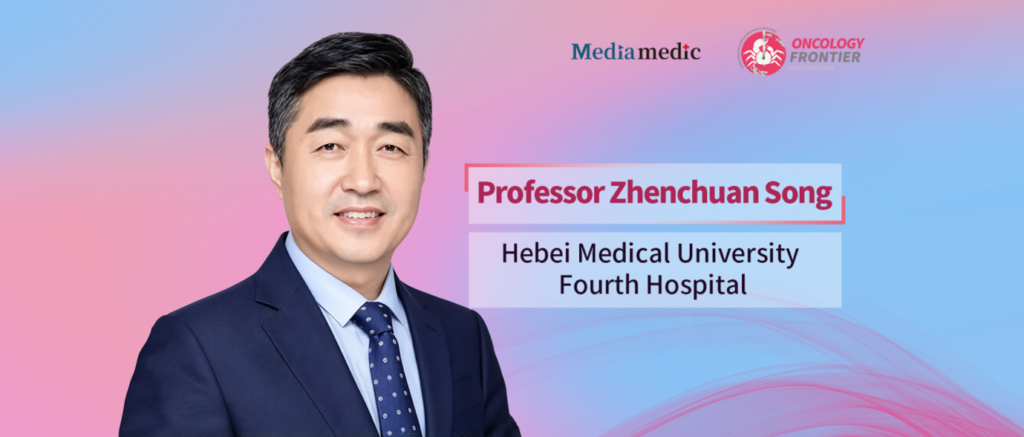
Editor's Note: The 17th Yanzhao Breast Cancer Forum was held in Shijiazhuang from August 26 to 30, 2026. Continuing the forum's longstanding academic tradition, this year's meeting featured a series of lectures by leading experts from across China, who engaged in in-depth discussions on key topics in breast cancer diagnosis and treatment, as well as specialty development. The multidisciplinary team (MDT) case discussion session was another major component of the forum, focusing on the central role of MDT in the comprehensive management of breast cancer and examining the current status and challenges of extending MDT services to primary-level hospitals. During the meeting, Oncology Frontier invited Professor Zhenchuan Song of the Fourth Hospital of Hebei Medical University to share his insights into the academic highlights of the expert lecture series and specialty development, the core value of MDT in comprehensive patient management, and the challenges and strategies involved in promoting MDT at the grassroots level.01
Oncology Frontier: This year’s forum featured a series of lectures by leading experts. From your perspective, what major topics and emerging trends in breast cancer were reflected in these lectures? What insights might the concentrated presentation of these topics offer physicians in their clinical practice?
Professor Zhenchuan Song: The expert lecture series has been an important and longstanding component of the Yanzhao Breast Cancer Forum. Its purpose is to invite renowned experts from across China to share standardized diagnostic and treatment principles, as well as the latest advances in breast cancer, with colleagues in Hebei Province.
The topics covered in this year’s lectures were broad and comprehensive, spanning multiple aspects of breast cancer treatment, including surgery, radiotherapy, immunotherapy, and endocrine therapy. They also addressed specialty development, such as improving the quality of surgical departments. Together, these topics provided a comprehensive reflection of current clinical priorities and emerging trends in breast cancer diagnosis and treatment.
Through this program, we hope to help our colleagues in the breast cancer field across Hebei Province further improve the overall standard of diagnosis and treatment.
02
Oncology Frontier: The multidisciplinary case discussion session was another important component of this year’s forum. Could you explain the core value of the MDT model in breast cancer diagnosis and treatment? What indispensable role does it play in improving the standardization of clinical care?
Professor Zhenchuan Song: Multidisciplinary team (MDT) care is a treatment model that the National Health Commission of China is actively promoting. Under this approach, multidisciplinary discussions are required before the initial treatment decision is made for patients with newly diagnosed tumors. This model moves away from the traditional approach in which individual departments, such as medical oncology, surgery, and radiation oncology, independently develop treatment plans. Instead, it brings together the relevant specialties to comprehensively discuss each patient’s specific circumstances and formulate an individualized treatment plan.
The core value of MDT lies in establishing a model of comprehensive, continuous care throughout the entire course of a patient’s disease. In breast cancer, for example, MDT discussions are essential at every stage: deciding between neoadjuvant therapy and upfront surgery; determining whether targeted therapy or immunotherapy should be incorporated into neoadjuvant treatment; selecting the appropriate surgical approach, such as breast-conserving surgery, mastectomy, or breast reconstruction; and developing postoperative adjuvant intensification strategies, including endocrine therapy and intensified targeted therapy.
The National Health Commission’s efforts to promote the widespread implementation of MDT are ultimately intended to ensure that treatment decisions are coordinated and carefully evaluated across specialties. This helps standardize decisions both at initial diagnosis and throughout subsequent stages of care, thereby improving overall survival outcomes and quality of life for patients.
03
Oncology Frontier: MDT has been widely implemented at major medical centers, but its expansion to primary-level hospitals continues to face numerous challenges. What do you consider the main barriers to broader adoption of the MDT model? How can case discussion sessions such as this one help address these issues?
Professor Zhenchuan Song: The MDT model has been widely adopted in China’s tertiary Grade A hospitals, with strong support from both clinical teams and hospital administrators. However, implementing this model in primary-level hospitals still presents considerable practical challenges. These include relatively limited medical resources and the need to improve diagnostic and treatment capabilities, which may lead to deviations in treatment planning.
To address this situation, China is promoting remote consultations, including remote MDT services. When primary-level hospitals encounter complex or difficult cases, they can connect online with higher-level tertiary Grade A hospitals or partner institutions within medical alliances. Multidisciplinary experts can then comprehensively assess the patient’s condition and conduct in-depth discussions via online platforms, jointly developing an individualized treatment plan suited to the patient’s needs.
This approach is expected to help patients receive more consistent, standardized care regardless of the region or level of the hospital where they are treated, ultimately improving treatment outcomes and quality of life.
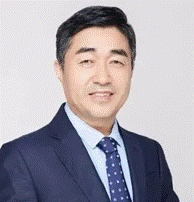
Professor Zhenchuan Song