


ASCO China Focus | “Rebirth: I Want to Keep My Bladder”—Professor Yijun Shen Presents Phase II ReBirth Study on Stratified Bladder-Sparing Approaches After Neoadjuvant Immunochemotherapy
To live or to live well?” This Shakespearean dilemma continues to haunt many patients with bladder cancer. How to provide longer-lasting disease control while preserving the bladder through safer and more tolerable strategies has become a central challenge in urologic oncology. At the 2025 ASCO Annual Meeting, Professor Yijun Shen from Fudan University Shanghai Cancer Center presented the Phase II ReBirth study, which evaluates stratified bladder-sparing treatment strategies based on whether patients achieve clinical complete response (cCR) following neoadjuvant immunochemotherapy.

Prof. Philip Kwong: New Strategies and Emerging Horizons in the Management of mHSPC

The “2025 Pujiang Prostate Cancer Academic Conference,” held from June 27 to 28 in Shanghai, was jointly organized with the Annual Meeting of the Chinese Society of Clinical Oncology Prostate Cancer Committee (CSCO-PC), the Chinese Anti-Cancer Association Genitourinary Oncology Committee (CACA-GO) Prostate Cancer Meeting, and the Annual Conference of the Chinese Prostate Cancer Consortium (CPCC). With the theme “Global Vision · Chinese Practice · Precision Breakthrough,” the event attracted numerous domestic and international experts to share the latest advances and real-world experiences in prostate cancer.


Professor Dingwei Ye: The Three Dimensions of Surgical Treatment for Prostate Cancer — Skill Advancement, Technological Innovation, and Conceptual Reform | 2025 CACA Integrated Prostate Oncology Conference
At the “CACA Integrated Prostate Oncology Conference” held from June 14–15, numerous Chinese experts and scholars gathered under the theme “Winning Through Integration in Cancer Control” to engage in academic discussions on the latest CACA prostate cancer guideline updates, recent research advances, and multidisciplinary team (MDT) evaluations of complex cases. Professor Dingwei Ye from Fudan University Shanghai Cancer Center delivered a keynote lecture titled “The Three Dimensions of Surgical Treatment for Prostate Cancer — Skill Advancement, Technological Innovation, and Conceptual Reform.” The following is a summary of his presentation.
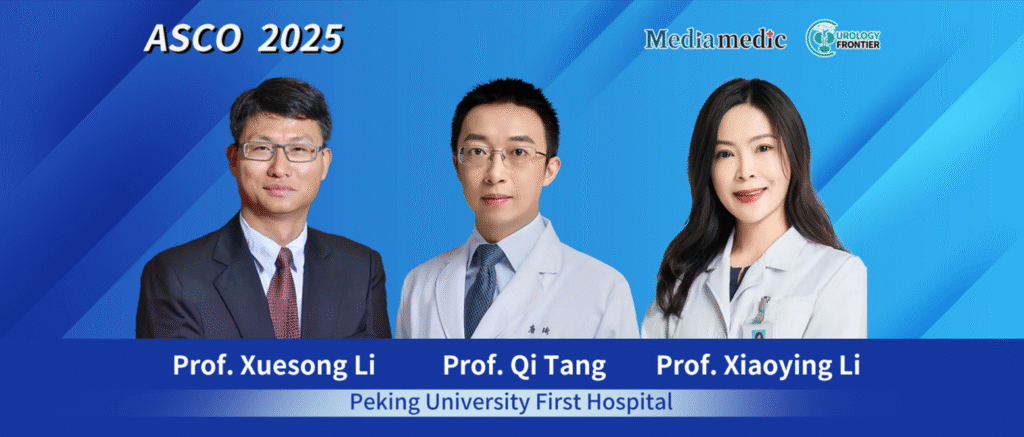
ASCO Expert Commentary | Professors Xuesong Li, Qi Tang, and Xiaoying Li: Addressing the Unique Challenges of UTUC in China—Disitamab Vedotin Paves the Way for a New Era in Adjuvant Therapy

Editor’s Note: Upper tract urothelial carcinoma (UTUC), which originates in the renal pelvis or ureter, is a distinct disease entity with unique characteristics in China. Accounting for 17.9% of all…

Professor Jiwei Huang: The “Renji Experience” in Neoadjuvant Therapy for UTUC | CUDA 2025
The 2025 Annual Meeting of the Chinese Urological Association (CUDA), held from June 12 to 15 in the romantic city of Zhuhai, brought together leading experts under the theme “Healthy China, Urology First.” At the conference, Professor Jiwei Huang from Renji Hospital, Shanghai Jiao Tong University School of Medicine, delivered a compelling presentation on neoadjuvant therapy for upper tract urothelial carcinoma (UTUC). In an exclusive interview with Oncology Frontier – UroStream, he further discussed his team’s research and practical experience in this evolving field.
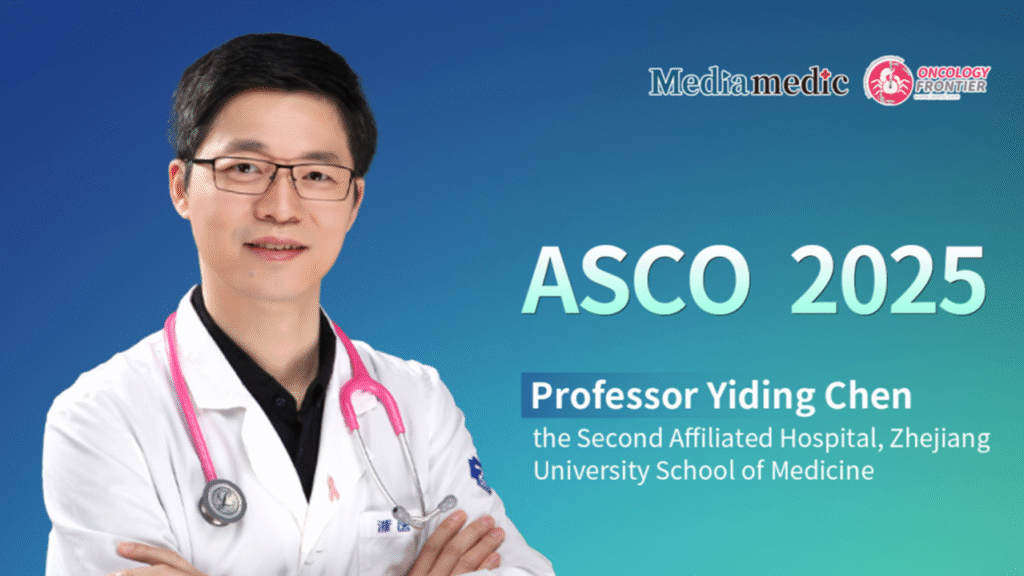
Voices from China at ASCO | Prof. Yiding Chen: Biomarker Analysis from the DANCER Study Opens a New Chapter in Precision Therapy for Breast Cancer

The 2025 American Society of Clinical Oncology (ASCO) Annual Meeting took place from May 30 to June 3 in Chicago. At this global event, Professor Yiding Chen from the Second Affiliated Hospital, Zhejiang University School of Medicine, presented results from the biomarker analysis of the DANCER study. Focusing on operable HER2-negative Luminal B breast cancer, the study explored biomarkers related to neoadjuvant dalpiciclib-based therapy, offering new perspectives for precision treatment. Oncology Frontier conducted an exclusive interview with Prof. Chen onsite at ASCO, where he detailed the background, findings, and clinical significance of the study—highlighting the crucial role biomarkers may play in predicting treatment response and opening new avenues for breast cancer care.