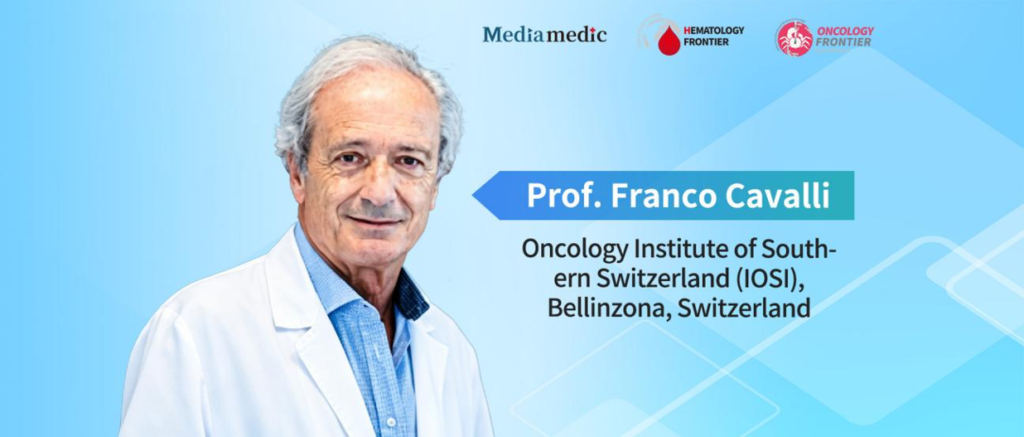
Editor's Note: The 29th Chinese Society of Clinical Oncology (CSCO) Annual Meeting was held in Jinan from September 16 to 19, 2026, bringing together leading oncology experts from around the world to explore pathways for innovation and advancement in precision cancer care. Professor Franco Cavalli, President of the International Conference on Malignant Lymphoma (ICML) and Professor at the Oncology Institute of Southern Switzerland in Bellinzona, was invited to attend the meeting and deliver a special presentation. As an internationally renowned expert who has devoted decades to oncology, Professor Cavalli has witnessed more than 30 years of transformation in Chinese oncology since his first visit to China in 1989. In an interview with Oncology Frontier – Hematology Frontier, he reflected on his longstanding exchanges and collaboration with the Chinese oncology community, shared key advances and future directions in extranodal lymphoma, and previewed the major topics to watch at ICML 2027.Oncology Frontier-Hematology Frontier:Welcome to China for the 2026 CSCO Annual Meeting. As an expert who has been dedicated to oncology research and international academic collaboration for many years, how do you evaluate the recent development and progress of oncology in China? During this visit, what are your special impressions and expectations?
Professor Franco Cavalli:My first visit to China was in 1989. Subsequently, I attended the CSCO Annual Meeting held in Qingdao in 2005. In my view, the developmental trajectory of oncology in China mirrors the transformation seen across all other sectors. When I first arrived in 1989 and returned a decade later, the country was almost unrecognizable, having undergone earth-shattering changes. The field of oncology followed a similar path. During my initial visit, my impression was that of a developing nation where modern cancer therapeutics were little understood. Ten years on, the landscape had changed drastically; professional awareness among peers had improved significantly, and medical oncology had made substantial progress during that interval.
Today, China stands at the forefront of global advancements in numerous aspects of oncology. Twenty-five years ago, the pharmaceutical landscape was dominated exclusively by Western companies. Now, domestic Chinese pharmaceutical enterprises stand on equal footing with their Western counterparts, and arguably demonstrate greater innovation. Currently, a significant volume of new clinical data from Phase III trials originates from China. China is also leading the way in applying artificial intelligence to cancer research. We are currently preparing a memorandum of understanding with Professor Xu Bo from Chongqing to foster collaboration in this field. There is no doubt that China is at the vanguard of developing highly innovative therapies. Taking CAR-T cell therapy as an example, the initial clinical data for CAR-T therapy in multiple myeloma originated from China. At present, novel strategies combining traditional approaches with various interleukins to enhance the efficacy of CAR-T cells are also under development in China.
It can be said that twenty-five years ago, we attended the CSCO Annual Meeting to teach; today, we attend primarily to learn.
Oncology Frontier-Hematology Frontier:During the lymphoma session, you delivered a presentation entitled “What’s New in Extranodal Lymphoma.” In recent years, significant advances have been achieved in the molecular classification, precision diagnosis and treatment, and therapeutic strategies for extranodal lymphoma. Could you please share the most important breakthroughs in this field? What are the key challenges that future research needs to address?
Professor Franco Cavalli:Thirty years ago, we decided to establish the International Extranodal Lymphoma Study Group (IELSG). In extranodal lymphomas, the site of involvement is the most important prognostic factor; therefore, each site—such as the breast, liver, central nervous system, and stomach—must be studied individually. However, no single institution worldwide possesses a sufficient number of cases to conduct such studies independently; this is feasible only through a collaborative group. Consequently, we established this study group, which now encompasses more than 300 institutions.
Building upon this collaborative platform, we have progressively refined our understanding of the natural history of extranodal lymphomas at various sites. Subsequently, we conducted multiple prospective studies, based on which we have redefined the standard treatment regimens for most sites. The most significant advances include: demonstrating that radiation therapy is no longer required for primary mediastinal lymphoma; and showing that primary central nervous system (CNS) lymphoma can also be managed without radiotherapy through modern chemotherapy combined with autologous bone marrow transplantation. Although this disease was almost invariably fatal in the past, at least 50% of patients can now be cured. We have further demonstrated that CNS relapse in testicular lymphoma, which previously occurred in over 50% of cases, can now be effectively prevented. Additionally, we have confirmed that the majority of gastric MALT lymphomas can be cured solely through Helicobacter pylori eradication.
Currently, we are dedicated to exploring in depth the molecular biological characteristics and microenvironment composition of different extranodal lymphoma subtypes, with the aim of better characterizing those subtypes that are not yet fully defined. Although we have redefined treatment protocols for extranodal lymphomas at nearly all sites, we continue to advance our efforts to further elucidate the biological foundations of each site, with the ultimate goal of achieving a cure for all patients.
Oncology Frontier-Hematology Frontier:The 19th International Conference on Malignant Lymphoma (ICML 2027) will be held in Lugano, Switzerland, from June 15 to 19, 2027. As one of the key figures involved in the development of ICML, how would you introduce the highlights and major topics of this upcoming meeting? What expectations and messages would you like to share with Chinese experts and researchers who will participate in ICML 2027?
Professor Franco Cavalli:The core agenda of the conference has been tentatively established. Of course, the final program will depend on the approximately 1,500 abstracts we expect to receive next year; it remains to be seen how many innovative findings these submissions will yield. However, as is customary for previous ICML meetings, a symposium focusing on the most pressing current topics will be held the day before the official conference. The theme of this symposium is to harmonize and define the precise role of liquid biopsy and circulating tumor DNA (ctDNA) in guiding treatment decisions for patients with lymphoma. By leveraging PET and ctDNA technologies, we have already achieved individualized and precision therapy in certain lymphoma subtypes. Our aspiration is to reach a stage where individualized treatment plans can be formulated for all patients based on ctDNA and PET findings, which will undoubtedly be one of the most anticipated topics of this meeting.
Another agenda item of particular significance to Chinese attendees is the special session jointly organized by the ICML and the Union of Chinese Lymphoma Investigators. This session will focus on gene therapy and CAR-T cell therapy, with an emphasis on harmonizing indications, regulatory standards, and clinical trial protocols. Given the existing challenges in the field of gene therapy, we will compare regulatory frameworks and operational experiences between Europe and China to further advance the development of gene therapy and T-cell therapy for lymphoma.
The third highly cutting-edge topic involves a series of special lectures on emerging genetic insights. Currently, our understanding of the non-coding regions of DNA remains limited. However, in terms of quantity, these non-coding regions constitute the most substantial component of DNA and are likely to play a pivotal role in defining the biological characteristics of different lymphoma subtypes. Extensive in-depth discussions on this subject are scheduled for the conference.
These three topics represent the most significant themes I can currently anticipate. Naturally, based on the abstracts we will receive, many other compelling topics will emerge, and we look forward to your continued attention.
Expert Profile
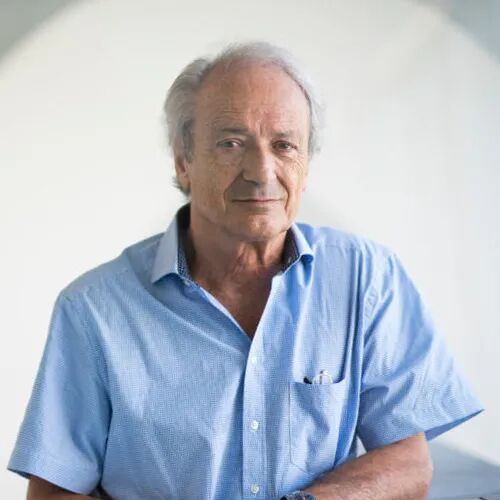
Professor Franco Cavalli
Oncology Institute of Southern Switzerland (IOSI), Bellinzona, Switzerland
- Former President, Union for International Cancer Control (UICC)
- Member, Swiss Academy of Medical Sciences
- Scientific Director, Oncology Institute of Southern Switzerland (IOSI), Bellinzona
- Former President, Swiss Clinical Research Group of the Swiss Cancer League (SAKK)
- Chair, Scientific Committee, European School of Oncology (ESO) and World Oncology Forum (WOF)
- President, International Conference on Malignant Lymphoma (ICML)
- President, International Extranodal Lymphoma Study Group (IELSG)
- Author/co-author of more than 600 publications and contributor to numerous books on cancer
- Recipient of more than 20 international oncology awards
- Recipient of the AACR Award for Lifetime Achievement in Cancer Research