-
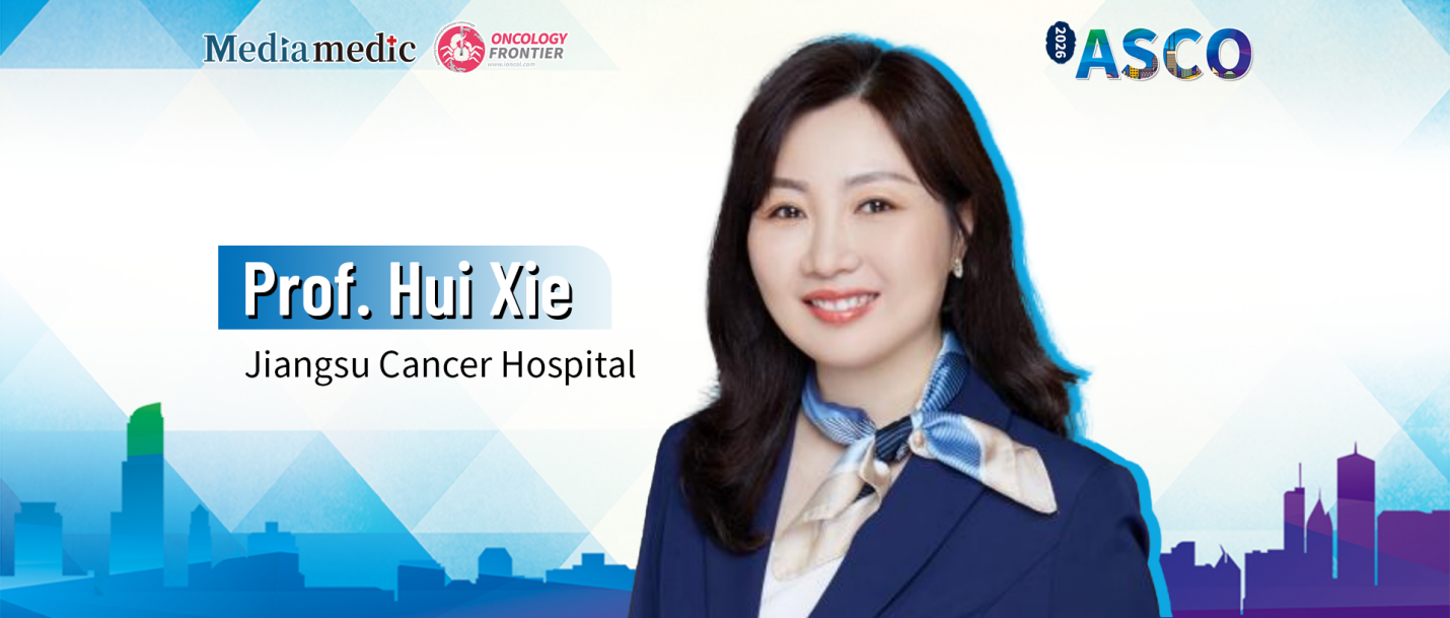
ASCO China Voice | Professor Hui Xie: BMI May Serve as a Simple Stratification Marker for Trastuzumab Deruxtecan in Advanced Breast Cancer
At the 2026 American Society of Clinical Oncology (ASCO) Annual Meeting, a study led by Professor Hui Xie from Jiangsu Cancer Hospital was presented as an electronic poster (Abstract e13078). Using multicenter real-world data from China, the study is the first to systematically evaluate the relationship between body mass index (BMI) and the efficacy and…
-
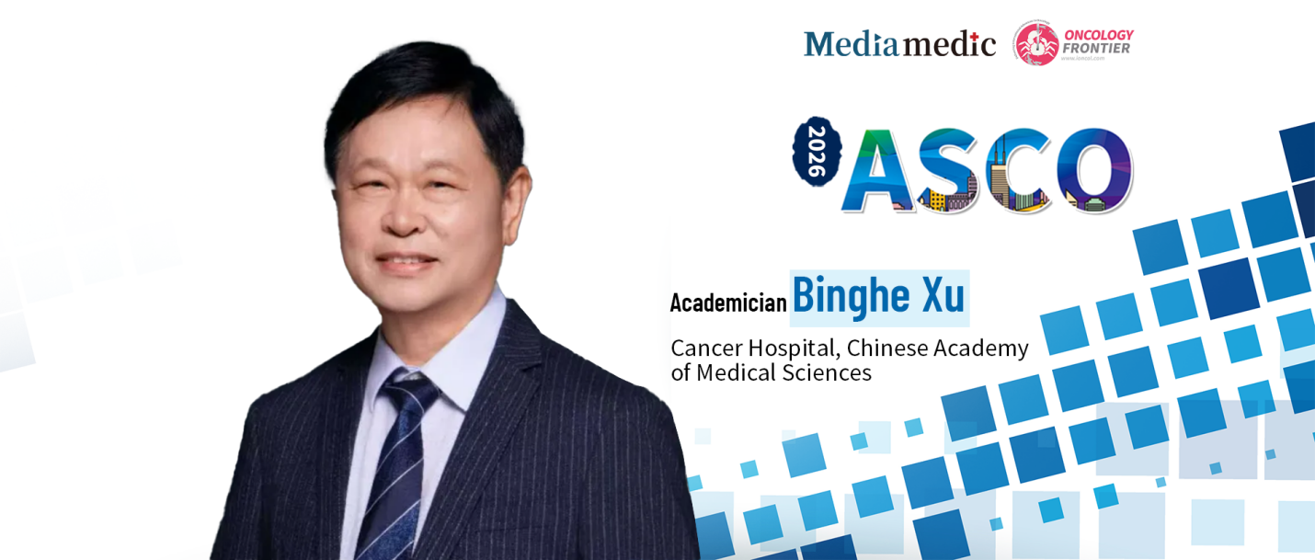
ASCO China Voice | Academician Binghe Xu: China-Developed B7-H4 ADC Demonstrates Promising Antitumor Activity and Excellent Safety, Offering a Potential Breakthrough for Two Difficult-to-Treat Advanced Solid Tumors
The 2026 American Society of Clinical Oncology (ASCO) Annual Meeting, held from May 29 to June 2 in Chicago, USA, featured the first-in-human Phase 1a results (Abstract #3013) of BG-C9074, a novel B7-H4-targeting antibody-drug conjugate (ADC) developed in China, during the Rapid Oral Abstract Session on Developmental Therapeutics.
-
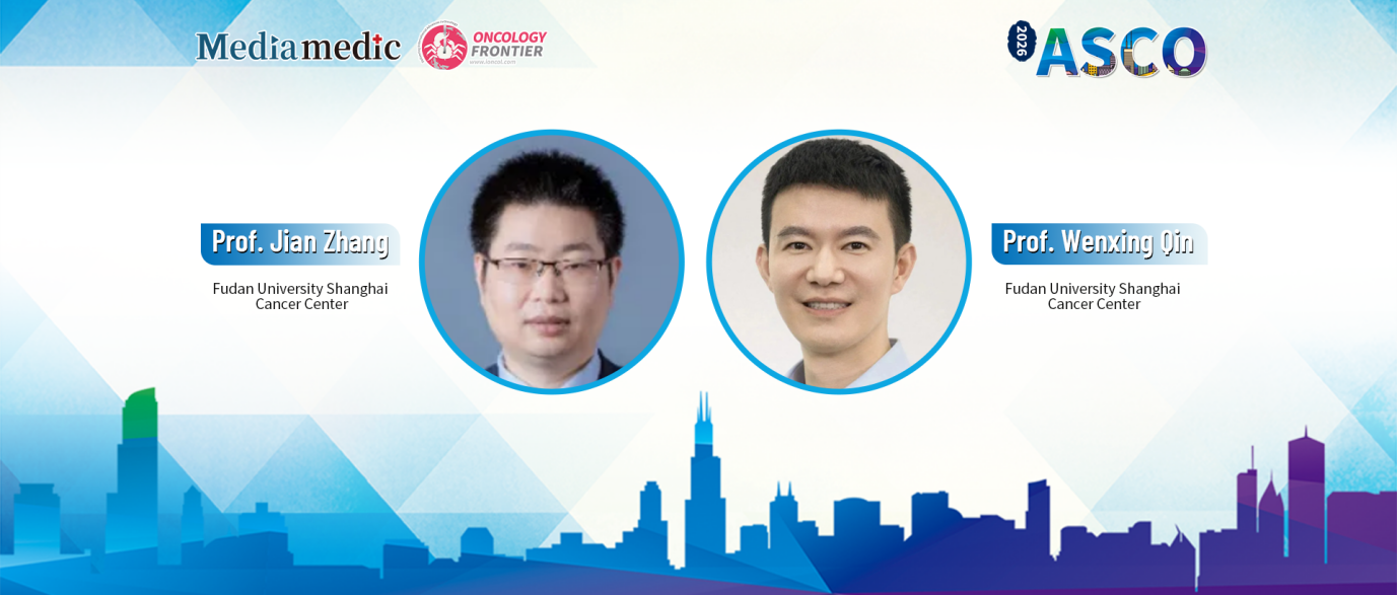
ASCO China Voice | Professors Jian Zhang and Wenxing Qin: Chinese-Developed Oral SERD TFX06 Demonstrates Promising Activity in Fulvestrant-Pretreated ER+/HER2− Advanced Breast Cancer
For patients with HR+/HER2− advanced breast cancer, fulvestrant combined with targeted therapy remains the preferred treatment after progression on aromatase inhibitors (AIs). However, for patients whose disease progresses following fulvestrant, there is currently no established standard of care worldwide.
-
Professor Yuwen Zhou: CAPCET Study Demonstrates a More Effective and Cost-Efficient First-Line Strategy for Left-Sided RAS/BRAF Wild-Type Metastatic Colorectal Cancer
Professor Yuwen Zhou will present the CAPCET study, which focuses on first-line treatment for patients with RAS/BRAF wild-type left-sided metastatic colorectal cancer. By comparing modified CAPOX plus cetuximab with the conventional mFOLFOX6-based regimen, the study demonstrated significant therapeutic advantages. The results showed superior progression-free survival (PFS), overall survival (OS), and objective response rate (ORR), while…
-
Professor Haihong Wang: UNION TNT Study Highlights the Potential of Precision Combination Therapy for HER2-Expressing Locally Advanced Rectal Cancer
Professor Haihong Wang will present the UNION TNT study, which explores short-course radiotherapy combined with disitamab vedotin and immunochemotherapy for patients with HER2-expressing locally advanced rectal cancer. Preliminary findings demonstrate remarkable clinical benefit, with a pathological complete response (pCR) rate of 75% among patients who underwent surgery, while several additional patients achieved clinical complete response…
-
Professor Yi Yi Yu: Building a High-Quality IIT Research System at Zhongshan Hospital
This presentation provided an in-depth overview of Zhongshan Hospital’s investigator-initiated trial (IIT) research system, highlighting its practical experience in infrastructure development, digital platforms, and talent cultivation. Through the implementation of the CREMS management platform, a dual electronic data capture (EDC) system, and the institutional innovation known as the “Zhongshan Ten Measures,” the hospital has established…

Connecting Medical Expertise through Media