
The 2026 American Society of Clinical Oncology (ASCO) Annual Meeting, held from May 29 to June 2 in Chicago, USA, featured the first-in-human Phase 1a results (Abstract #3013) of BG-C9074, a novel B7-H4-targeting antibody-drug conjugate (ADC) developed in China, during the Rapid Oral Abstract Session on Developmental Therapeutics.BG-C9074 demonstrated encouraging antitumor activity in two particularly challenging malignancies—ovarian cancer and triple-negative breast cancer (TNBC). Importantly, unlike many currently available ADCs, the study reported no cases of interstitial lung disease, ocular toxicity, or oral mucositis, highlighting a favorable safety profile alongside promising efficacy.
Oncology Frontier invited Academician Binghe Xu of the National Cancer Center/Cancer Hospital, Chinese Academy of Medical Sciences, who presented the study at ASCO, to discuss the trial design, key efficacy and safety findings, and the future clinical development of BG-C9074.
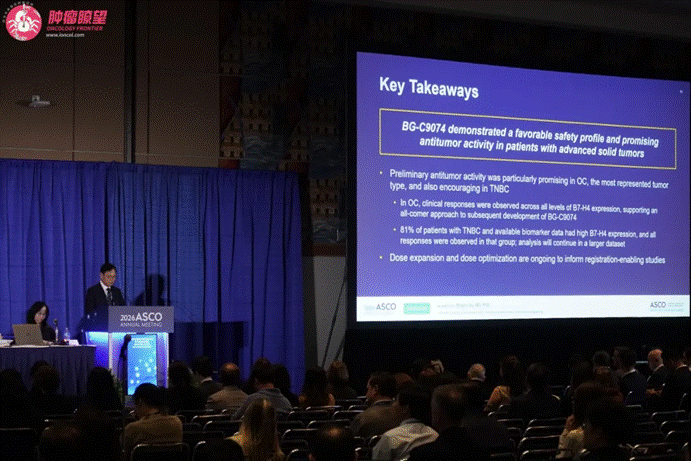
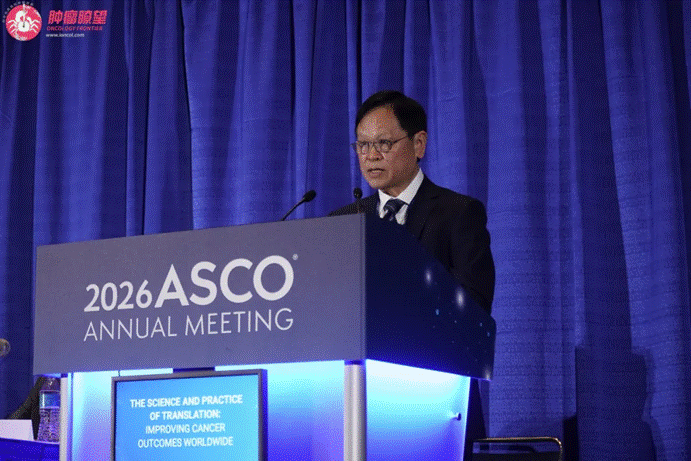
Oncology Frontier: Could you first introduce the design of the first-in-human study of BG-C9074 that you presented at ASCO?
Academician Binghe Xu:
BG-C9074 is a novel China-developed ADC targeting B7-H4. At this year’s ASCO meeting, we presented results from the Phase 1a portion of its ongoing Phase I clinical study.
This is a global, multicenter first-in-human trial, and I serve as one of the co-principal investigators (Co-PIs) alongside a U.S. investigator. Because enrollment and study execution at several Chinese centers were particularly strong, I was invited to present the safety and preliminary efficacy data.
The study employed a dose-escalation followed by dose-expansion design. During the dose-escalation phase, dosing was based on patients’ actual body weight. For patients with higher body weight, doses were adjusted according to ideal body weight to optimize treatment exposure.
Oncology Frontier: BG-C9074 demonstrated particularly encouraging antitumor activity in ovarian cancer and TNBC. Based on your clinical experience, how do you view its potential role in these difficult-to-treat cancers? Could it fill an important unmet need? Additionally, what key clinical questions do you hope the ongoing dose optimization and expansion studies will answer?
Academician Binghe Xu:
At present, the study has achieved a confirmed objective response rate (cORR) of 36.5%. Since approximately half of the responding patients have not yet undergone response confirmation, we expect the overall objective response rate to eventually exceed 50%.
Among confirmed responders, ovarian cancer demonstrated the highest activity, with a cORR of 39.5%, increasing to 45.5% when dosing was calculated using ideal body weight. In TNBC, the confirmed ORR reached 40.0%, although the sample size remains relatively small and enrollment is currently being expanded.
Beyond ovarian cancer and TNBC, the study also explored BG-C9074 in several other tumor types, including lung cancer, biliary tract cancer, endometrial cancer, and hormone receptor-positive breast cancer. However, ovarian cancer and TNBC have emerged as the two indications with the greatest promise for further clinical development.
The next phase of the program will therefore focus on dose expansion, with increased enrollment in these two patient populations. Our goal is to further characterize the efficacy of BG-C9074 and generate the evidence needed to support subsequent Phase II and Phase III clinical trials.
Oncology Frontier: How would you characterize the safety profile of BG-C9074? How were adverse events managed during the study to maximize patient benefit?
Academician Binghe Xu:
The dose-limiting toxicities observed with BG-C9074 have primarily been hematologic, including thrombocytopenia and febrile neutropenia.
One of the most distinctive features of BG-C9074 is its safety profile compared with other ADCs. As of the data cutoff, no patients had developed interstitial lung disease, ocular toxicity, or oral mucositis, toxicities that are commonly associated with other ADC therapies. We will continue monitoring these events during the ongoing dose-expansion phase.
Overall, the adverse events associated with BG-C9074 have been largely confined to hematologic toxicities, which are generally familiar to clinicians and relatively manageable in routine practice.
Study Overview
Study Title
First-in-human study of BG-C9074 (B7-H4–targeting ADC) in advanced solid tumors: Dose escalation and safety expansion Abstract #3013
Background
B7-H4 is a transmembrane glycoprotein with limited expression in normal tissues but is overexpressed across a wide range of solid tumors. BG-C9074 is an investigational ADC targeting B7-H4 that carries a topoisomerase I inhibitor payload. The data presented at ASCO represent results from the monotherapy dose-escalation and safety-expansion portions of its ongoing Phase I study.
Methods
BG-C9074-101 (NCT06233942) is a multicenter first-in-human study evaluating BG-C9074 both as monotherapy and in combination with other anticancer therapies in patients with advanced solid tumors. Patients were enrolled regardless of B7-H4 expression status and received intravenous BG-C9074 every three weeks at doses ranging from 1 to 9 mg/kg.
The primary objectives included evaluation of safety, preliminary antitumor activity according to RECIST v1.1, and pharmacokinetics.
Results
As of December 29, 2025, 112 patients with advanced solid tumors had received BG-C9074 monotherapy during the Phase 1a study. The study population included patients with ovarian cancer (n=63), HR+/HER2− breast cancer (n=28), TNBC (n=18), and endometrial cancer (n=3). Patients had received a median of four prior lines of therapy (range, 0–13).
Eight patients experienced dose-limiting toxicities, including thrombocytopenia, febrile neutropenia, neutropenic infection, fatigue, nausea, and one unexplained death at the highest dose level. Treatment-emergent adverse events occurred in 98.4% of patients, while Grade ≥3 adverse events were reported in 41.9%. The most frequently observed adverse events were nausea (58.1%), neutropenia or decreased neutrophil count (47.6%), and fatigue (46.0%). Both hematologic and gastrointestinal toxicities were manageable with dose modifications and supportive care.
Among 74 efficacy-evaluable patients, the confirmed ORR was 36.5% (95% CI, 25.6–48.5), while the unconfirmed ORR reached 44.6% (95% CI, 33.0–56.6). Responses included three complete responses—two in ovarian cancer and one in TNBC—and 30 partial responses. Clinical responses were observed across multiple dose levels and B7-H4 expression levels, with no consistent correlation identified between B7-H4 expression and treatment response. Median follow-up was 6.0 months (range, 0.3–17.7 months).
Pharmacokinetic analyses demonstrated biexponential declines in both ADC and free payload concentrations. The ADC exhibited an approximate seven-day half-life, and exposure to both the ADC and released payload increased approximately proportionally with dose.
Conclusion
BG-C9074 demonstrated a manageable safety profile and encouraging antitumor activity in patients with advanced solid tumors, particularly in ovarian cancer and triple-negative breast cancer. Dose optimization and expansion studies are currently underway.
Expert Profil

National Cancer Center / Cancer Hospital, Chinese Academy of Medical Sciences