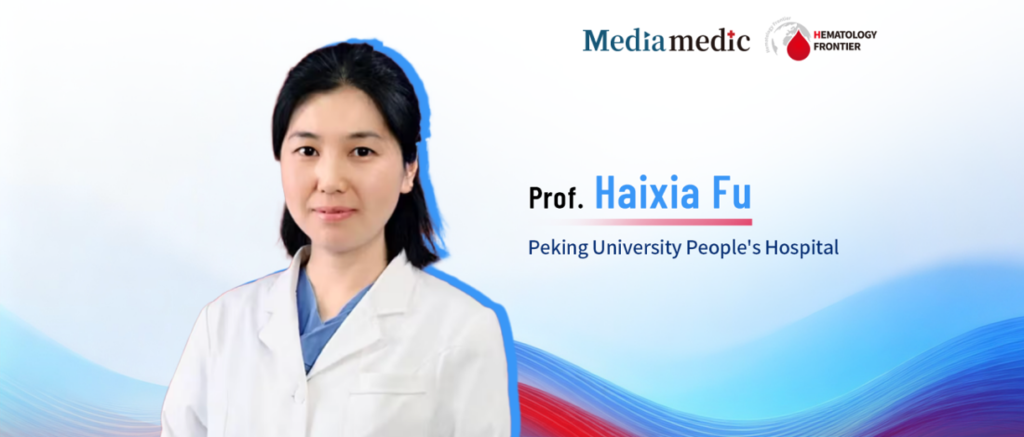
Editor's Note: 2026 China-France Scientific Symposium on Hematology and Immunology was held in Beijing from September 11 to 13, 2026. Building on the longstanding tradition of academic exchange between China and France in hematology, this year's conference further expanded its scope to encompass the intersection of hematology and immunology, bringing together renowned experts from both countries to explore the latest advances and exchange scientific insights. On this occasion, Oncology Frontier – Hematology Frontier invited Professor Haixia Fu of Peking University People's Hospital to discuss strategies for balancing the need to increase platelet counts with the risk of thrombosis in patients with immune thrombocytopenia (ITP). She provided an in-depth analysis of the incidence and risk factors of thrombotic events in ITP patients, as well as individualized treatment strategies, and shared valuable clinical insights.Oncology Frontier – Hematology Frontier: Your presentation at this pre-conference meeting was titled “How to Balance the Need to Increase Platelet Counts and the Risk of Thrombosis in Patients with Immune Thrombocytopenia (ITP).” Thrombotic risk in ITP patients has received increasing attention in recent years. Could you explain the incidence of thrombotic events in ITP patients and the factors that increase their risk?
Professor Haixia Fu: In routine clinical practice, patients themselves tend to be more concerned about the risk of bleeding, but the risk of thrombosis in ITP patients deserves equal attention. Compared with the general population, patients with ITP have a significantly increased risk of thrombosis, with an overall incidence of approximately 1%–3%. Although the absolute increase is relatively modest, the elevated risk remains clinically significant compared with that in the general population.
From a pathophysiological perspective, factors affecting thrombotic risk in ITP patients involve multiple aspects, including the disease itself, patients’ baseline characteristics, and treatment-related factors. As an autoimmune disease, ITP is characterized by persistent attacks on the vascular endothelium by inflammatory, immune, and complement systems, resulting in an inflammatory or prothrombotic state. This endothelial injury, together with persistent low-grade inflammation, provides the pathological basis for thrombosis.
Meanwhile, ITP is more prevalent among older adults, who often have traditional thrombotic risk factors such as advanced age, hypertension, diabetes, hyperlipidemia, smoking, and alcohol consumption. These comorbidities further increase the risk of thrombosis in ITP patients.
In addition, during ITP treatment, corticosteroids, intravenous immunoglobulin (IVIG), immunosuppressants, and platelet-stimulating agents may all increase the risk of thrombosis. In some patients, platelet counts rise rapidly after treatment, and newly produced platelets have stronger hemostatic function. These factors may also contribute to an increased risk of thrombotic events.
The combined effects of these factors place some patients at high risk of thrombosis. In clinical practice, we conduct appropriate assessments of thrombotic risk. For high-risk patients, the risk of thrombosis must be carefully considered throughout treatment, with appropriate thromboprophylaxis or measures to address thrombotic risk incorporated into the treatment plan.
Oncology Frontier – Hematology Frontier: In clinical practice, is there a direct causal relationship between platelet-raising therapies, such as thrombopoietin receptor agonists (TPO-RAs), and thrombotic risk? How can we strike a balance between increasing platelet counts and preventing thrombosis?
Professor Haixia Fu: Based on the current evidence, a direct causal relationship between TPO-RAs and the risk of thrombosis has not yet been established. However, meta-analyses and prospective randomized controlled trials have shown that patients receiving TPO-RAs do have a slightly increased risk of thrombosis, although the absolute increase is limited. Therefore, the risk of thrombotic events should still be carefully monitored during TPO-RA treatment.
The introduction of TPO-RAs has provided an important therapeutic option for ITP. In some patients, platelet counts may rise rapidly after receiving these drugs, sometimes reaching very high levels. Many patients also hope to maintain a persistently normal platelet count during treatment. For patients who already have thrombotic risk factors, this may further increase their risk of thrombosis.
Therefore, thrombotic risk factors must be carefully considered throughout treatment. Based on current research, thrombosis is not necessarily caused by the drug itself. Rather, patients may already have underlying thrombotic risk factors, which can be amplified when platelet counts rise rapidly following treatment, ultimately leading to thrombotic events.
There are two key considerations during treatment.
First, we must be alert to rapid fluctuations in platelet counts. When platelet counts rise sharply, fall, and then rise sharply again, the large number of newly produced platelets, together with inflammation-related endothelial changes, may increase the risk of thrombosis.
Second, thrombotic risk assessment is essential. If a patient is identified as being at high risk of thrombosis or is experiencing an active thrombotic event, the platelet count target should not be the normal range. Instead, the goal may be to raise the platelet count to approximately 30,000–70,000/μL, thereby reducing the risk of bleeding while accommodating the need for antithrombotic or antiplatelet therapy.
For patients at even higher risk of thrombosis, thromboprophylaxis with anticoagulant or antiplatelet therapy should also be considered alongside platelet-raising treatment to reduce the risk of thrombosis during treatment.
Oncology Frontier – Hematology Frontier: For ITP patients of different ages and with different baseline thrombotic risk profiles, how would you develop individualized platelet-raising treatment strategies? What areas of thrombotic risk management in ITP patients warrant further exploration in the future?
Professor Haixia Fu: We primarily treat adults with ITP, so I will focus on this population. Among adults with ITP, the risk of thrombosis varies depending on age and physiological status. Older adults have a higher risk of thrombosis because they often have more underlying comorbidities. The risk of thrombosis is also increased during pregnancy. When managing these populations, we must ensure that treatment strategies take thrombotic risk into account.
For older patients at high risk of thrombosis, the platelet count target may not need to be raised to the normal range. In terms of treatment selection, we can also consider prioritizing immunosuppressive or immunomodulatory approaches to treating ITP. If these approaches are ineffective, TPO-RAs can then be considered as an add-on therapy. This may help avoid excessive use of platelet-stimulating agents and prevent platelet counts from rising too rapidly or excessively.
This does not mean that TPO-RAs should not be used. Rather, the key is to optimize their use, which may lead to better management of this patient population.
There are still many important questions to explore in the future management of ITP.
First, the relationship between antiphospholipid antibodies and thrombotic risk deserves further investigation. Some patients do not meet the diagnostic criteria for an autoimmune disease but have detectable antiphospholipid antibodies. These antibodies may persist over time or may be transiently elevated, for example, following a viral infection. Do these antibodies also increase patients’ risk of thrombosis? Should thrombotic risk also be considered when managing these patients? These are important questions that warrant further study.
Second, more refined management of pregnant patients is needed. Treatment options during pregnancy are very limited, generally restricted to corticosteroids, IVIG, or recombinant thrombopoietin (TPO), and overall treatment efficacy remains suboptimal.
We may be more concerned about bleeding in these patients, but there is actually a subgroup of pregnant patients who do not experience bleeding yet have an increased risk of thrombosis, fetal loss, or other adverse pregnancy outcomes. How to provide more individualized management and optimize treatment for these patients is another important area that deserves further investigation.
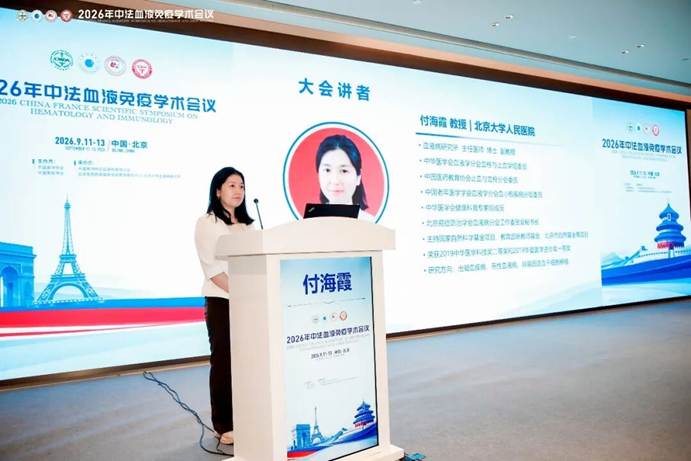
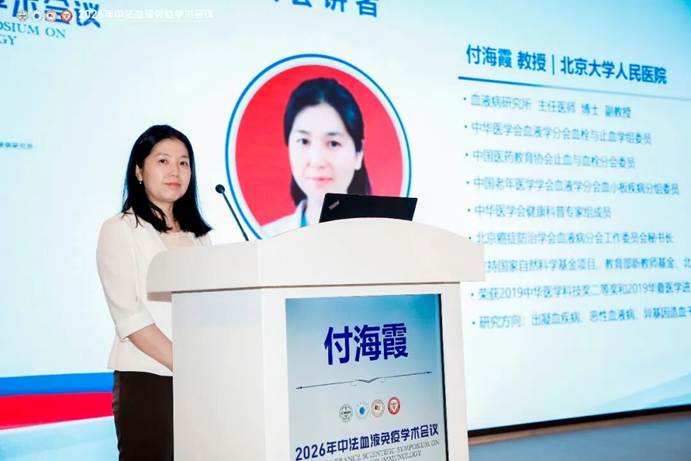
Expert Profile

Professor Haixia Fu
Institute of Hematology, Peking University People’s Hospital
PhD, Chief Physician, Associate Professor
Research Interests
Bleeding and coagulation disorders, hematologic malignancies, and allogeneic hematopoietic stem cell transplantation.
Academic Appointments
Member, Thrombosis and Hemostasis Group, Hematology Branch, Chinese Medical Association
Member, Hemostasis and Thrombosis Branch, China Medical Education Association
Member, Platelet Disorders Group, Hematology Branch, China Association of Gerontology and Geriatrics
Member, Health Science Popularization Expert Group, Chinese Medical Association
Secretary-General, Working Committee of the Hematology Branch, Beijing Cancer Prevention and Treatment Society
Research and Awards
Professor Fu has led research projects funded by the National Natural Science Foundation of China, the Ministry of Education’s New Teacher Fund, the Beijing Natural Science Foundation, and other funding programs.
She received the Second Prize of the 2019 Chinese Medical Science and Technology Award and the First Prize of the 2019 Huaxia Medical Science and Technology Award.