-
the 14th Lu Daopei Hematology Forum丨Professor Yuzhu Shi: Identifying Etiology Through Imaging for Precise Diagnosis — Imaging Diagnosis of Central Nervous System Infections After Hematopoietic Stem Cell Transplantation
On August 21, 2026, the 14th Lu Daopei Hematology Forum officially opened at Hebei Yanda Lu Daopei Hospital. Over the past 14 years, the conference has established a strong academic foundation. This year’s meeting focused on cutting-edge topics including hematopoietic stem cell transplantation, cellular immunotherapy, and precision diagnosis and treatment of hematologic diseases, bringing together…
-
2026 Pujiang Urological Oncology Conference丨Professor Gang Zhu: AI and Holographic Imaging Empower Urologic Oncology Surgery — From Precision Resection to Functional Preservation
The 2026 Pujiang Urological Oncology Conference was held in Shanghai, bringing together experts from China and abroad to discuss standardized diagnosis and treatment, innovations in surgical techniques, and advances in precision medicine in urologic oncology. At this year’s conference, the application of artificial intelligence (AI) and holographic imaging (three-dimensional reconstruction) in robotic surgery emerged as…
-
AIDS 2026 | Interview with Dr. Claire Norcross: Analysis of HIV Drug Resistance Profiles and Implementation Strategies for Long-Acting Antiretroviral Regimens in African Populations
Infectious Disease Frontier: Your research centers on African adult PLWH with poor medication adherence. Could you outline the prominent characteristics of overall drug resistance prevalence and dominant HIV viral subtypes…
-

AIDS 2026 | Adriana Cervo: Focus on Long-Term Survival, Tumor Recurrence and Post-Transplant Metabolic Management Among HIV-Infected Liver Transplant Recipients
The 2026 International AIDS Conference (AIDS 2026) was held in Rio de Janeiro, Brazil. Long-term prognosis of liver transplantation in people living with HIV (PLWH) emerged as a key topic in the hepatology track of the conference. Dr. Adriana Cervo from the University Hospital of Modena, Italy, presented a specialized study at the conference, systematically…
-
AIDS 2026 | Dr. Bascombe: Moving Beyond BMI to Address Occult Liver Injury in Lean HIV-Associated Fatty Liver Disease
The 2026 International AIDS Conference (AIDS 2026) was held in Rio de Janeiro, Brazil. Bringing together global specialists in infectious diseases, the conference covered a wide array of cutting-edge topics including viral prevention and control, antiretroviral therapy, and long-term health management for people living with HIV, and shared numerous innovative clinical research findings. At the…
-

AIDS 2026 | Dr. Alfredo Tagarro: Moving Beyond Transmission – In-Depth Exploration of Immune Profiles and Intervention Strategies in HIV-Exposed Infants and Young Children
The 2026 International AIDS Conference (AIDS 2026) was successfully held in Rio de Janeiro, Brazil. The prevention and control of maternal, infant and pediatric HIV remained a key topic of discussion at this conference. We conducted an exclusive interview with Dr. Alfredo Tagarro from the Instituto de Investigación 12 de Octubre, Spain. Breaking free from…
-
2026 Pujiang Urological Oncology Academic Conference丨Professor Dingwei Ye: Reshaping First-Line Treatment for Urothelial Carcinoma — Standardized Comprehensive Management to Maximize Long-Term Patient Benefit
The 2026 Pujiang Urological Oncology Academic Conference was held in Shanghai. In recent years, innovative approaches including antibody-drug conjugates (ADCs), immunotherapy, and precision diagnostics have developed rapidly, shifting the treatment goals of urothelial carcinoma from short-term disease control toward deeper responses, long-term survival, and comprehensive disease management. Enfortumab vedotin-based combination therapy has changed the first-line…
-
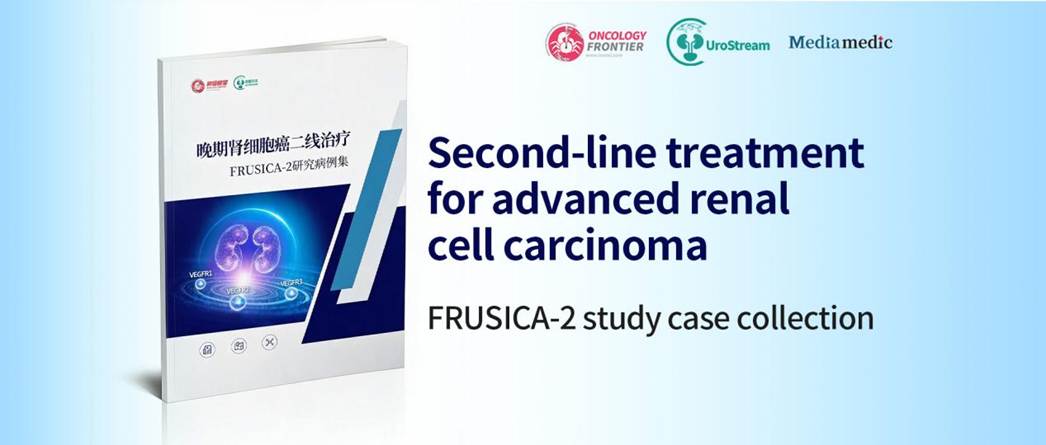
From Evidence to Clinical Practice丨FRUSICA-2 Case Series in Second-Line Treatment of Advanced Renal Cell Carcinoma Officially Released
Building on the evidence from the pivotal FRUSICA-2 registration study, the FRUSICA-2 Case Series has now been officially launched. This case collection brings together real-world clinical cases from multiple centers across China, providing practical insights into the clinical application of fruquintinib plus sintilimab as second-line treatment for advanced renal cell carcinoma. Scan the QR code…

Connecting Medical Expertise through Media