Editor's Note: 2026 China-France Scientific Symposium on Hematology and Immunology was held in Beijing from September 11 to 13, 2026. Building on the longstanding tradition of hematology exchanges between China and France, this year's conference expanded its scope to the intersection of hematology and immunology, bringing together renowned experts from both countries to explore scientific advances and exchange perspectives. On this occasion, Oncology Frontier – Hematology Frontier invited Professor Suning Chen of The First Affiliated Hospital of Soochow University to discuss the standardized diagnosis and treatment of acute myeloid leukemia (AML) in young adults. Professor Chen examined the distinctive biological characteristics, treatment strategies, and prognostic features of AML in this population and shared valuable clinical insights into the prospects for targeted therapy and immunotherapy.Oncology Frontier – Hematology Frontier: Your presentation at this conference focused on the standardized diagnosis and treatment of AML in young adults. Compared with older patients with AML, what are the distinctive features of AML in young adults in terms of disease biology, treatment strategies, and prognosis? In clinical practice, how can genetic risk stratification, such as the European LeukemiaNet (ELN) risk classification, guide individualized treatment pathways and optimize decisions regarding induction chemotherapy, consolidation therapy, and allogeneic hematopoietic stem cell transplantation (allo-HSCT)?
Professor Suning Chen: AML in young adults differs significantly from AML in older patients across several dimensions. In terms of disease biology, AML in young adults shows marked heterogeneity, with two distinct patterns. On the one hand, favorable-risk disease is more prevalent, particularly core-binding factor AML (CBF-AML), including cases with t(8;21) and inv(16). On the other hand, certain high-risk subtypes are also disproportionately represented in younger patients, particularly fusion-driven subtypes such as t(16;21), KMT2A fusions, and PICALM-AF10. Consequently, prognosis varies considerably among younger patients with AML, and leukemic cells also tend to proliferate more rapidly.
Historically, treatment for young adults with AML has relied primarily on intensive chemotherapy. The standard induction regimen has been the 3+7 regimen, followed by intensive chemotherapy for consolidation, with allo-HSCT for patients with an indication for transplantation. Older patients, by contrast, were traditionally treated primarily with lower-intensity chemotherapy. Since 2020, following publication of the VIALE-A results, treatment for older patients and those ineligible for intensive chemotherapy has shifted toward a chemotherapy-free approach based on a BCL-2 inhibitor combined with a hypomethylating agent.
This landscape has continued to evolve in recent years. Our center published two studies in Blood, in 2023 and 2025, respectively. Using a single-arm study and a comparative study, we demonstrated that, in young adults with intermediate- or high-risk AML, chemotherapy-free induction with venetoclax plus a hypomethylating agent achieved greater efficacy and better safety than intensive chemotherapy. More recently, the PARADIGM study was published in The New England Journal of Medicine, providing further support for our findings to some extent. The study showed that treatment with venetoclax plus azacitidine in young adults with intermediate- or high-risk AML resulted in higher response rates, better safety, and improved event-free survival (EFS). Thus, treatment strategies for younger and older patients with AML are beginning to converge to some extent.
In terms of prognosis, both younger and older patients exhibit substantial heterogeneity, with favorable-, intermediate-, and adverse-risk disease represented in both populations. Their outcomes therefore cannot be generalized based on age alone.
In clinical practice, genetic risk stratification is central to individualized treatment decisions for young adults with AML. Based on ELN risk classification, patients are generally categorized into favorable-, intermediate-, and adverse-risk groups, with treatment tailored accordingly.
For favorable-risk patients, such as those with CBF-AML, including t(8;21) or inv(16), intensive induction and consolidation chemotherapy are generally recommended, while allo-HSCT is not routinely indicated in first remission. These patients are typically chemotherapy-sensitive and have relatively favorable outcomes. However, MRD must be monitored closely. Persistent MRD positivity or molecular relapse should prompt reassessment of the indication for transplantation.
The intermediate-risk group is the most heterogeneous, and treatment decisions should integrate MRD monitoring results with specific genetic features. For patients who achieve MRD negativity and have no additional high-risk factors, continued intensive chemotherapy for consolidation may be considered. If MRD remains positive or adverse genetic features are present, allo-HSCT should be considered as early as possible during first complete remission.
For patients with adverse-risk disease, including those with TP53 mutations, complex karyotypes, or KMT2A rearrangements, allo-HSCT should generally be pursued as early as possible during first complete remission.
With the introduction of targeted agents in recent years, the options for induction, consolidation, and maintenance therapy have expanded. Decisions regarding allo-HSCT are also increasingly informed by dynamic, MRD-guided assessments.
It is worth emphasizing that chemotherapy-free induction regimens combining venetoclax with hypomethylating agents have demonstrated improved efficacy and safety in young adults with intermediate- or high-risk AML. These regimens offer an additional treatment option for selected patients who are unsuitable for intensive chemotherapy or prefer not to undergo it. Furthermore, targeted agents such as FLT3 inhibitors, IDH inhibitors, and menin inhibitors are expanding treatment options for specific genetic subtypes and reshaping the entire treatment continuum, from induction and consolidation to maintenance.
Oncology Frontier – Hematology Frontier: What are the prospects for targeted therapy and immunotherapy in young adults with AML? Which research directions do you consider most worthy of attention in the future?
Professor Suning Chen: For many years, intensive chemotherapy and transplantation have been the principal treatment approaches for young patients with AML. Compared with lymphoma and multiple myeloma, progress in immunotherapy for AML has been relatively slow. In lymphoma and multiple myeloma, CAR T-cell therapy, monoclonal antibodies, bispecific antibodies, and trispecific antibodies have profoundly changed treatment paradigms. In AML, however, immunotherapy has yet to achieve a comparable breakthrough overall.
AML entered the era of targeted therapy in 2017, although treatment has primarily relied on small-molecule targeted agents. From earlier agents such as midostaurin, enasidenib, gilteritinib, ivosidenib, and venetoclax to the two more recently developed menin inhibitors, revumenib and ziftomenib, these therapies are transforming the treatment landscape for AML and are gradually assuming an important role in younger patients as well.
At present and in the near future, these small-molecule targeted agents are expected to reshape induction, consolidation, and maintenance treatment for young adults with AML, as well as reinduction strategies for patients with refractory or relapsed disease.
More specifically, FLT3 inhibitors are important treatment options for young patients with FLT3-mutated AML. The RATIFY and QuANTUM-First studies demonstrated that adding midostaurin or quizartinib, respectively, to intensive chemotherapy significantly improves OS. Gilteritinib has also become a standard treatment for relapsed or refractory FLT3-mutated AML.
IDH inhibitors offer new options for young patients with IDH1- or IDH2-mutated AML. Long-term follow-up data indicate that some patients can achieve deep and durable remissions lasting more than five years.
The approval of the menin inhibitors revumenib and ziftomenib has introduced a new differentiation-based therapeutic strategy for two HOX-dependent AML subtypes: KMT2A-rearranged AML and NPM1-mutated AML. Clinical trials investigating combinations of these agents with venetoclax, FLT3 inhibitors, and other therapies are actively underway.
Venetoclax combined with hypomethylating agents or lower-intensity chemotherapy has also demonstrated high response and MRD-negativity rates in younger patients, further reshaping the induction treatment landscape.
Looking ahead, I believe two research directions deserve particular attention.
First, further development of small-molecule targeted therapies. This includes multikinase inhibitors and emerging targeted agents such as KAT6A inhibitors.
Second, immunotherapy. Although identifying an ideal single target for CAR T-cell therapy, other cellular therapies, or antibody-based treatments in AML remains challenging, cancer vaccines may represent a particularly important avenue for future development in this disease.
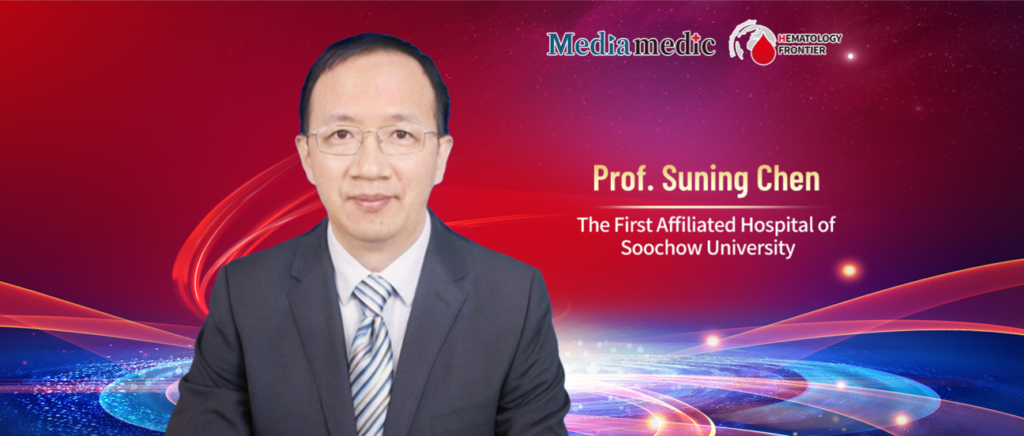
Expert Profile

Professor Suning Chen
The First Affiliated Hospital of Soochow University
- PhD; Chief Physician
- Chair, Hematology Branch, Jiangsu Medical Association
- Deputy Director, Jiangsu Institute of Hematology
- Committee Member, Hematology Branch, Chinese Medical Association
- Standing Committee Member, Experimental Hematology Branch, Chinese Society of Pathophysiology
- Vice Chair, Hematologic Disease Rehabilitation Committee, Chinese Association of Rehabilitation Medicine