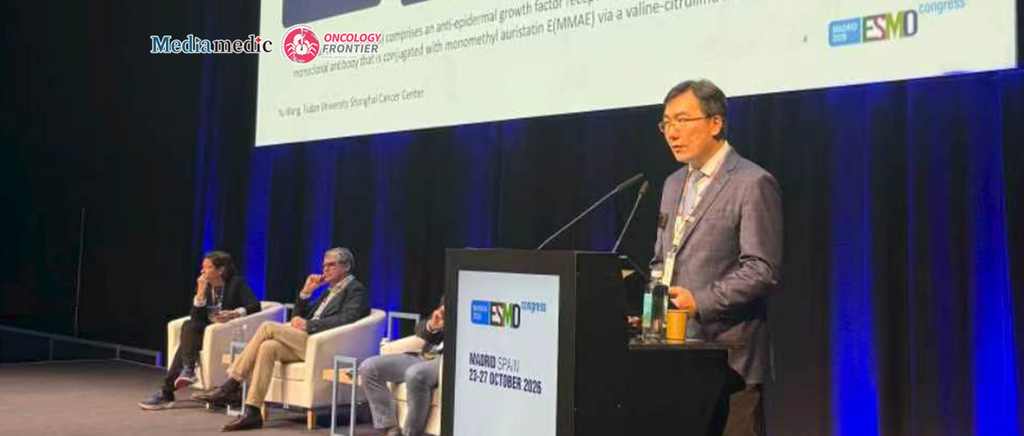
New Advances in Treating Aggressive Thyroid Cancers: Fudan Cancer Hospital Presents an Exploratory “China Strategy” at a Leading International Oncology Congress

New Advances in Treating Aggressive Thyroid Cancers: Fudan Cancer Hospital Presents an Exploratory “China Strategy” at a Leading International Oncology Congress

Most types of thyroid cancer progress slowly and respond well to treatment. However, two subtypes are particularly aggressive: anaplastic thyroid carcinoma (ATC) and poorly differentiated thyroid carcinoma (PDTC). ATC is one of the most rapidly progressing thyroid malignancies, with a historical median overall survival (OS) of only approximately five months and a 1-year OS rate of around 20%. Although PDTC generally has a better prognosis than ATC, it is highly heterogeneous. Historically, the overall 5-year OS rate has been approximately 60%–70%; however, once the disease becomes locally advanced, unresectable, or metastatic, patient outcomes deteriorate significantly. For a long time, effective treatment options for these patients have been extremely limited.
Oncology Frontier | ESMO Insights from the East

Oncology Frontier | ESMO Insights from the East

The highly anticipated 2026 Congress of the European Society for Medical Oncology (ESMO) was held in Madrid, Spain, from October 23 to 27, 2026. As one of the most influential academic meetings in global oncology, this year's congress brought together leading experts and scholars from around the world to present cutting-edge advances and explore the future of cancer diagnosis and treatment.
Published in The Lancet | First-in-Class Bispecific ADC Iza-bren Reshapes Clinical Treatment Decision-Making and Ushers in a New Era of Bispecific ADC Therapy for Breast Cancer

Published in The Lancet | First-in-Class Bispecific ADC Iza-bren Reshapes Clinical Treatment Decision-Making and Ushers in a New Era of Bispecific ADC Therapy for Breast Cancer

The 2026 ESMO Congress brought major advances to the forefront of oncology. Iza-bren (BL-B01D1/伦康依隆妥单抗), the world's first-in-class and first approved EGFR×HER3 bispecific antibody–drug conjugate (ADC), made a striking appearance with data from its pivotal Phase III PANKU-Breast01 study. The study presented its prespecified interim analysis results in full for the first time in a late-breaking abstract (LBA).
ESMO Investigator Insights | Professor Qingyuan Zhang: Robust Clinical Evidence Demonstrates the Strength of Iza-bren, Ushering in a New Era of Breast Cancer Treatment

ESMO Investigator Insights | Professor Qingyuan Zhang: Robust Clinical Evidence Demonstrates the Strength of Iza-bren, Ushering in a New Era of Breast Cancer Treatment

The European Society for Medical Oncology (ESMO) Congress is one of the most influential academic events in global oncology, where the presentation of each major study has the potential to reshape the clinical treatment landscape. Iza-bren (伦康依隆妥单抗), a globally pioneering, first-in-class bispecific antibody–drug conjugate (ADC) and the first of its kind to receive regulatory approval worldwide, has demonstrated significant clinical impact. At this year's congress, the interim analysis results of its pivotal Phase III PANKU-Breast01 study were presented as a late-breaking abstract (LBA). The study evaluated patients with unresectable locally advanced or metastatic HR-positive/HER2-negative breast cancer who had received prior endocrine therapy and one to two lines of chemotherapy. The results were also published simultaneously in The Lancet (impact factor: 109), making iza-bren the first innovative Chinese drug in the field of breast cancer to be published in the journal's main edition in its 200-year history.
ESMO Investigator Insights | Professor Shusen Wang: Reshaping the Breast Cancer Treatment Landscape—How Iza-bren Is Ushering in a New Era of Bispecific ADC Therapy

ESMO Investigator Insights | Professor Shusen Wang: Reshaping the Breast Cancer Treatment Landscape—How Iza-bren Is Ushering in a New Era of Bispecific ADC Therapy

The European Society for Medical Oncology (ESMO) Congress is one of the most prestigious academic events in global oncology, where the presentation of every major study has the potential to reshape the clinical treatment landscape. Iza-bren (伦康依隆妥单抗) is the world's first approved EGFR×HER3 bispecific antibody–drug conjugate (ADC). At this year's congress, the pivotal Phase III PANKU-Breast01 study, led by Academician Binghe Xu of the National Cancer Center/National Clinical Research Center for Cancer/Cancer Hospital, Chinese Academy of Medical Sciences, was presented as a late-breaking abstract (LBA). The study evaluated iza-bren in patients with unresectable locally advanced or metastatic HR-positive/HER2-negative breast cancer who had previously received endocrine therapy and one to two lines of chemotherapy, and demonstrated highly encouraging results. The full study was also published simultaneously in The Lancet (impact factor: 109), making iza-bren the first innovative Chinese drug in the field of breast cancer to be published in the journal's main edition.
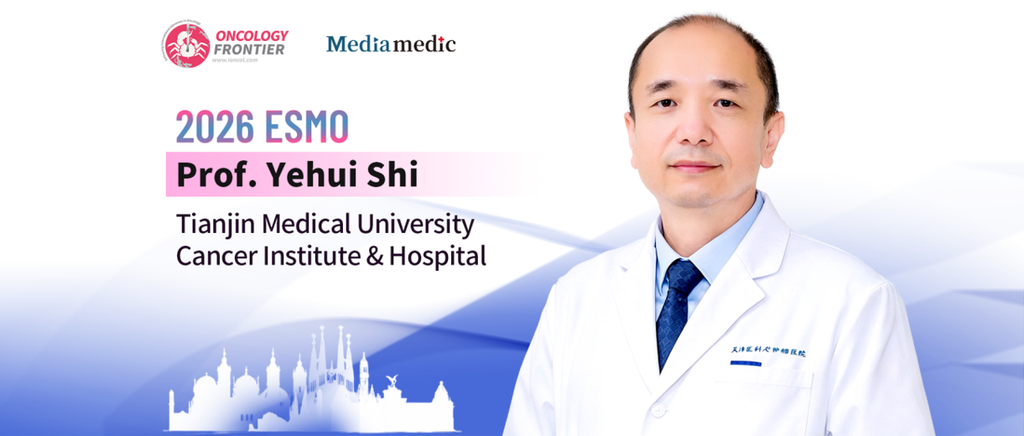
ESMO Investigator Insights | Professor Yehui Shi: Confronting Challenges and Breaking New Ground—How the World’s First Bispecific ADC, Iza-bren, Is Ushering in a New Era of Bispecific ADC Therapy for Breast Cancer

ESMO Investigator Insights | Professor Yehui Shi: Confronting Challenges and Breaking New Ground—How the World’s First Bispecific ADC, Iza-bren, Is Ushering in a New Era of Bispecific ADC Therapy for Breast Cancer

The European Society for Medical Oncology (ESMO) Congress is one of the most highly anticipated academic events in global oncology, where the presentation of every major study has the potential to reshape the clinical treatment landscape. Iza-bren (BL-B01D1/伦康依隆妥单抗) is the world's first approved EGFR×HER3 bispecific antibody–drug conjugate (ADC). At this year's congress, the pivotal Phase III PANKU-Breast01 study evaluating iza-bren in patients with HR-positive/HER2-negative advanced breast cancer who had previously received endocrine therapy and one to two lines of chemotherapy was presented as a late-breaking abstract (LBA), demonstrating impressive results.
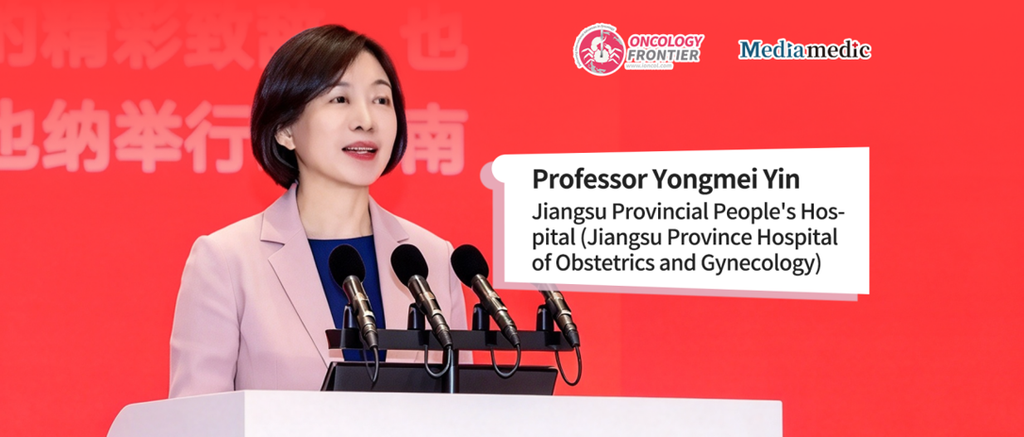
2026 East China Breast Cancer Salon | Professor Yongmei Yin: A Decade of Academic Exchange and Mentorship—Advancing Evidence-Based Practice and Standardized Breast Cancer Care

2026 East China Breast Cancer Salon | Professor Yongmei Yin: A Decade of Academic Exchange and Mentorship—Advancing Evidence-Based Practice and Standardized Breast Cancer Care

Against the vibrant autumn backdrop of Nanjing, breast cancer experts gathered on October 11, 2026, for the 2026 East China Breast Cancer Salon. Under the theme “Ninety Years of Compassion and Dedication, Passing the Torch of Medical Excellence,” the meeting focused on advances in breast cancer diagnosis and treatment, clinical implementation, and the development of the specialty. Over the past decade, the salon has established a strong regional foundation while benchmarking its work against international standards, creating an academic platform that integrates cutting-edge research, clinical application, and professional training.
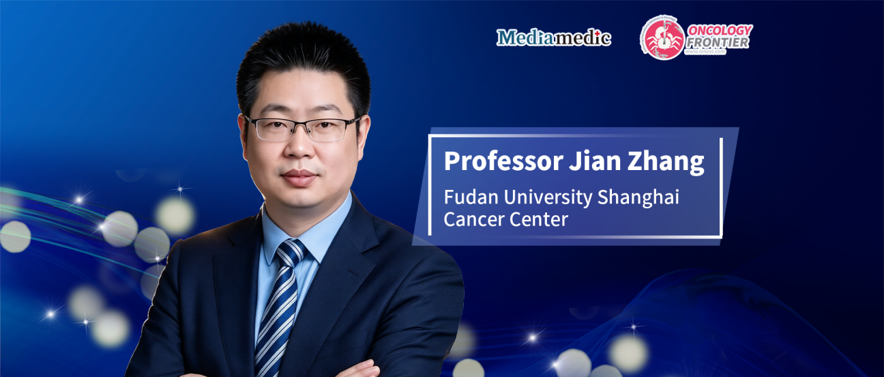
SIBCS 2026 | Professor Jian Zhang: From Adjuvant CDK4/6 Inhibitors to Post-Recurrence Treatment—New Perspectives on Stratified Management of HR+/HER2− Advanced Breast Cancer

SIBCS 2026 | Professor Jian Zhang: From Adjuvant CDK4/6 Inhibitors to Post-Recurrence Treatment—New Perspectives on Stratified Management of HR+/HER2− Advanced Breast Cancer

The 21st Shanghai International Breast Cancer Symposium (SIBCS) was held in Shanghai on October 16–17, 2026. The meeting brought together experts in breast cancer from across China for in-depth discussions on comprehensive breast cancer management and precision, stratified treatment.
From Tumor Metabolic Reprogramming to Immune Evasion: Metabolic Immune Checkpoints Offer a New Framework for Precision Immunotherapy

From Tumor Metabolic Reprogramming to Immune Evasion: Metabolic Immune Checkpoints Offer a New Framework for Precision Immunotherapy

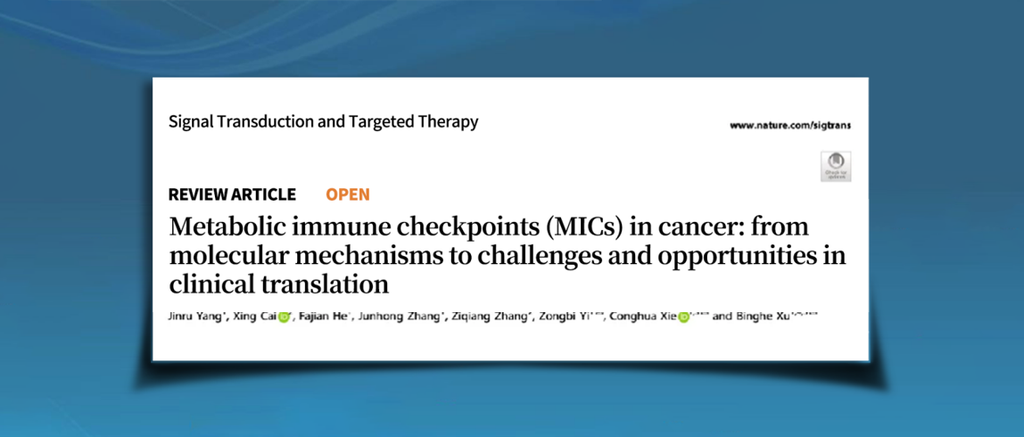
On October 9, 2026, a research team from Zhongnan Hospital of Wuhan University, the Taikang Center for Life and Medical Sciences at Wuhan University, the National Cancer Center, and the Cancer Hospital of the Chinese Academy of Medical Sciences published a review article online in Signal Transduction and Targeted Therapy (impact factor: 81.2), entitled “Metabolic immune checkpoints (MICs) in cancer: from molecular mechanisms to challenges and opportunities in clinical translation.” The review was co-corresponding-authored by Academician Qianjun Xu, Professor Xiehua Xie, and Professor Yechun Yi. It systematically examines the molecular mechanisms through which tumor metabolic reprogramming drives immune evasion and proposes a theoretical framework centered on metabolic immune checkpoints (MICs), offering a new conceptual basis for understanding immunotherapy resistance and developing combined metabolic and immunotherapeutic strategies.