
ESMO 2026 LBA | EGFR×HER3 Bispecific ADC Iza-bren Reshapes the Treatment Landscape of Advanced HR+/HER2− Breast Cancer, Becoming the First Chinese Innovative Drug in Breast Cancer to Be Published in The Lancet

ESMO 2026 LBA | EGFR×HER3 Bispecific ADC Iza-bren Reshapes the Treatment Landscape of Advanced HR+/HER2− Breast Cancer, Becoming the First Chinese Innovative Drug in Breast Cancer to Be Published in The Lancet

From October 23 to 27, 2026, the European Society for Medical Oncology (ESMO) Congress was held in Madrid, Spain. At the meeting, iza-bren (BL-B01D1), an innovative EGFR×HER3 bispecific antibody–drug conjugate (BsADC) independently developed by SystImmune, made a remarkable appearance with data from its pivotal Phase III PANKU-Breast01 study. As a first-in-class, new-concept therapeutic, the agent's prespecified interim analysis results were presented in full for the first time worldwide in a late-breaking abstract (LBA).
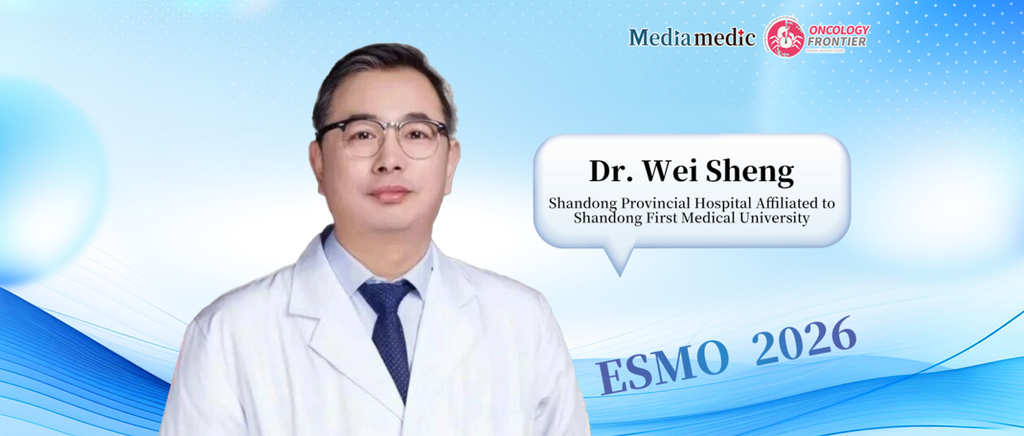
ESMO 2026 | Professor Wei Xu: From Tumor Shrinkage to Surgery—Exploring a New Neoadjuvant Treatment Strategy for Head and Neck Squamous Cell Carcinoma with Iparomlimab, Tovoricimab, and Chemotherapy

ESMO 2026 | Professor Wei Xu: From Tumor Shrinkage to Surgery—Exploring a New Neoadjuvant Treatment Strategy for Head and Neck Squamous Cell Carcinoma with Iparomlimab, Tovoricimab, and Chemotherapy

Neoadjuvant treatment for locally advanced head and neck squamous cell carcinoma (LA-HNSCC) must achieve tumor regression and improve the likelihood of surgery while minimizing the impact on organ function and quality of life. At the 2026 European Society for Medical Oncology (ESMO) Congress, preliminary results were reported from an exploratory study evaluating neoadjuvant iparomlimab and tovoricimab (hereafter referred to as the “combination antibody regimen”) plus nab-paclitaxel and nedaplatin. As of April 2026, 12 patients had been enrolled. The cohort included a relatively high proportion of patients with hypopharyngeal cancer, and most patients had a PD-L1 combined positive score (CPS) of less than 20. The study reported high objective response and pathological response rates. However, this was a small, single-arm exploratory study, and the findings require validation through controlled studies and long-term follow-up. Oncology Frontier interviewed Professor Wei Xu about the study design, interpretation of pathological response, appropriate patient populations, and functional outcomes.
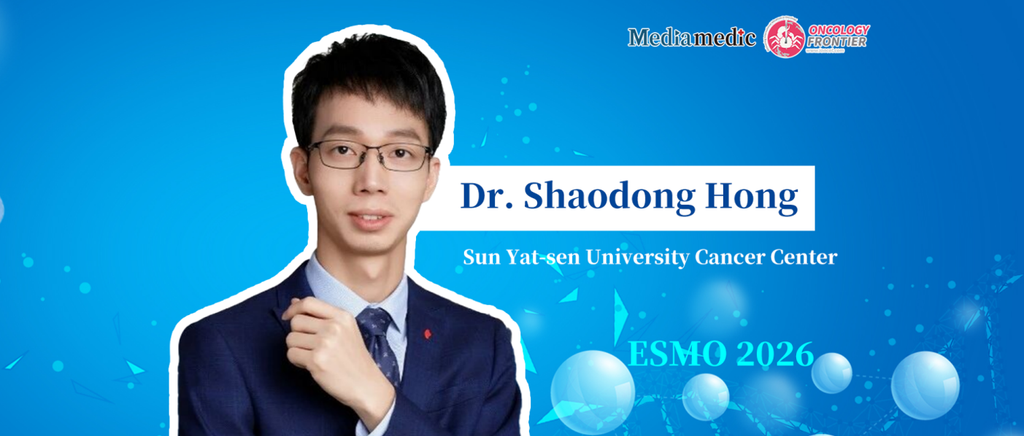
ESMO LBA Insights | Professor Shaodong Hong Discusses TAISHAN-301: Doubling the Response Rate in Nasopharyngeal Carcinoma and Offering a New Later-Line Treatment Option

ESMO LBA Insights | Professor Shaodong Hong Discusses TAISHAN-301: Doubling the Response Rate in Nasopharyngeal Carcinoma and Offering a New Later-Line Treatment Option

Nasopharyngeal carcinoma (NPC), often referred to as the “Guangdong cancer,” is particularly prevalent in southern China. First-line treatment with gemcitabine plus platinum-based chemotherapy combined with a PD-1 inhibitor has become the standard of care. However, for patients with recurrent or metastatic (R/M) disease whose cancer progresses following immunotherapy and platinum-based chemotherapy, later-line treatment options remain limited. Treatment still relies primarily on single-agent chemotherapy, such as gemcitabine and docetaxel, with objective response rates (ORRs) of only 10%–30% and median progression-free survival (PFS) of approximately 3–4 months. An effective standard treatment for this setting has long been lacking.
ESMO 2026 | Interim Results from a Neoadjuvant Study in Locally Advanced Cervical Cancer: QL1706 Plus Chemotherapy, with 14 Patients Undergoing Surgery

ESMO 2026 | Interim Results from a Neoadjuvant Study in Locally Advanced Cervical Cancer: QL1706 Plus Chemotherapy, with 14 Patients Undergoing Surgery

Concurrent chemoradiotherapy remains the standard treatment for locally advanced cervical cancer. For high-risk patients with a substantial tumor burden, extensive local invasion, or lymph node metastases, rapidly reducing tumor burden early in treatment and creating favorable conditions for subsequent definitive therapy remain important clinical challenges.
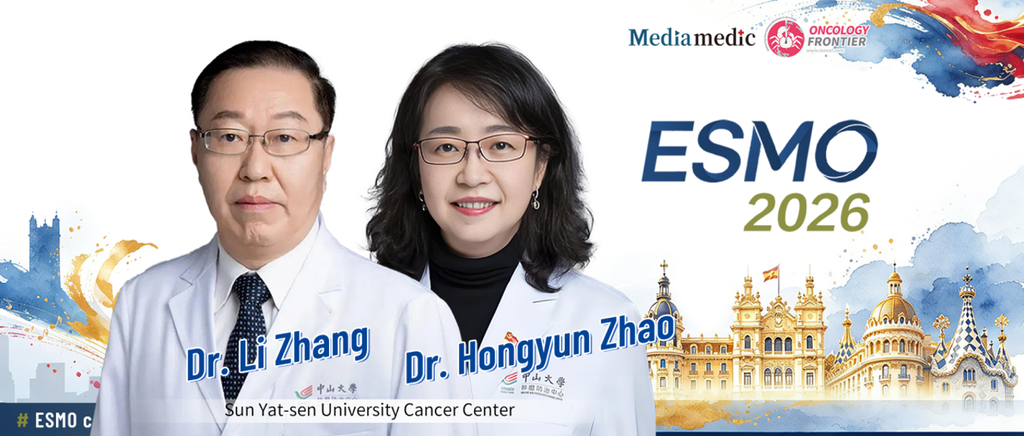
ESMO 2026 Voices from China | Professor Li Zhang and Professor Hongyun Zhao’s Team Presents First Large-Scale Dataset on Novel EGFR/c-Met Bispecific ADC HS-20122

ESMO 2026 Voices from China | Professor Li Zhang and Professor Hongyun Zhao’s Team Presents First Large-Scale Dataset on Novel EGFR/c-Met Bispecific ADC HS-20122

For patients with EGFR-mutated non-small cell lung cancer (NSCLC), resistance following EGFR tyrosine kinase inhibitor (TKI) treatment is almost inevitable. The challenge becomes particularly pronounced when resistance develops to third-generation EGFR-TKIs, leaving patients with limited subsequent treatment options and a persistent need for improved efficacy. It is against this backdrop of unmet clinical need that a novel dual-targeted agent has entered the clinical spotlight: HS-20122, a bispecific antibody-drug conjugate (ADC) targeting both EGFR and c-Met.
ESMO LBA Insights | Balancing Efficacy Gains and Safety Management: A Focus on the DeLLphi-305 and SAFFRON Studies

ESMO LBA Insights | Balancing Efficacy Gains and Safety Management: A Focus on the DeLLphi-305 and SAFFRON Studies

The 2026 European Society for Medical Oncology (ESMO) Congress was held in Madrid, Spain, from October 23 to 27. Several major advances in lung cancer research were presented, covering cutting-edge areas such as maintenance therapy for small cell lung cancer (SCLC), precision treatment and perioperative management of non-small cell lung cancer (NSCLC), novel antibody-drug conjugates (ADCs), and immunotherapy-based combination strategies. Although the congress has concluded, academic interest in these findings continues. Oncology Frontier has therefore launched a special series to provide further insights into the key studies and developments presented at the meeting.
ESMO Insights from the East | Professor Jianya Zhou: PD-1/IL-2 Bispecific Antibody Plus Bevacizumab May Offer a New Strategy to Overcome Immunotherapy Resistance in Lung Adenocarcinoma

ESMO Insights from the East | Professor Jianya Zhou: PD-1/IL-2 Bispecific Antibody Plus Bevacizumab May Offer a New Strategy to Overcome Immunotherapy Resistance in Lung Adenocarcinoma

In recent years, immune checkpoint inhibitors (ICIs), particularly those targeting PD-1/PD-L1, have transformed the treatment landscape of advanced driver gene-negative non-small cell lung cancer (NSCLC). However, resistance to immunotherapy remains inevitable. For patients whose disease progresses following first-line immunotherapy combined with chemotherapy, subsequent treatment options are extremely limited, creating an urgent need for more effective strategies to overcome resistance.
ESMO International Perspectives | How Does the BEHOLD-1 Biomarker Analysis Inform Patient Selection for ADC Therapy in Ovarian Cancer?

ESMO International Perspectives | How Does the BEHOLD-1 Biomarker Analysis Inform Patient Selection for ADC Therapy in Ovarian Cancer?

The 2026 European Society for Medical Oncology (ESMO) Congress was held in Madrid, Spain, from October 23 to 27. During the Gynecological Cancers Session, an exploratory biomarker analysis from the BEHOLD-1 study attracted considerable attention. The analysis systematically characterized response patterns to Mo-Rez (mocertatug rezetecan), a novel B7-H4-targeted topoisomerase I inhibitor (TOP1i) antibody-drug conjugate (ADC), in patients with platinum-resistant ovarian cancer (PROC). The findings showed that 96% of patients with PROC had B7-H4-positive tumors, while clinical responses to Mo-Rez were observed across different levels of B7-H4 expression. The linker-cleaving enzyme CTSB, the payload sensitivity gene TOP1, stromal remodeling, and immune-related pathways were all associated with response.
ESMO Voices from China | Landmark Study Led by Academician Binghe Xu Published in The Lancet: Iza-bren Reshapes the Breast Cancer Treatment Landscape with Robust Clinical Data

ESMO Voices from China | Landmark Study Led by Academician Binghe Xu Published in The Lancet: Iza-bren Reshapes the Breast Cancer Treatment Landscape with Robust Clinical Data

At the 2026 European Society for Medical Oncology (ESMO) Congress, the PANKU-Breast01 study, led by Academician Binghe Xu of the National Cancer Center/Cancer Hospital, Chinese Academy of Medical Sciences, was presented as a late-breaking abstract (LBA) and simultaneously published in the internationally renowned medical journal The Lancet (impact factor: 109). In the more than 200-year history of The Lancet, this is the first study of an innovative Chinese drug in the breast cancer field to be published in the journal's flagship edition.