2024 COMB丨Dr. Songqing Ye: Exploring the Development of CDK4/6 Inhibitors, ADCs, and Immunotherapy in Early-Stage Breast Cancer

2024 COMB丨Dr. Songqing Ye: Exploring the Development of CDK4/6 Inhibitors, ADCs, and Immunotherapy in Early-Stage Breast Cancer

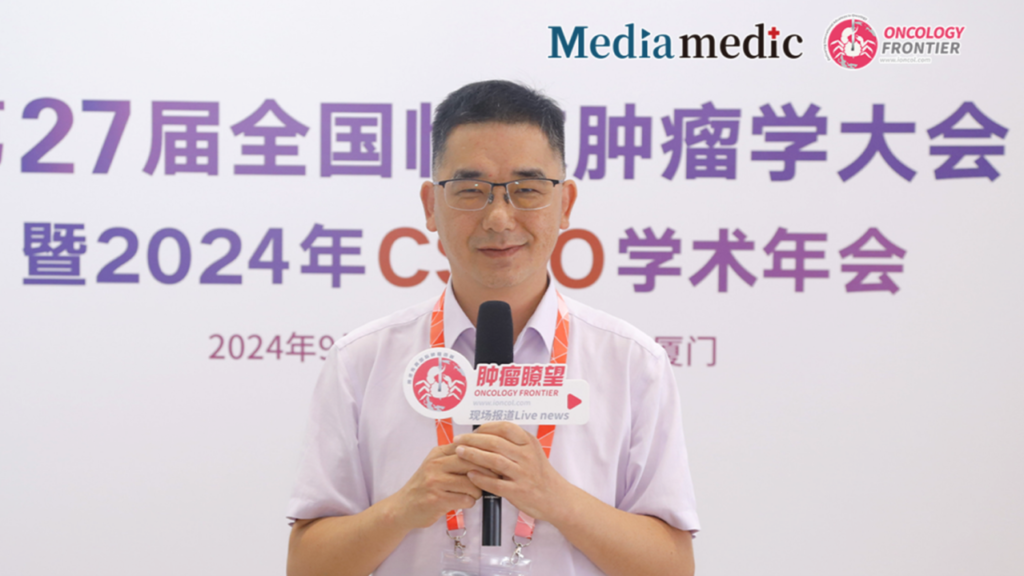
From August 2-4, 2024, the 7th Oncology Precision Diagnosis and Treatment Conference and the 10th Breast Cancer Individualized Treatment Conference (COMB), organized by the China Cancer Foundation and Beijing Breast Disease Prevention Society, was grandly held in Beijing. The conference brought together the latest advances in individualized precision treatment for breast cancer in China, providing a broad platform for promoting new concepts, developing new technologies, and creating new models in the breast cancer field. With the recent advancements in breast cancer precision medicine, CDK4/6 inhibitors (CDK4/6i), immunotherapy drugs, and antibody-drug conjugates (ADCs) have significantly improved the survival benefits for breast cancer patients. Oncology Frontier conducted an exclusive interview with Dr. Songqing Ye from Fujian Provincial Hospital to discuss the current landscape and trends in the development of new drugs for precision treatment of early-stage breast cancer.
2024 ESMO BC | Exploratory Analysis of the SERENA-2 Study Suggests Early Changes in ctDNA Predict Better Response to Camizestrant Treatment

2024 ESMO BC | Exploratory Analysis of the SERENA-2 Study Suggests Early Changes in ctDNA Predict Better Response to Camizestrant Treatment

The SERENA-2 study evaluated the efficacy and safety of different doses of Camizestrant (75 mg, 150 mg) compared to fulvestrant in patients with advanced ER+/HER2- breast cancer. The results showed that the median PFS in the Camizestrant groups was similar regardless of ESR1m status or dosage. Researchers further conducted an exploratory analysis of the SERENA-2 study to examine the suppression of ESR1m ctDNA in patients treated with Camizestrant compared to fulvestrant and its correlation with PFS. The findings of this exploratory analysis were presented at the 2024 ESMO BC conference, and this article provides a summary of the results.
JCO | Is It Too Early to Use Radiographic Progression-Free Survival as a Surrogate Endpoint in Metastatic Hormone-Sensitive Prostate Cancer?

JCO | Is It Too Early to Use Radiographic Progression-Free Survival as a Surrogate Endpoint in Metastatic Hormone-Sensitive Prostate Cancer?

Metastatic hormone-sensitive prostate cancer (mHSPC) is a heterogeneous disease state and represents a critical time window for improving survival in advanced prostate cancer, requiring comprehensive and personalized treatment. As diagnostic and therapeutic strategies continue to advance, the management and assessment of mHSPC have become increasingly complex. Several studies have already evaluated the efficacy of new regimens or drugs for mHSPC using radiographic progression-free survival (rPFS). Recently, a commentary published in the Journal of Clinical Oncology analyzed the feasibility of rPFS as a surrogate endpoint for evaluating mHSPC efficacy. This summary is presented for our readers.
ASCO 2024| Meta-Analysis of Short-Term Recurrence Risk in HR+/HER2- Early Breast Cancer Patients Undergoing Endocrine Therapy

ASCO 2024| Meta-Analysis of Short-Term Recurrence Risk in HR+/HER2- Early Breast Cancer Patients Undergoing Endocrine Therapy

Multiple studies have demonstrated that both lymph node-positive and lymph node-negative stage II or III HR+/HER2- early breast cancer patients are at risk of recurrence, and the recurrence rate gradually increases over time. At the 2024 ASCO conference, a study conducted a systematic literature review and meta-analysis to evaluate the 3-year and 5-year recurrence risk in early breast cancer patients, emphasizing the need for treatment intensification in specific patient groups. This article provides a summary of the study.
Dr. Qiang Liu: Can Triple-Negative Breast Cancer Be Treated Without Chemotherapy?—Exploring Precision Medicine Guided by Biomarkers in Breast Cancer

Dr. Qiang Liu: Can Triple-Negative Breast Cancer Be Treated Without Chemotherapy?—Exploring Precision Medicine Guided by Biomarkers in Breast Cancer

In recent years, significant advancements have been made in the treatment of triple-negative breast cancer (TNBC), particularly in the field of biomarker research. To delve deeper into this, Cancer Outlook invited Dr. Qiang Liu from Sun Yat-sen Memorial Hospital, Sun Yat-sen University to provide an in-depth analysis of two recent landmark studies. These studies explore the prognostic value of tumor-infiltrating lymphocytes (TILs) in early-stage TNBC patients who have not undergone chemotherapy. The findings from these studies reveal a correlation between TIL levels and patient survival, offering a new perspective for identifying patients with a good prognosis who may not require chemotherapy. Additionally, Professor Liu shares insights from his own research on circulating tumor DNA (ctDNA) in breast cancer treatment, underscoring the importance of precision medicine in managing TNBC.
International Lung Cancer Conference | Dr. Yuehong Wang: Exploring a New Model for Comprehensive Lung Cancer Management in the AI Era

International Lung Cancer Conference | Dr. Yuehong Wang: Exploring a New Model for Comprehensive Lung Cancer Management in the AI Era

At the International Lung Cancer Conference (CLC 2024) held from August 9-11, Dr. Yuehong Wang from The First Affiliated Hospital, Zhejiang University School of Medicine delivered a keynote presentation titled "Exploring a New Model for Comprehensive Lung Cancer Management in the AI Era." This article provides a brief overview of her report.
International Lung Cancer Conference | Dr. Nan Bi: Optimizing MRIgART Processes to Improve the Treatment of Brain Metastases in Lung Cancer

International Lung Cancer Conference | Dr. Nan Bi: Optimizing MRIgART Processes to Improve the Treatment of Brain Metastases in Lung Cancer

Radiation therapy plays a crucial role in the treatment of brain metastases from lung cancer. At the recent International Lung Cancer Conference (CLC 2024), Dr. Nan Bi from the Cancer Hospital , Chinese Academy of Medical Sciences and Peking Union Medical College, delivered a keynote presentation titled "Advances in Precision Radiotherapy for Brain Metastases in Lung Cancer." The presentation focused on the necessity, safety, and technical challenges of using MRI-guided Adaptive Radiotherapy (MRIgART) for treating brain metastases. This article provides a brief overview of the report.
Highlights of the Zhongshan-Specific Colorectal Cancer Forum with Emphasis on Precision Diagnosis, Treatment, and Public Screening

Highlights of the Zhongshan-Specific Colorectal Cancer Forum with Emphasis on Precision Diagnosis, Treatment, and Public Screening

The Guangzhou Colorectal Cancer Summit Forum and the 22nd Guangdong Provincial Colorectal Cancer Academic Conference were successfully held from August 5-10, 2024. Reporters from Oncology Frontier conducted an in-depth interview with the conference chair, Dr. Gong Chen from the Sun Yat-sen University Cancer Center, focusing on the highlights of the conference and the precision diagnosis and treatment of colorectal cancer. This article summarizes the interview.
International Lung Cancer Conference | Dr. Wentao Fang: Neoadjuvant Therapy for Locally Advanced NSCLC

International Lung Cancer Conference | Dr. Wentao Fang: Neoadjuvant Therapy for Locally Advanced NSCLC

Treating locally advanced lung cancer is a significant clinical challenge, with perioperative treatment being key to improving patient outcomes. At the 2024 International Lung Cancer Conference (CLC 2024), Dr. Wentao Fang from Shanghai Chest Hospital delivered a presentation titled "Neoadjuvant Therapy for Locally Advanced NSCLC." This article provides a brief overview of his report.
2024 COMB丨Dr. Songqing Ye: Exploring the Development of CDK4/6 Inhibitors, ADCs, and Immunotherapy in Early-Stage Breast Cancer

2024 COMB丨Dr. Songqing Ye: Exploring the Development of CDK4/6 Inhibitors, ADCs, and Immunotherapy in Early-Stage Breast Cancer

From August 2-4, 2024, the 7th Oncology Precision Diagnosis and Treatment Conference and the 10th Breast Cancer Individualized Treatment Conference (COMB), organized by the China Cancer Foundation and Beijing Breast Disease Prevention Society, was grandly held in Beijing. The conference brought together the latest advances in individualized precision treatment for breast cancer in China, providing a broad platform for promoting new concepts, developing new technologies, and creating new models in the breast cancer field. With the recent advancements in breast cancer precision medicine, CDK4/6 inhibitors (CDK4/6i), immunotherapy drugs, and antibody-drug conjugates (ADCs) have significantly improved the survival benefits for breast cancer patients. Oncology Frontier conducted an exclusive interview with Dr. Songqing Ye from Fujian Provincial Hospital to discuss the current landscape and trends in the development of new drugs for precision treatment of early-stage breast cancer.