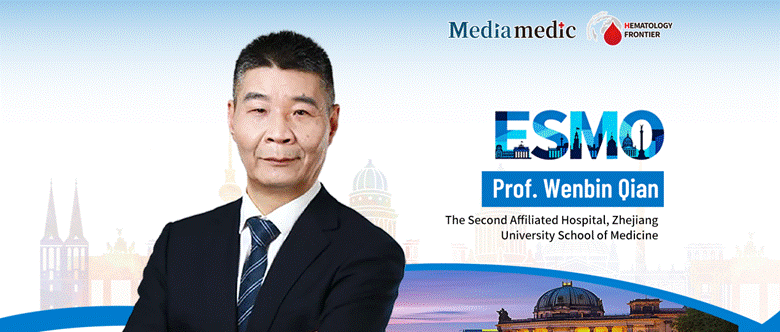
The 2025 European Society for Medical Oncology (ESMO) Congress is set to take place in Berlin, bringing together the latest advances and cutting-edge research in oncology. In hematology, several highly anticipated research directions are attracting attention, ranging from investigations into the mechanisms of CAR-T cell resistance and potential strategies to overcome this challenge, to innovative dual-target therapies that may offer more precise and effective treatment options. Other highlights include MRD-guided treatment discontinuation in multiple myeloma, which may help improve long-term survival and quality of life, as well as single-cell profiling studies providing new insights into the pathogenesis of hematologic malignancies. Together, these studies reflect the continued advancement of hematologic oncology and the emergence of new opportunities for more precise diagnosis and treatment.To highlight major breakthroughs in hematology and promote academic exchange, Oncology Frontier – Hematology Frontier has launched the “What Are the ESMO Experts Watching?” series. In this issue, Professor Wenbin Qian from the Second Affiliated Hospital of Zhejiang University School of Medicine provides an expert perspective on this study, analyzing its scientific innovation and potential clinical implications while discussing future directions in the field.
October 15
15:30–15:40 (local time)
LBA47
CAR-T Cell Resistance in High-Grade B-Cell Lymphoma Is Dictated by Tumor-Associated Macrophages
Tumor-associated macrophages determine CAR-T cell resistance in high-grade B-cell lymphoma
Presenter: Myriam Ben Khelil (Villejuif, France)

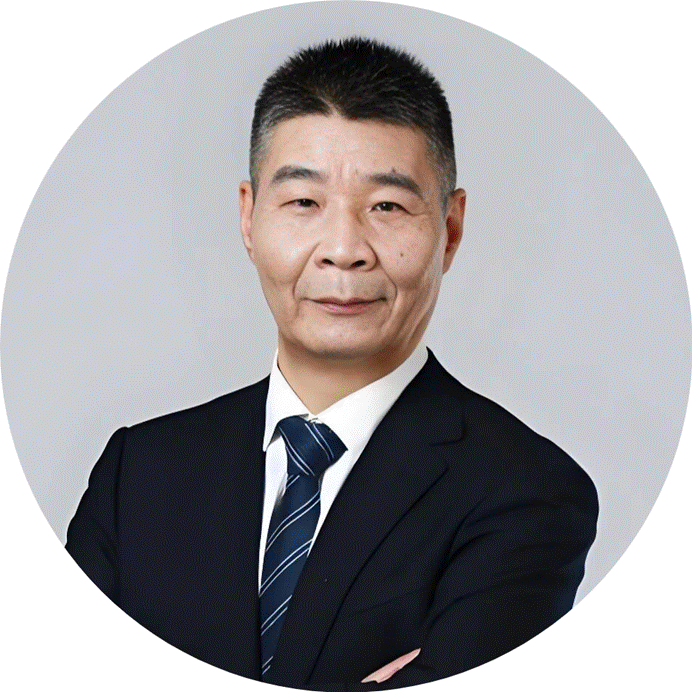
Professor Wenbin Qian’s Commentary:
This study focuses on tumor-associated macrophage (TAM)-mediated CAR-T cell resistance, with important implications both for understanding the underlying mechanisms and for identifying potential therapeutic targets. By shifting attention from CAR-T cell exhaustion and phenotypic changes toward immunosuppressive components of the tumor microenvironment (TME)—particularly how macrophage polarization and metabolic products may directly suppress CAR-T cell function—the study highlights the complex interactions between CAR-T cells and the host immune system. This provides a new perspective and potentially a new paradigm for overcoming CAR-T cell resistance.
From a broader field perspective, the findings suggest that future CAR-T strategies may increasingly emphasize combination approaches integrating cellular therapy with tumor microenvironment modulation. Evolving from single-target cellular therapy toward multimodal immunotherapeutic strategies may improve the durability of responses in highly aggressive malignancies such as high-grade B-cell lymphoma (HGBCL), particularly in tumors characterized by substantial TAM infiltration.
Overall, this work may help advance the field from a “cell-centered” to a “tumor ecosystem-centered” CAR-T system. It suggests that future clinical trials should incorporate TME-targeted interventions into rational combination strategies while simultaneously developing immunomic biomarkers capable of predicting treatment response.
Further early-phase clinical validation based on these mechanistic insights will be critical for translating these biological findings into improved outcomes for patients with HGBCL. We look forward to the presentation of further data from this important study.