As precision medicine continues to advance in hematologic malignancies, the clinical value of germline genetic factors is gradually extending beyond disease-risk assessment to influence treatment decision-making. For patients undergoing hematopoietic stem cell transplantation (HSCT), donor selection has traditionally focused on factors such as HLA matching, donor–recipient relationship, donor age, and overall health status. However, an increasingly important question is: Could the germline genetic backgrounds shared by or differing between donors and recipients also affect post-transplant disease control, infection risk, and long-term survival?On July 28, 2026, the international journal Frontiers in Immunology published a single-center retrospective study led by Dr. Zhihui Li of Beijing Gaobo BoRen Hospital, involving 558 patients with hematologic diseases who underwent HSCT. The study systematically evaluated germline genetic susceptibility genes and further analyzed their associations with transplant outcomes and donor selection.
The findings suggest that certain germline genetic susceptibility genes, particularly those involving cellular and humoral immunity, may be associated with adverse post-transplant outcomes. Of particular interest, among patients carrying homozygous germline genetic susceptibility mutations, transplantation from an unrelated donor appeared to be associated with better outcomes than transplantation from a related donor.
These findings introduce a new dimension to donor selection for HSCT, suggesting that germline genetic background may deserve greater consideration alongside traditional factors such as HLA matching and donor–recipient relationship.
Study Design
The study included 558 patients who underwent HSCT at Beijing Gaobo BoRen Hospital between December 2017 and February 2024. Of these, 557 received allogeneic HSCT and one received autologous HSCT. The patients ranged widely in age, with a median age of 16.14 years; 298 were children and 260 were adults.
The disease spectrum was predominantly composed of acute leukemias, including 225 patients with B-ALL and 157 with AML, as well as patients with T-ALL, T-LBL/ALL, B-NHL, MDS, aplastic anemia, and other hematologic disorders. All patients underwent germline genetic susceptibility screening before transplantation, with informed consent obtained from the patients or their guardians. The study was approved by the hospital’s ethics committee.
Notably, this was a high-risk transplant population: 59.9% of patients had experienced disease relapse before transplantation, while 24.4% underwent a second HSCT. Regarding donor types, 70.1% received transplants from haploidentical related donors, 22.4% from unrelated donors, and 7.3% from HLA-matched sibling donors.
All patients received myeloablative conditioning. Among them, 290 patients (52.0%) received total body irradiation (TBI)-based conditioning, while 267 (47.8%) received busulfan (BU)-based conditioning. Patients undergoing haploidentical or unrelated donor transplantation also received anti-thymocyte globulin (ATG-F). GVHD prophylaxis consisted of cyclosporine, mycophenolate mofetil, and short-course methotrexate. Acute and chronic GVHD, infections, and other transplant-related outcomes were assessed according to standard criteria.
For genetic testing, DNA was extracted from peripheral blood mononuclear cells (PBMCs) collected before transplantation. Targeted sequencing was performed to evaluate more than 900 genes associated with hematologic malignancies or immune-system disorders. All germline variants with a VAF >15%, MAF <5%, and predicted moderate or high functional impact were validated by Sanger sequencing using genomic DNA obtained from non-hematopoietic tissues, such as oral epithelial cells or nail clippings, from the same patient. Only variants confirmed to be of germline origin were included in the final analysis.
Variant interpretation was based on the Human Gene Mutation Database (HGMD) and American College of Medical Genetics and Genomics (ACMG) guidelines, with only pathogenic and likely pathogenic variants included. Germline mutations in inborn errors of immunity (IEI) genes were classified according to the 2022 classification of human inborn errors of immunity.
Study Results
01. Germline Genetic Susceptibility Variants Were Common Among HSCT Recipients and Showed Age- and Disease-Specific Patterns
A striking 94.4% of patients (527/558) carried at least one pathogenic or likely pathogenic germline genetic susceptibility variant. The median number of germline susceptibility variants per patient was 3 (range, 0–12).
The 10 most frequently detected genes were:
- BTLA — 15.6%
- TNFAIP3 — 14.0%
- MPEG1 — 12.7%
- EP300 — 11.8%
- MLH1 — 9.0%
- NCF2 — 9.0%
- MUTYH — 7.7%
- KIT — 7.2%
- STK11 — 6.5%
- RET — 5.9%
These findings indicate that germline genetic susceptibility variants are remarkably prevalent in patients undergoing HSCT, highlighting the potential importance of incorporating germline genetic information into transplant-related risk assessment and, potentially, donor-selection strategies.
Further analysis revealed that the germline mutation profiles differed between pediatric and adult patients. Mutations in KIT, CARD14, PROC, and TLR1 were more frequently observed among pediatric patients, whereas ASXL1 mutations were significantly enriched in adults, suggesting that different age groups may be characterized by distinct genetic susceptibility mechanisms.
At the same time, different hematologic diseases demonstrated distinct patterns of gene enrichment. For example, IRF7 mutations were enriched in patients with B-ALL/LBL, while UNC13D mutations were more frequently observed in patients with MDS. TNFRSF13C mutations were enriched in patients with CML, whereas HAVCR2 and STK11 mutations were more frequently detected in patients with B-NHL.
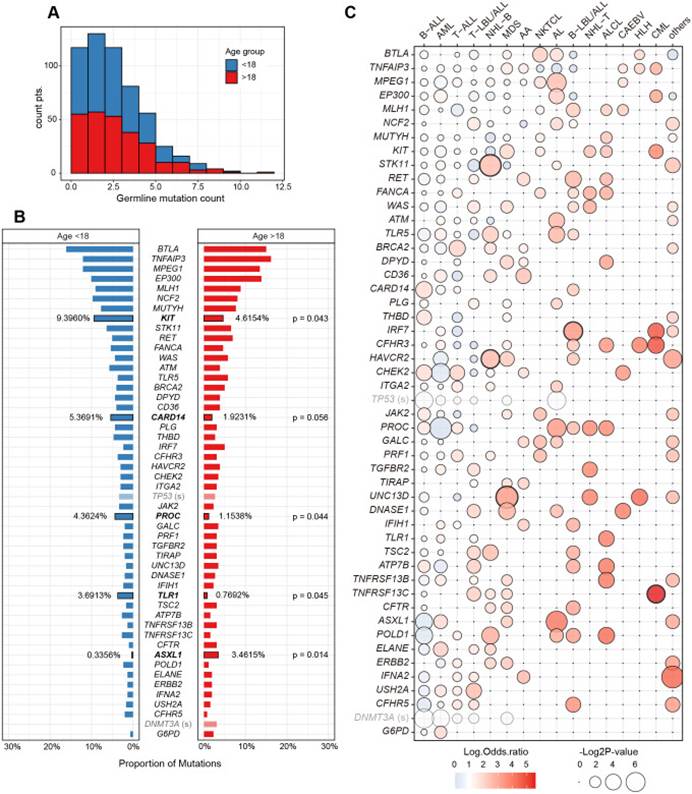
The study also found that some germline genetic susceptibility variants may be associated with HSCT outcomes. In patients with B-NHL, HAVCR2 mutations were associated with poorer disease-free survival (DFS), while UNC13D mutations in patients with MDS showed a trend toward less favorable outcomes, although the impact of donor genotype did not reach statistical significance. In addition, all 17 TP53 variants initially identified were confirmed to be of somatic rather than germline origin, while no significant differences in prognosis were observed among the six patients with RUNX1 mutations. One patient with a GATA2 mutation died of disease relapse, whereas the patient with an ETV6 mutation remained alive.
Taken together, these findings indicate that germline genetic susceptibility abnormalities are not merely rare findings confined to a small subset of HSCT recipients. Their distribution may also be influenced by age, disease type, and genetic background. Therefore, systematic identification of potential germline genetic risks may have meaningful clinical value for patients undergoing HSCT.
02. Outcomes in Patients With Homozygous Germline Mutations Were Closely Associated With Donor Type: Unrelated Donors May Offer More Favorable Outcomes
Among the 558 patients, 42 (7.5%) carried homozygous mutations, most commonly involving WAS, BTLA, EP300, MPEG1, POLD1, STK11, TNFRSF13C, and UNC13D. When patients with and without homozygous mutations were compared, there were no statistically significant differences in overall DFS or overall survival (OS), with P values of 0.82 and 0.74, respectively. These findings suggest that HSCT may help improve outcomes in patients carrying homozygous germline genetic susceptibility mutations.
However, when the researchers further stratified patients according to donor type, the picture changed substantially. Among patients carrying homozygous germline genetic susceptibility mutations, outcomes differed significantly according to donor type. Patients receiving transplants from related donors had a 3-year DFS of 48.3% and a 3-year OS of 56.7%, whereas patients receiving transplants from unrelated donors achieved both a 3-year DFS and OS of 82.1%.
A similar pattern was observed among patients with homozygous IEI mutations. Of the 23 patients carrying homozygous IEI mutations, those receiving transplants from unrelated donors had a 3-year DFS and OS of 87.5%, compared with 40.0% and 58.3%, respectively, among those receiving transplants from related donors.
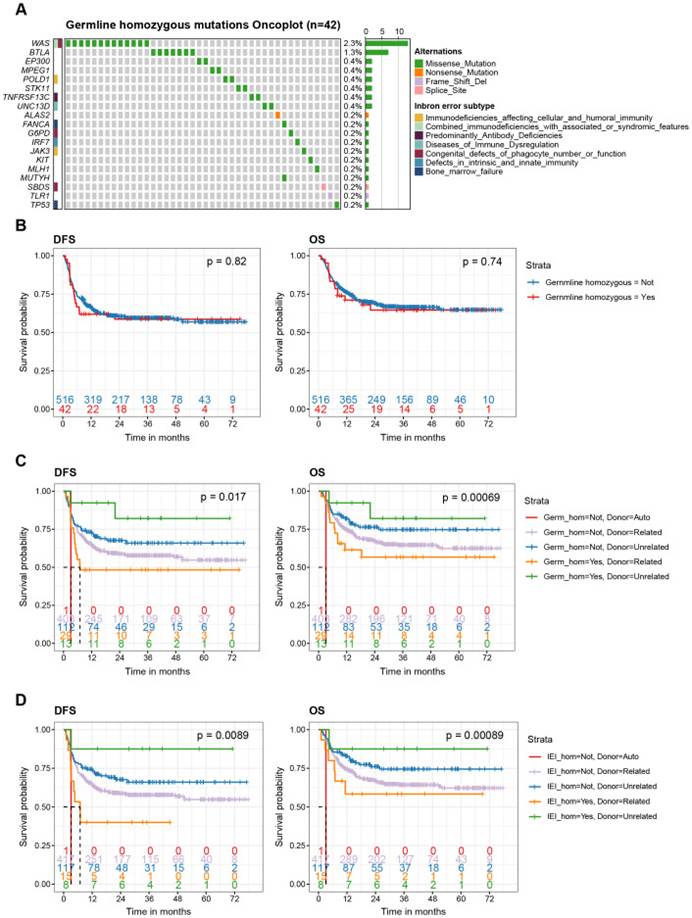
Previous case series have reported that selecting related donors who carry the same germline mutation can significantly increase the risks of graft failure and donor-derived leukemia. The findings of the present study are consistent with previous reports. Among patients with homozygous germline predisposition gene mutations, the use of unrelated donors significantly improved DFS compared with related donors. This finding provides important evidence to inform clinical decision-making regarding donor selection for patients with homozygous germline mutations.
03. Germline Mutations Affecting Cellular and Humoral Immunity Are Associated with Poorer Transplant Outcomes and Higher Infection Risk
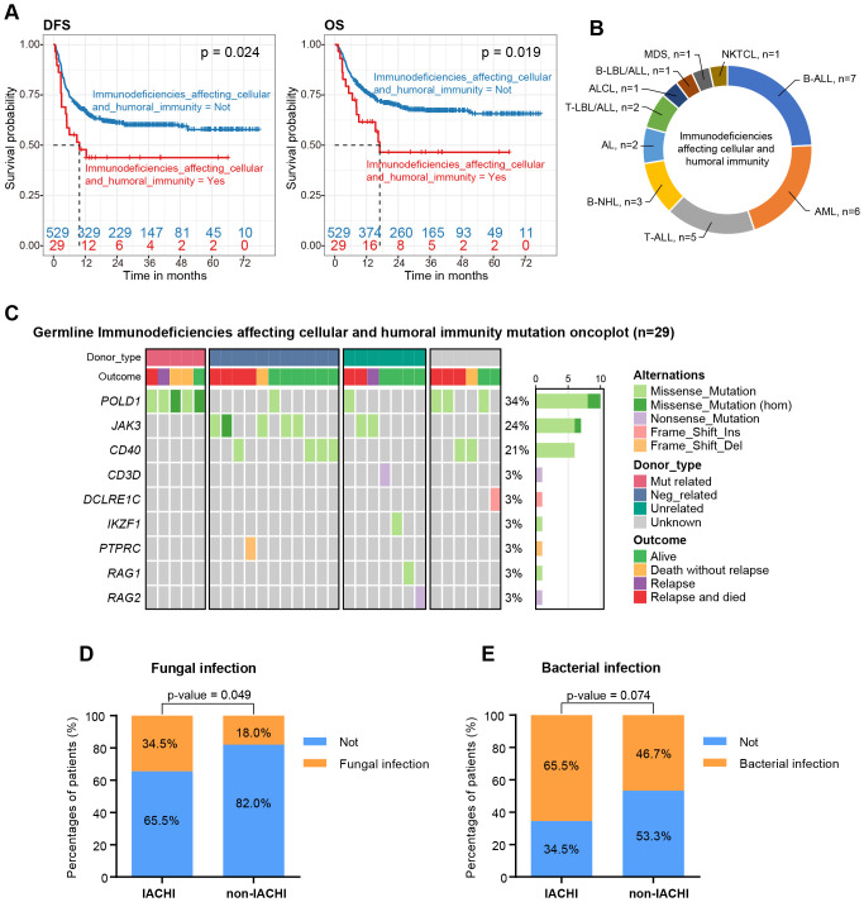
Among the 558 patients, 372 (66.7%) carried mutations in genes associated with inborn errors of immunity (IEI). Of these, 29 patients (5.2%) carried germline mutations associated with combined defects affecting cellular and humoral immunity (IACHI).
Compared with patients without IACHI-related mutations, patients carrying IACHI mutations had significantly poorer post-transplant outcomes. The hazard ratio (HR) for disease-free survival (DFS) was 1.79 (95% CI: 1.07–2.97; P = 0.024), while the HR for overall survival (OS) was 1.90 (95% CI: 1.10–3.28; P = 0.019). These findings suggest that IACHI-associated germline mutations may be linked to poorer disease control and inferior long-term survival following HSCT.
In addition, patients with IACHI mutations had a higher risk of post-transplant infections. The incidence of fungal infections was 34.5%, significantly higher than the 18.0% observed in patients without IACHI mutations (P = 0.049). The incidence of bacterial infections also tended to be higher in the IACHI group (65.5% vs. 46.7%), although the difference did not reach statistical significance.
Donor-Origin Analysis and Multivariate Findings
Donor-origin analysis showed that patients who received transplants from related donors carrying the same IACHI mutation had the poorest outcomes: 4 of the 5 patients died or experienced relapse. In contrast, outcomes were substantially improved among patients who received transplants from related donors without the mutation (n = 11) or unrelated donors (n = 7), with most patients remaining alive and relapse-free. These findings suggest that screening related donors for IACHI-associated germline mutations may improve outcomes in patients carrying IACHI germline mutations.
Further multivariate Cox regression analysis showed that chronic graft-versus-host disease (cGVHD) was an independent protective factor for both DFS and OS. In contrast, IACHI gene mutations were an independent predictor of poorer OS (HR = 1.843, P = 0.0307), while age >18 years was also significantly associated with inferior OS. None of the remaining covariates in the DFS model reached statistical significance. These findings indicate that cGVHD was independently associated with favorable outcomes, whereas combined cellular and humoral immune defects independently increased the risk of post-transplant mortality.
Summary and Clinical Implications
In recent years, increasing attention has been paid to the potential role of germline genetic predisposition genes in the development of hematologic malignancies and outcomes following HSCT. For patients undergoing HSCT, systematic pre-transplant germline genetic predisposition screening may not only help identify individuals at high risk but could also provide important information for transplant risk assessment, donor selection, and subsequent individualized management.
This study demonstrated that germline genetic predisposition variants are frequently detected among patients undergoing HSCT and may represent important factors influencing transplant outcomes, with donor selection potentially serving as a critical link between genetic risk and transplant benefit. Among patients carrying homozygous germline genetic predisposition mutations, particularly those with homozygous IEI-associated mutations, transplantation from unrelated donors was associated with more favorable long-term outcomes. Specifically, patients with homozygous germline predisposition mutations who received unrelated donor transplants had 3-year DFS and OS rates of 82.1%, compared with 48.3% and 56.7%, respectively, among those receiving related donor transplants.
From a clinical perspective, this study offers several important insights. First, systematic pre-transplant screening for germline genetic predisposition variants may help identify high-risk individuals and inform individualized treatment strategies. Second, for patients carrying homozygous germline mutations, selecting an unrelated donor may be associated with substantially better outcomes. Third, for patients carrying IACHI-associated mutations, targeted germline genetic screening of potential related donors may represent a simple and potentially effective strategy for improving transplant outcomes.
Overall, this study provides a new perspective on precision medicine in HSCT, moving germline genetic predisposition information from a field of research exploration toward a potential clinical decision-making tool. As prospective, multicenter, larger-scale studies are conducted, the role of germline genetic factors in predicting transplant outcomes and optimizing donor selection is expected to be further validated and refined, ultimately benefiting more patients undergoing hematopoietic stem cell transplantation.
References:
Li Z, Yang K, Zhang C, et al. Impact of germline predisposition genes to hematologic malignancies on transplant outcomes and donor selection. Front Immunol. 2026 Jul 28;17:1880348. doi: 10.3389/fimmu.2026.1880348. PMID: 42582185; PMCID: PMC13457106.

Zhihui Li, MD, PhD
Beijing GoBroad Borun Hospital
Chief Physician and Doctor of Medicine
Visiting Scholar, Mayo Clinic, USA
Taiping Young Scholar, Hong Kong Applied Science and Technology Research Institute (ASTRI)
Deputy Director, Hematologic Disaease Digital Diagnosis and Treatment Professional Committee, Beijing Imaging Technology Alliance
Committee Member, Hematologic Oncology Professional Committee, Chinese Anti-Cancer Association
Committee Member, Pediatric Oncology Nutrition Expert Group, Oncology Nutrition Professional Committee, Chinese Anti-Cancer Association
Committee Member, Medical Biotechnology Clinical Application Professional Committee, China Association of Pharmaceutical Biotechnology
Committee Member, Infectious and Inflammatory Radiology Professional Committee, Chinese Research Hospital Association
Committee Member, Hematopoietic Stem Cell Transplantation Professional Committee, Beijing Cancer Prevention and Control Society
Editorial Board Member, Radiology Science
Dr. Li has published multiple SCI-indexed articles in journals including Blood Advances, Transplantation and Cellular Therapy, Bone Marrow Transplantation, and Frontiers in Immunology.
She has delivered presentations and presented posters at more than 30 international hematology conferences, including ASH, EHA, EBMT, and APBMT.