Advancements in Predicting Patient Outcomes: A Multidimensional Approach to COVID-19 with the Omicron Variant

Advancements in Predicting Patient Outcomes: A Multidimensional Approach to COVID-19 with the Omicron Variant

The COVID-19 pandemic, heightened by the emergence of the Omicron variant, has presented substantial challenges in managing patient conditions and predicting outcomes. Researchers at Peking Union Medical College Hospital sought to address this by developing a dynamic prediction model utilizing machine learning techniques. This study aimed to accurately forecast the deterioration or recovery of hospitalized COVID-19 patients, incorporating daily multidimensional data from 995 patients. Employing an ensemble machine learning approach, the researchers utilized the XGBoost algorithm. The resulting models exhibited promising discrimination capabilities, offering a valuable tool for clinicians to assess the likelihood of condition changes in the medium term.
Dr. Taisheng Li: The Evolving “Chinese Approach” to HIV/AIDS Diagnosis and Treatment

Dr. Taisheng Li: The Evolving “Chinese Approach” to HIV/AIDS Diagnosis and Treatment

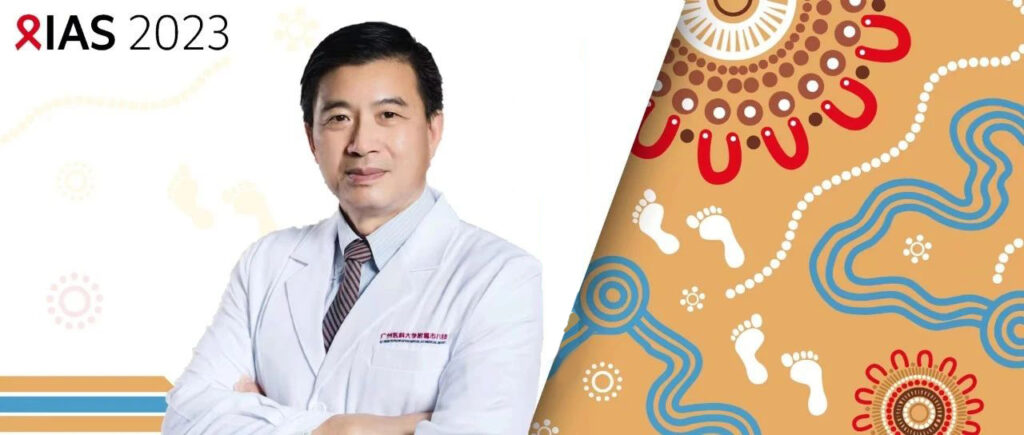
Editor's Note: Since the discovery of the first AIDS patient in China in 1985, an enduring battle, devoid of gunfire, has persisted for nearly forty years. Generation after generation of Chinese experts in AIDS prevention and control have tirelessly explored a "Chinese approach" to AIDS diagnosis and treatment that suits the national context. With changing treatment models and philosophies, the connotations of the "Chinese approach" to AIDS diagnosis and treatment have continually been updated and enriched. During the recent "21st National Conference on Viral Hepatitis and Liver Diseases, as well as the 2023 Annual Conference of the Chinese Medical Association Hepatology Branch and the Annual Conference of the Chinese Medical Association Infectious Diseases Branch," Dr. Taisheng Li, Director of the Infectious Diseases Branch of the Chinese Medical Association, presented an insightful report on "The Establishment and Application of the 'Chinese Approach' to AIDS Diagnosis and Treatment."
IDWeek Commentary | Dr. Mei Zeng: Racing Against Time! Developing a Predictive Model for Early Identification of Severe Infections in Newborns

IDWeek Commentary | Dr. Mei Zeng: Racing Against Time! Developing a Predictive Model for Early Identification of Severe Infections in Newborns

Half of all global child deaths under the age of 5 are caused by infections, and half of all sepsis patients worldwide are children, especially newborns. These alarming statistics highlight the significant challenge of infection treatment in pediatric clinical practice. At the recent IDWeek 2023 in the United States, a predictive model for severe infection in infants under 90 days of age, based on clinical data and inflammatory biomarkers, was reported. This predictive model may aid in the early identification of newborns at high risk of severe infection, allowing timely clinical intervention to reduce the risk of disease progression. Dr. Mei Zeng from the Children's Hospital of Fudan University/National Children's Medical Center provides an introduction and commentary on this research.

Multiple HIV Research Achievements by Dr. Yaokai Chen’s Team from Chongqing Public Health Medical Center Was Selected for the 2023 IDWeek

Editor's Note: The IDWeek in the United States is one of the largest infectious disease academic conferences globally, often referred to as the "Oscars" of the infectious disease field. Numerous cutting-edge research findings would be shared and discussed at this highly anticipated academic event. During the recent 2023 IDWeek, Dr. Yaokai Chen's team from Chongqing Public Health Medical Center had four HIV-related research findings selected for the conference. One of these was presented as a Rapid-Fire Poster, while the other three were included in poster presentations.
IDWeek Commentary | Dr. Hongmei Xu: CMV PCR Agreement between Blood and Dried Blood Spots in Infants with Congenital Cytomegalovirus Infection

IDWeek Commentary | Dr. Hongmei Xu: CMV PCR Agreement between Blood and Dried Blood Spots in Infants with Congenital Cytomegalovirus Infection

Infants can be infected with congenital cytomegalovirus (CMV) through vertical mother-to-child transmission, and CMV infection screening is required for some newborns with specific indications. Polymerase chain reaction (PCR) is a commonly used clinical method for qualitative or quantitative diagnosis of CMV, and it can test specimens such as urine, plasma, and dried blood spots, each with its own advantages and disadvantages. A recent study evaluating the consistency of plasma PCR and dried blood spot PCR for CMV infection diagnosis was presented at the 2023 IDWeek. Dr. Hongmei Xu from Children's Hospital of Chongqing Medical University introduces and comments on this study.
Antimicrobial Susceptibility Testing: The Joint Efforts of CLSI and EUCAST丨ECCMID 2023

Antimicrobial Susceptibility Testing: The Joint Efforts of CLSI and EUCAST丨ECCMID 2023

Antimicrobial susceptibility testing (AST) is pivotal in both individualized and empirical treatments. Notably, standards set for interpreting AST results enable clinicians to choose suitable medications and optimal treatment plans, acting as a significant tool in controlling antimicrobial resistance. The most influential bodies in this space are the Clinical and Laboratory Standards Institute (CLSI) of the United States and the European Committee on Antimicrobial Susceptibility Testing (EUCAST). These entities aim to standardize AST procedures and reduce experimental errors.