36% Reduction in DFS Risk: POTOMAC Study Validates Immuno-Combination Therapy for Elderly Patients with High-Risk NMIBC 

36% Reduction in DFS Risk: POTOMAC Study Validates Immuno-Combination Therapy for Elderly Patients with High-Risk NMIBC 

At a recent academic symposium, Professor Joan Palou from the Department of Urology, Universitat Autònoma de Barcelona, Spain, presented the latest subgroup analysis from the POTOMAC study. The presentation focused on the efficacy and safety of one year of durvalumab (D) in combination with Bacillus Calmette-Guérin (BCG) induction and maintenance therapy for BCG-naïve, high-risk non-muscle-invasive bladder cancer (NMIBC) patients aged ≥65 years.

A Predictive Model for BCG-Unresponsiveness and Progression Based on Five Clinical Factors: A Study of 2,211 Patients

A Predictive Model for BCG-Unresponsiveness and Progression Based on Five Clinical Factors: A Study of 2,211 Patients

During a recent session on urological oncology, Professor A. Ślusarczyk from the Department of General, Oncological, and Functional Urology at the Medical University of Warsaw, Poland, presented the results of an international multicenter retrospective study. The study aimed to develop and validate a clinical predictive model to identify patients with high-grade non-muscle-invasive bladder cancer (NMIBC) who are at risk of BCG-unresponsiveness or disease progression following treatment.
Optimizing mRCC Therapy: Morning Infusion of Immune Checkpoint Inhibitors Associated with a 38% Reduction in Mortality Risk

Optimizing mRCC Therapy: Morning Infusion of Immune Checkpoint Inhibitors Associated with a 38% Reduction in Mortality Risk

At a recent international uro-oncology symposium, Dr. Takemura K. from the Department of Genitourinary Oncology at the Japanese Foundation for Cancer Research (JFCR), Ariake Hospital, presented findings from a multicenter retrospective study investigating the correlation between the time-of-day administration (ToDA) of first-line immune checkpoint inhibitors (ICIs) and overall survival (OS) in patients with metastatic renal cell carcinoma (mRCC).
Toward a “Chemo-Free” Future: Exploring Disitamab Vedotin plus Tislelizumab in the Adjuvant Setting for UTUC

Toward a “Chemo-Free” Future: Exploring Disitamab Vedotin plus Tislelizumab in the Adjuvant Setting for UTUC

During the recent academic conference, Professor Liangyou Gu from the People's Liberation Army General Hospital (PLAGH) presented the latest findings from a prospective, controlled, phase II study. The study evaluated the efficacy and safety of Disitamab Vedotin (DV/RC48), a HER2-targeted antibody-drug conjugate (ADC), combined with Tislelizumab (a PD-1 inhibitor) as adjuvant therapy for patients with HER2-expressing upper tract urothelial carcinoma (UTUC) following radical surgery.
1-Year DFS Reaches 93%! RC48-ADC Plus Radiotherapy Breaks the Adjuvant Treatment Dilemma for Cisplatin-Ineligible UTUC 

1-Year DFS Reaches 93%! RC48-ADC Plus Radiotherapy Breaks the Adjuvant Treatment Dilemma for Cisplatin-Ineligible UTUC 

During a recent academic session, Dr. Tao Zihao from Peking University First Hospital presented the preliminary results of a Phase II study evaluating the efficacy and safety of Disitamab Vedotin (RC48-ADC) in combination with radiotherapy for the adjuvant treatment of Upper Tract Urothelial Carcinoma (UTUC). This study provides a potential new therapeutic strategy for high-risk UTUC patients who are cisplatin-ineligible or refuse conventional chemotherapy
71.9% CR Rate at 3 Months: RC48 Combined with PD-1 Inhibitors Emerges as a Promising Bladder-Sparing Strategy for HR-NMIBC

71.9% CR Rate at 3 Months: RC48 Combined with PD-1 Inhibitors Emerges as a Promising Bladder-Sparing Strategy for HR-NMIBC

At a recent academic symposium, Dr. Xuanjun Guo (Peking University First Hospital) presented data from a multicenter real-world study evaluating the efficacy and safety of Disitamab Vedotin (RC48), a humanized anti-HER2 antibody-drug conjugate (ADC), administered as monotherapy or in combination with PD-1 inhibitors for high-risk non-muscle-invasive bladder cancer (HR-NMIBC). This study provides critical real-world evidence for patients seeking bladder-sparing alternatives.
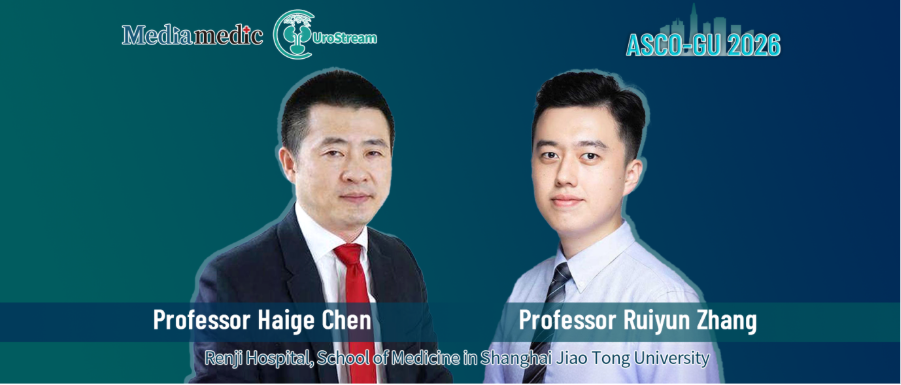
Voice of China at ASCO-GU | Prof. Haige Chen and Prof. Ruiyun Zhang: Renji Hospital’s Urothelial Carcinoma Team Showcases Multiple Studies on the International Stage, Advancing Bladder-Preserving Therapy and Liquid Biopsy

Voice of China at ASCO-GU | Prof. Haige Chen and Prof. Ruiyun Zhang: Renji Hospital’s Urothelial Carcinoma Team Showcases Multiple Studies on the International Stage, Advancing Bladder-Preserving Therapy and Liquid Biopsy

The 2026 ASCO Genitourinary Cancers Symposium (ASCO-GU) recently concluded successfully in San Francisco, USA. As one of the most influential global academic conferences in the field of genitourinary oncology, the meeting brings together the latest research advances and evolving clinical perspectives from around the world.
World Kidney Day 2026 | Prof. Lei Liu: Challenges and Strategies in Preventing and Managing Infections After Kidney Transplantation

World Kidney Day 2026 | Prof. Lei Liu: Challenges and Strategies in Preventing and Managing Infections After Kidney Transplantation

For patients with end-stage kidney disease, kidney transplantation represents a life-changing treatment that can restore quality of life and offer a “second chance.” However, transplantation success is only the beginning of a long journey. Lifelong immunosuppressive therapy—while essential for preventing rejection—also exposes recipients to a significant risk: infection.