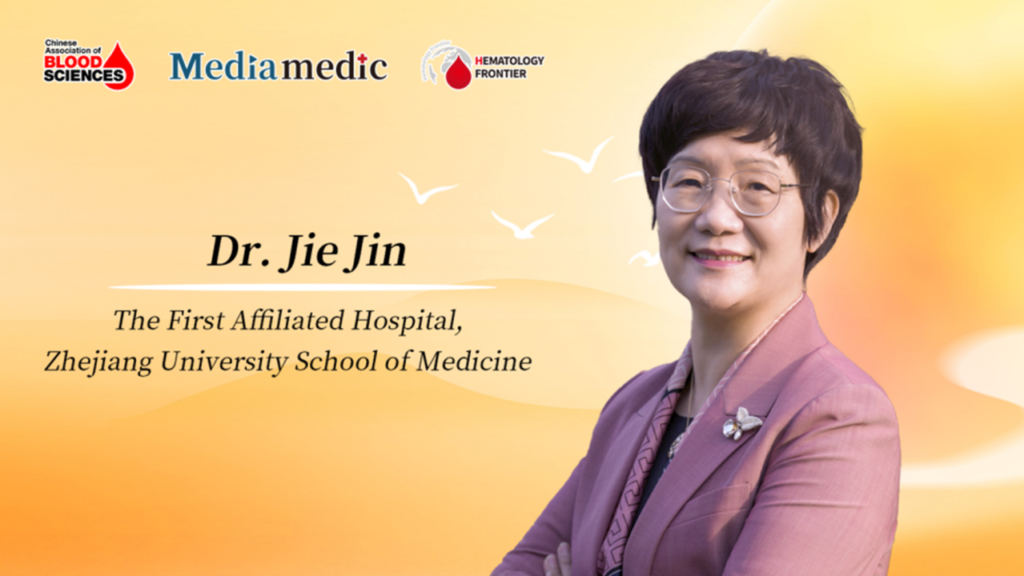
Ivosidenib in Chinese Patients with Relapsed or Refractory IDH1-Mutated Acute Myeloid Leukemia: A Registry Study

Ivosidenib in Chinese Patients with Relapsed or Refractory IDH1-Mutated Acute Myeloid Leukemia: A Registry Study

In June 2024, Blood Science published an important study led by Dr. Jie Jin and colleagues from the The First Affiliated Hospital, Zhejiang University School of Medicine, investigating the safety, pharmacokinetics, and efficacy of ivosidenib in Chinese patients with relapsed or refractory (R/R) isocitrate dehydrogenase 1 (IDH1)-mutated acute myeloid leukemia (AML). AML, a heterogeneous and aggressive hematological malignancy, presents significant treatment challenges, especially in its relapsed or refractory stages. For patients with R/R AML, survival rates are dismal, with a median overall survival of approximately five months.
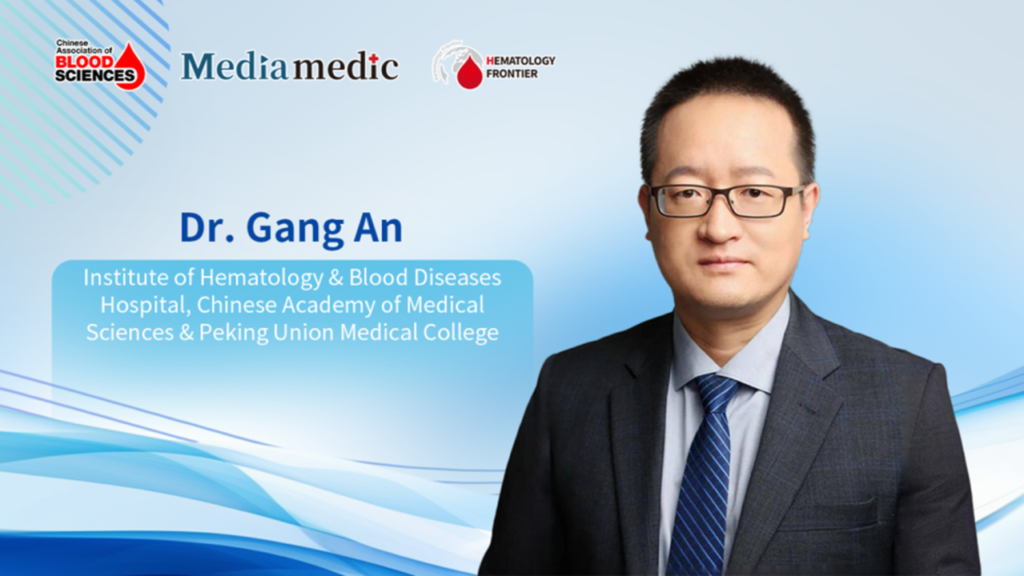
Subcutaneous Daratumumab in Chinese Patients with Relapsed/Refractory Multiple Myeloma: A Phase 1 Study

Subcutaneous Daratumumab in Chinese Patients with Relapsed/Refractory Multiple Myeloma: A Phase 1 Study

In April 2024, the journal Blood Science published an important study led by Dr. Gang An and colleagues from the Institute of Hematology & Blood Diseases Hospital, Chinese Academy of Medical Sciences & Peking Union Medical College, investigating the use of subcutaneous daratumumab in Chinese patients with relapsed/refractory multiple myeloma (R/R MM). Multiple myeloma is a challenging hematological malignancy characterized by the proliferation of abnormal plasma cells in the bone marrow. Despite significant advances in treatment, many patients experience relapse or develop resistance to existing therapies, necessitating new and more effective approaches.
Targeting HMGCS1 Restores Chemotherapy Sensitivity in Acute Myeloid Leukemia

Targeting HMGCS1 Restores Chemotherapy Sensitivity in Acute Myeloid Leukemia

In June 2024, Blood Science published a groundbreaking study led by Dr. Hui Zeng and colleagues from the The First Affiliated Hospital of Jinan University , focusing on the role of 3-hydroxy-3-methylglutaryl coenzyme A synthase 1 (HMGCS1) in acute myeloid leukemia (AML). AML is a severe hematological malignancy characterized by the rapid proliferation of immature white blood cells, leading to significant dysfunction in the blood and bone marrow. Despite advancements in treatment, relapsed and refractory (RR) AML continues to pose a significant clinical challenge with a poor prognosis, emphasizing the need for novel therapeutic targets to enhance patient outcomes.
Pomalidomide Enhances CAR-T Therapy Effectiveness in Hematological Malignancies: A Promising Synergy

Pomalidomide Enhances CAR-T Therapy Effectiveness in Hematological Malignancies: A Promising Synergy

Relapsed and refractory multiple myeloma (R/R MM) and B-cell leukemia/lymphoma with extramedullary disease (EMD) represent some of the most formidable challenges in hematology. These conditions often carry a bleak prognosis due to their resistance to conventional therapies and the complex nature of extramedullary disease, where cancer cells spread outside the bone marrow. Chimeric antigen receptor (CAR)-T cell therapy has revolutionized the treatment landscape for these malignancies, offering hope where few options existed. However, even with CAR-T cell therapy, patients with EMD have experienced limited success, highlighting the need for innovative approaches to improve outcomes.
Interview with Dr. Swaminathan P iyer at the EHA 2024: Exploring Breakthroughs in Secondary HLH Treatment with ELA26

Interview with Dr. Swaminathan P iyer at the EHA 2024: Exploring Breakthroughs in Secondary HLH Treatment with ELA26

At this year’s European Hematology Association (EHA) conference, we had the opportunity to speak with Dr. Swaminathan P iyer, Professor of Medicine at MD Anderson Cancer Center, about the groundbreaking phase I study on ELA26 for secondary hemophagocytic lymphohistiocytosis (HLH). Dr. Iyer shared the promising data from the treatment-naive cohort, which showed a remarkable 100% response rate by two months, offering new hope to patients dealing with this life-threatening complication. As HLH has a high mortality rate, with most patients unable to receive adequate malignancy treatment due to complications, this study opens new doors for future integration with chemotherapy.
Subcutaneous Daratumumab in Chinese Patients with Relapsed/Refractory Multiple Myeloma: A Phase 1 Study

Subcutaneous Daratumumab in Chinese Patients with Relapsed/Refractory Multiple Myeloma: A Phase 1 Study

In April 2024, the journal Blood Science published an important study led by Dr. Gang An and colleagues from the Institute of Hematology & Blood Diseases Hospital, Chinese Academy of Medical Sciences & Peking Union Medical College, investigating the use of subcutaneous daratumumab in Chinese patients with relapsed/refractory multiple myeloma (R/R MM). Multiple myeloma is a challenging hematological malignancy characterized by the proliferation of abnormal plasma cells in the bone marrow. Despite significant advances in treatment, many patients experience relapse or develop resistance to existing therapies, necessitating new and more effective approaches.
Breaking the Barrier of Immunotherapy Consolidation, ALK-TKI Combined with CRT Might Transform the Standard Treatment for Unresectable ALK-Positive

Breaking the Barrier of Immunotherapy Consolidation, ALK-TKI Combined with CRT Might Transform the Standard Treatment for Unresectable ALK-Positive

The American Society for Radiation Oncology (ASTRO) Annual Meeting took place in Washington, D.C., from September 29,2024 to October 2,2024. As one of the most prestigious annual events in radiation oncology, ASTRO offers a platform to share the latest advances, focusing on radiotherapy as a primary treatment for various cancers, alongside key updates in technology and basic research.