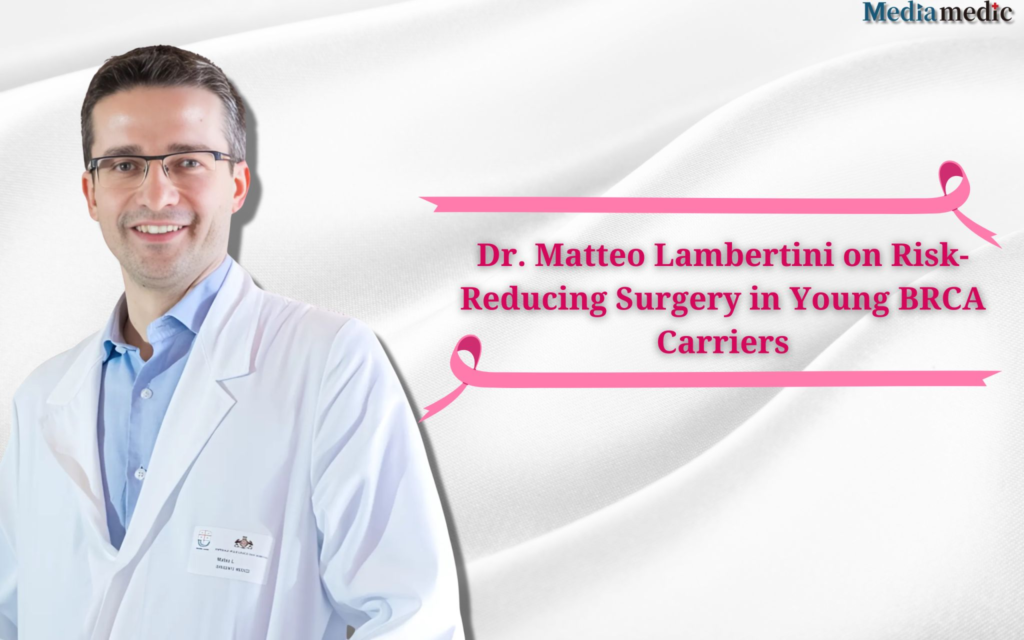
Throwback to SABCS 2024: Dr. Matteo Lambertini on Risk-Reducing Surgery in Young BRCA Carriers

Throwback to SABCS 2024: Dr. Matteo Lambertini on Risk-Reducing Surgery in Young BRCA Carriers

At SABCS 2024, Dr. Matteo Lambertini shared insights from a major international study examining the role of risk-reducing mastectomy (RRM) and salpingo-oophorectomy (RRSO) in young BRCA carriers with breast cancer. The study, which analyzed data from 5,290 patients across 109 centers worldwide, offers a deeper understanding of how these surgeries impact long-term survival.
Throwback to SABCS 2024: Dr. Icro Meattini on the EUROPA Trial – Optimizing Treatment for Older Women with Early Breast Cancer

Throwback to SABCS 2024: Dr. Icro Meattini on the EUROPA Trial – Optimizing Treatment for Older Women with Early Breast Cancer

At SABCS 2024, Dr. Icro Meattini presented a preplanned interim analysis of the EUROPA trial, a randomized phase III study comparing exclusive endocrine therapy (ET) vs. radiation therapy (RT) in women aged 70+ with luminal-like early breast cancer. The study aimed to evaluate quality of life (HRQOL) and ipsilateral breast tumor recurrence (IBTR) to guide treatment decisions in this patient population.
Throwback to SABCS 2024: Dr. Mafalda Oliveira on HER3-DXd in High-Risk HR+/HER2- Early Breast Cancer

Throwback to SABCS 2024: Dr. Mafalda Oliveira on HER3-DXd in High-Risk HR+/HER2- Early Breast Cancer

Throwback to SABCS 2024, where Dr. Mafalda Oliveira presented findings from the SOLTI VALENTINE phase II trial, evaluating HER3-DXd alone or in combination with letrozole as a neoadjuvant treatment for high-risk HR+/HER2-negative early breast cancer (EBC). The study explored whether HER3-DXd could serve as an effective and tolerable alternative to standard multi-agent chemotherapy.
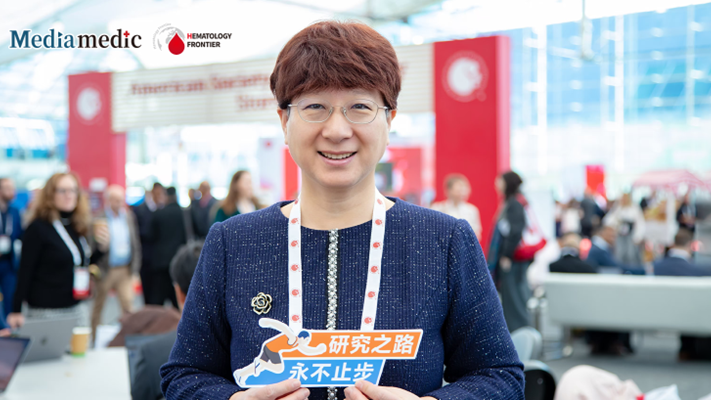
ASH 2024 | Dr. Shanshan Pei : First Discovery of TFG-ROS1 as a Rare Driver Gene in Myeloid Leukemia with Promising ALK/ROS1 Inhibitor Efficacy

ASH 2024 | Dr. Shanshan Pei : First Discovery of TFG-ROS1 as a Rare Driver Gene in Myeloid Leukemia with Promising ALK/ROS1 Inhibitor Efficacy

From December 7 to 10, 2024, the 66th Annual Meeting of the American Society of Hematology (ASH) convened in San Diego, bringing together leading experts to discuss pivotal advances in hematology. Among the highlights was a groundbreaking study by Dr. Shanshan Pei and his team from The First Affiliated Hospital,Zhejiang University and Liangzhu Laboratory. This study (Abstract #38), selected for oral presentation, identified the rare fusion gene TFG-ROS1 as an oncogenic driver in human myeloid leukemia. Furthermore, the team demonstrated effective treatment strategies using ALK/ROS1 inhibitors, achieving remission in a patient with refractory leukemia after multiple treatment failures. This study exemplifies the “bench-to-bedside” paradigm in precision medicine, showcasing its transformative potential for cancer care. Below is an in-depth exploration of the study and exclusive insights from Professor Pei.
ASH 2024 | Dr. Bing Han: Advances in Aplastic Anemia and PNH Treatment – Highlights from EBMT-SAAWP Studies

ASH 2024 | Dr. Bing Han: Advances in Aplastic Anemia and PNH Treatment – Highlights from EBMT-SAAWP Studies

From December 7 to 10, 2024, the 66th Annual Meeting of the American Society of Hematology (ASH) was held in San Diego, USA. Experts and scholars from around the globe gathered to discuss and exchange insights on the latest research in hematology. During the conference, Dr. Bing Han from Peking Union Medical College provided an on-site review of two significant studies from the Severe Aplastic Anemia Working Party (EBMT-SAAWP) of the European Society for Blood and Marrow Transplantation. Professor Han also shared in-depth analyses of key research topics presented at the meeting. These highlights are summarized below for our readers.
Annual Review | Dr. Jun Guo: Advances in Systemic Therapy for Melanoma in 2024

Annual Review | Dr. Jun Guo: Advances in Systemic Therapy for Melanoma in 2024

Malignant melanocytes can appear in various tissues throughout the body, most commonly in the skin and mucous membranes, and are highly aggressive. With continuous advancements in targeted therapy, immunotherapy, and biological therapy, even advanced melanoma can, in many cases, be managed as a chronic disease. Looking back at 2024, what were the key research developments and treatment strategies in systemic therapy for melanoma? Oncology Frontier invited Dr. Jun Guo, Vice President of the Chinese Society of Clinical Oncology (CSCO) and professor at Peking University Cancer Hospital, to provide an expert review and summary. From Professor Guo’s annual analysis, it is evident that numerous novel treatment strategies have already begun or are poised to impact clinical practice, including some pioneering approaches originating from China.