-
EBMT 2026 China Voice | Professor Heng Mei: Exploring the Global Frontiers of Cellular Therapy—From In Vivo CAR-T to Technological Innovation
At the 52nd Annual Meeting of the European Society for Blood and Marrow Transplantation (EBMT 2026), held in Madrid, “Cell Therapy Day” emerged as one of the most prominent highlights of the congress. The session brought together leading experts from China, the United States, Germany, and other countries, who shared cutting-edge advances and forward-looking perspectives…
-
EBMT 2026 China Voice | Professor Xiao-Xia Hu: Refining Risk Stratification and Optimizing Decision-Making—Fusion Gene–Guided Transplant Strategies in CBF-AML
From March 22 to 25, 2026, the 52nd Annual Meeting of the European Society for Blood and Marrow Transplantation (EBMT) was held in Madrid, Spain, bringing together thousands of experts worldwide to discuss the latest advances in transplantation and cellular therapy. Key topics included optimization of transplant strategies, infection control, CAR-T therapy, and graft-versus-host disease…
-
ASCO GU China Voice | Professor Hai-Long Hu’s Team: The TRUCE Program Advances Comprehensive Management of Urothelial Carcinoma with New Evidence from China
The 2026 American Society of Clinical Oncology Genitourinary Cancers Symposium (ASCO GU 2026) has successfully concluded, delivering multiple landmark advances that are reshaping clinical practice in urologic oncology.
-
ASCO GU China Voice | Professor Hao Zeng: Five Key Studies from West China Hospital Unlock New Directions for Difficult-to-Treat and Special Populations in Urologic Oncology
The 2026 American Society of Clinical Oncology Genitourinary Cancers Symposium (ASCO GU 2026) brought together cutting-edge advances and landmark studies in genitourinary oncology from around the world.
-
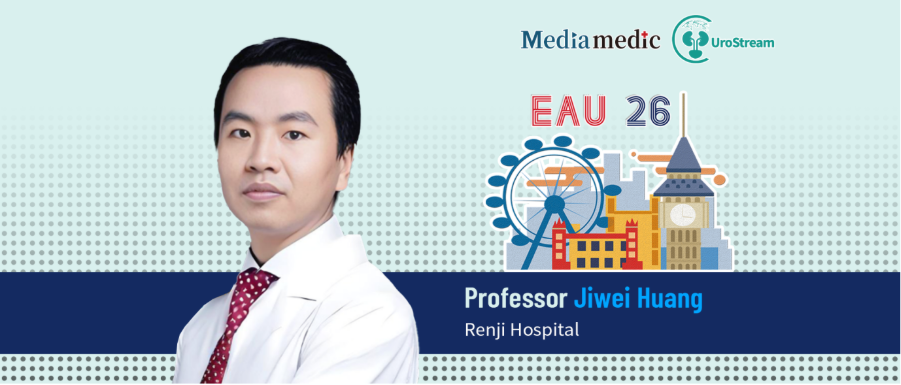
EAU26 Afternoon Dialogue | Professor Ji-Wei Huang: DISTINCT-I Study Redefines Kidney-Sparing Strategies in High-Risk UTUC with ADC–Immunotherapy Neoadjuvant Approach
Upper tract urothelial carcinoma (UTUC) is an aggressive malignancy of the urinary system, with high-risk subtypes associated with substantial risks of recurrence, metastasis, and poor prognosis. For decades, radical nephroureterectomy has been the standard treatment for high-risk UTUC. However, this approach inevitably leads to irreversible renal function impairment and may even result in renal failure,…
-
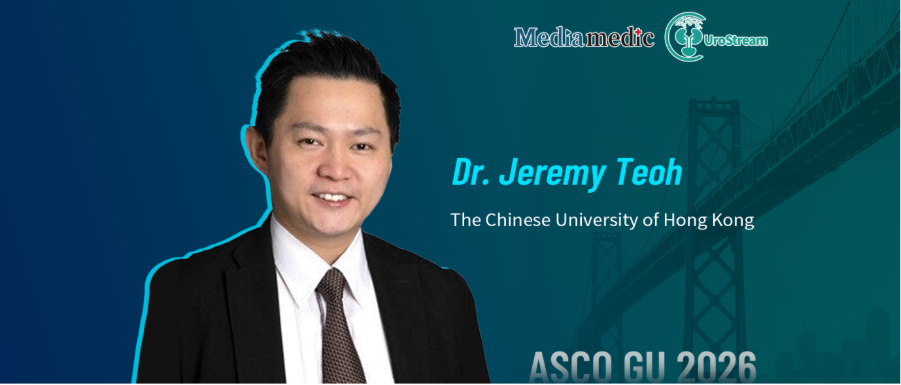
ASCO GU Expert Insights | Professor Jeremy Teoh (Yuan-Jin Zhang): En Bloc Resection Redefines the Treatment Paradigm for NMIBC
At the 2026 ASCO Genitourinary Cancers Symposium (ASCO GU 2026), one of the world’s leading academic platforms in genitourinary oncology, Professor Jeremy Teoh (Yuan-Jin Zhang) and his team from The Chinese University of Hong Kong presented a series of landmark studies on en bloc resection of bladder tumor (ERBT). Backed by high-level evidence, these findings…
-
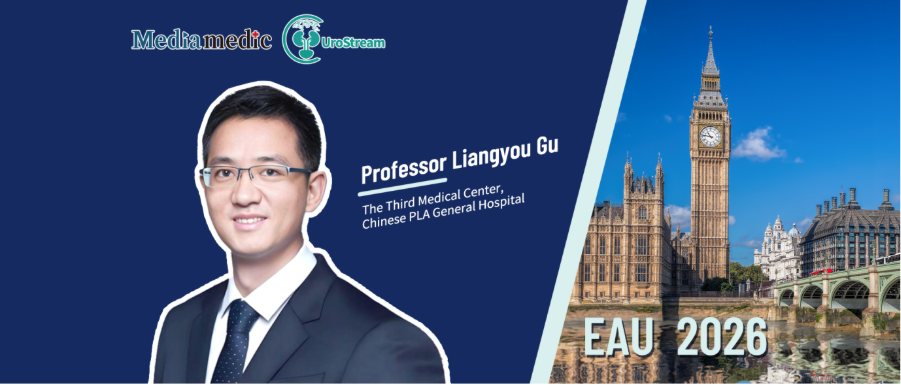
EAU26 | Professor Liang-You Gu: Disitamab Vedotin Plus Immunotherapy Achieves a 1-Year DFS Rate of 97.4%, Opening New Directions for Adjuvant Treatment in High-Risk UTUC
With ongoing advances in research, combinations of targeted therapy and immunotherapy have become the standard first-line treatment for advanced urothelial carcinoma. However, upper tract urothelial carcinoma (UTUC) differs significantly from bladder cancer in terms of anatomical structure, pathological characteristics, prognosis, and recurrence risk. As a result, radical nephroureterectomy (RNU) remains the gold standard for non-metastatic…
-

ASCO GU Investigator Insights | Professor Avivit Peer: Decoding the Present and Future of Advanced Urothelial Carcinoma Treatment
The 2026 American Society of Clinical Oncology Genitourinary Cancers Symposium (ASCO GU 2026) has successfully concluded. As one of the premier global academic meetings in genitourinary oncology, the conference showcased multiple landmark studies that are reshaping clinical practice worldwide.

Connecting Medical Expertise through Media