ESMO 2024丨Dr. Dingwei Ye: Exciting Advances with EGFR/HER3 Dual-Antibody ADC, New Successes in Urologic Oncology

ESMO 2024丨Dr. Dingwei Ye: Exciting Advances with EGFR/HER3 Dual-Antibody ADC, New Successes in Urologic Oncology

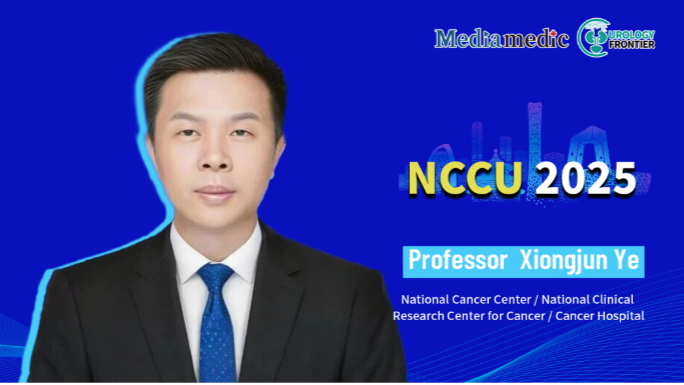
The 2024 European Society for Medical Oncology (ESMO) Congress was held from September 13 to 17 in Barcelona, Spain. During the event, multiple key studies in urologic oncology were highlighted. Dr. Dingwei Ye from Fudan University Shanghai Cancer Center presented preliminary findings on the safety, tolerability, and efficacy of BL-B01D1, a novel EGFR/HER3 dual-targeting antibody-drug conjugate (ADC), in patients with previously treated metastatic urothelial carcinoma (UC), garnering considerable attention. Urology Frontier invited Dr. Dingwei Ye to share major developments in urologic oncology from the congress, discuss new dual-targeted therapies for advanced UC, and highlight the Fudan University Shanghai Cancer Center’s progress in this area.
ESMO 2024丨Dr. Xiaojie Bian: Optimizing mCRPC Treatment Strategies and Prognostic Analysis Through Biomarkers

ESMO 2024丨Dr. Xiaojie Bian: Optimizing mCRPC Treatment Strategies and Prognostic Analysis Through Biomarkers

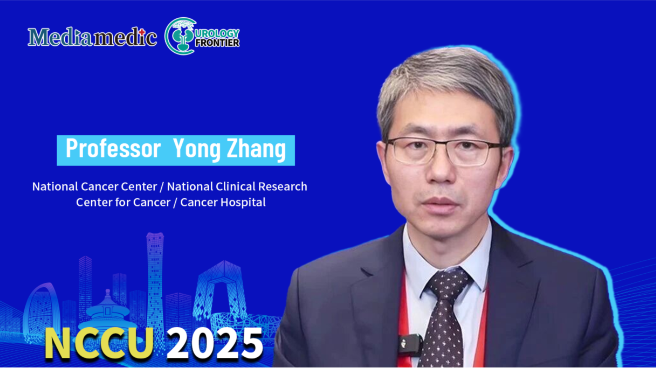
For most prostate cancer patients, resistance to androgen deprivation therapy (ADT) inevitably develops within 18-36 months, progressing to castration-resistant prostate cancer (CRPC). This transition not only increases mortality risk but also poses a serious challenge to survival outcomes. The European Society for Medical Oncology (ESMO) Annual Meeting 2024, held from September 13 to 17 in Barcelona, Spain, showcased numerous studies on metastatic castration-resistant prostate cancer (mCRPC). Oncology Frontier - Urology Insight invited Dr. Xiaojie Bian from Fudan University Shanghai Cancer Center to share the latest advances.
CSCO 2024 | Dr. Jianming Guo: Combining the Latest Advances to Further Improve Surgical Treatment for Prostate Cancer in China

CSCO 2024 | Dr. Jianming Guo: Combining the Latest Advances to Further Improve Surgical Treatment for Prostate Cancer in China

Surgical treatment is a crucial approach for prostate cancer, with radical prostatectomy being the gold standard. Even for intermediate and advanced prostate cancer, surgery can offer the possibility of clinical cure. For rare subtypes and complex cases, decisions often require multidisciplinary team (MDT) discussions and thorough communication with the patient. During the recent CSCO Annual Meeting, Urology Frontier invited Dr. Jianming Guo from Zhongshan Hospital, Fudan University, to share insights on the current state of prostate cancer diagnosis and treatment in China, recent research results, the standardized development of MDT, and the future directions for the urology team.
CUA 2024 Presents: Advancing Kidney-Sparing Strategies for UTUC

CUA 2024 Presents: Advancing Kidney-Sparing Strategies for UTUC

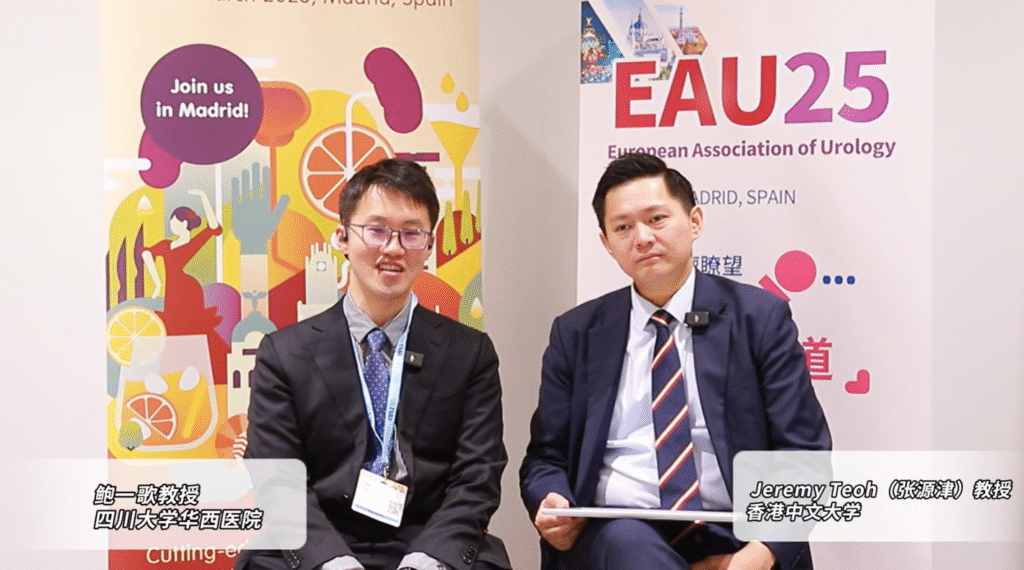
Radical nephroureterectomy (RNU) remains the gold standard treatment for upper tract urothelial carcinoma (UTUC). However, some patients with a solitary kidney or insufficient renal reserve may require alternative approaches to preserve kidney function. In recent years, advancements in systemic drug therapy and various endoscopic focal treatment techniques have provided kidney-sparing options for such patients. Nonetheless, large-scale case reports or prospective studies remain scarce. At the 31st Urology Academic Conference (CUA 2024), organized by the Chinese Medical Association and the Chinese Urological Association, Dr. Qiang Wei and  Yige Bao from West China Hospital, Sichuan University, presented their report on multimodal kidney-sparing treatment in 62 patients with high-risk localized UTUC.
STTT | Breakthrough in Kidney Cancer by Academician Xu Zhang’s Team! Neoadjuvant Regimen of Toripalimab Combined with Axitinib Assists RCC Patients with Tumor Thrombus Downstaging

STTT | Breakthrough in Kidney Cancer by Academician Xu Zhang’s Team! Neoadjuvant Regimen of Toripalimab Combined with Axitinib Assists RCC Patients with Tumor Thrombus Downstaging

Radical nephrectomy combined with venous tumor thrombus resection is the preferred treatment for renal cell carcinoma (RCC) with inferior vena cava tumor thrombus (IVC-TT) and can significantly improve patient prognosis. Preoperative neoadjuvant therapy aimed at reducing tumor thrombus level and grade is of great importance in reducing perioperative risks. Recently, the NEOTAX study, led by Academician Xu Zhang, Professor Xin Ma, and Professor Liangyou Gu from the Chinese People's Liberation Army General Hospital, was presented at the ESMO Congress (1701P). The study demonstrated that the neoadjuvant regimen of toripalimab combined with axitinib reduced tumor thrombus levels in 96.0% of RCC patients with IVC-TT and achieved thrombus downstaging in 44% of patients, thereby simplifying the surgical process. The study results were published in the Nature sub-journal Signal Transduction and Targeted Therapy (IF: 40.8). The combined treatment showed significant efficacy in reducing IVC-TT and improving surgical feasibility, offering a new direction for improving the prognosis of such patients. Below are the study details.
Advancing the Field: Dr. Pei Dong Discusses Groundbreaking Neoadjuvant Therapies for Renal Cancer at CSCO 2024

Advancing the Field: Dr. Pei Dong Discusses Groundbreaking Neoadjuvant Therapies for Renal Cancer at CSCO 2024

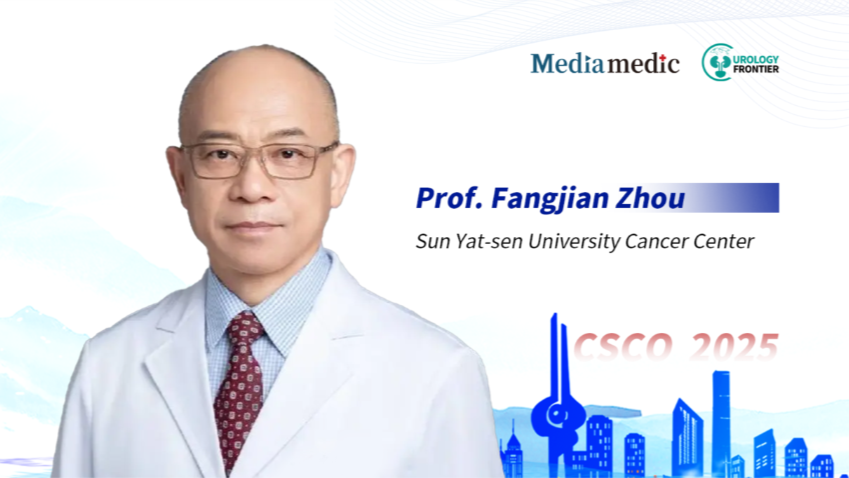
Surgery is a fundamental treatment for renal cancer, particularly for patients with stage I and II cancers, where surgery can cure the majority of cases and ensure long-term survival. At the 2024 CSCO Annual Meeting, Urology Frontier invited Dr. Pei Dong from Sun Yat-sen University Cancer Center to discuss this year’s key updates in the CSCO guidelines for surgical treatment of renal cancer, comparisons between single-port and traditional laparoscopic nephrectomy, and the role of neoadjuvant therapy in enhancing surgical outcomes.
CUA 2024 | Dr. Eamonn Rogers: Patient-Centered Care and Exploring Future Strategies for Prostate Cancer

CUA 2024 | Dr. Eamonn Rogers: Patient-Centered Care and Exploring Future Strategies for Prostate Cancer

Prostate cancer is a common malignant tumor in elderly men. However, with continuous advancements in diagnostic and treatment strategies, patient survival rates have improved, and patient-centered care has become a key focus in oncology. During the recent CUA Annual Meeting, Urology Frontier invited Dr. Eamonn Rogers from the National University of Ireland to share his thoughts on the future of prostate cancer research, the importance of patient-reported outcomes (PROs), and evolving models of care to meet modern medical challenges.
CUA 2024 | Dr. Jeremy Teoh: Addressing Unmet Needs in NMIBC and Exploring Advanced Diagnostic and Treatment Strategies

CUA 2024 | Dr. Jeremy Teoh: Addressing Unmet Needs in NMIBC and Exploring Advanced Diagnostic and Treatment Strategies

Bladder cancer is one of the most common malignant tumors among the Chinese population, with 75% of cases classified as non-muscle invasive bladder cancer (NMIBC), which has a high postoperative recurrence rate. What are the unmet diagnostic and treatment needs of NMIBC patients? Which research findings may change future clinical practice for NMIBC? During the recent CUA Annual Meeting, Urology Frontier invited Dr. Jeremy Teoh from The Chinese University of Hong Kong to discuss the current unmet needs in NMIBC, the factors influencing recurrence, and the latest research developments that could potentially change clinical practice.